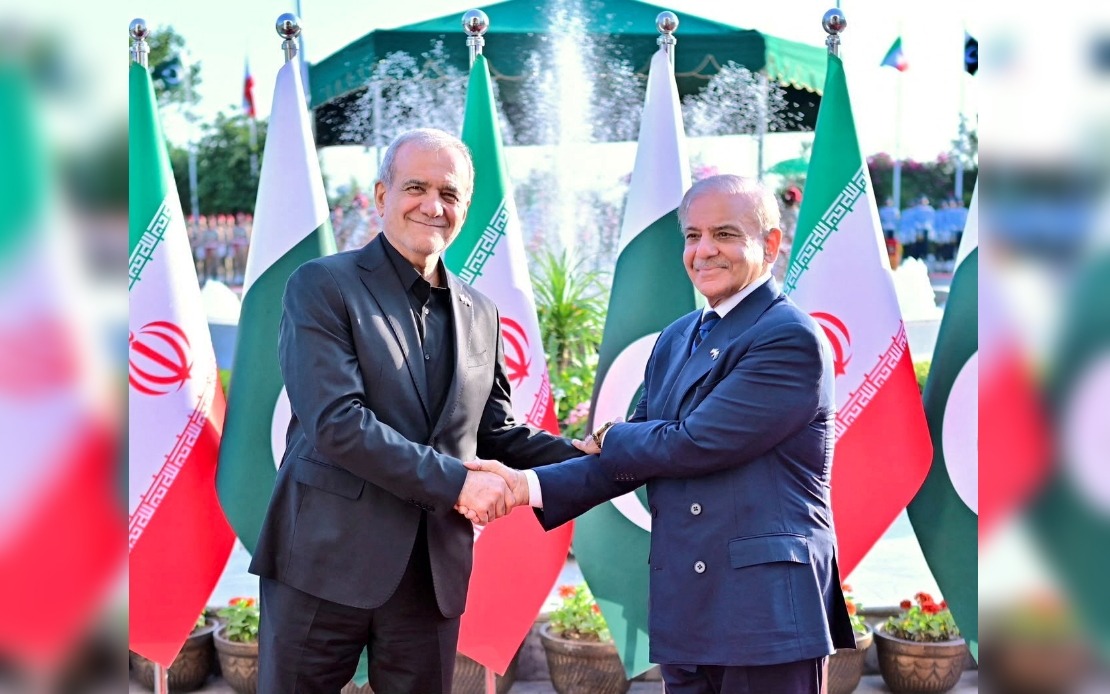
Pakistan's Prime Minister Shehbaz Sharif has publicly backed Iran's ballistic missile capabilities, declaring that Tehran's right to possess such weapons should not be questioned or subjected to different treatment than other nations. Speaking during high-level discussions with Iranian President Masoud Pezeshkian and his delegation in Islamabad on June 24, Sharif drew a clear distinction between Iran's missile programme and the recent peace understanding between Tehran and Washington, emphasizing that the two matters operate on entirely separate tracks and should not be conflated.
The Pakistani leader's remarks carry significant weight given his country's recent diplomatic achievements in West Asian affairs. Pakistan had played a crucial mediation role in facilitating a temporary ceasefire between Iran and the United States in April, before helping broker the broader memorandum of understanding that both nations signed on June 17. Deputy Prime Minister and Foreign Minister Ishaq Dar, alongside Field Marshal Syed Asim Munir, Pakistan's Chief of Army Staff, were instrumental in these negotiations, positioning Islamabad as a trusted neutral party in a highly contentious regional dispute.
Sharif's defence of Iran's missiles takes on added importance when understood within the broader context of international double standards in weapons proliferation. The Prime Minister explicitly rejected what he characterised as hypocritical treatment, pointing out that multiple countries maintain ballistic missile arsenals without international censure, yet Iran faces continued criticism for similar capabilities. This argument resonates particularly in the developing world, where perceptions of unequal application of non-proliferation standards have long been a source of tension. By framing Iran's missile possession as a matter of national equity rather than security escalation, Sharif has aligned Pakistan with Tehran's perspective on defensive capabilities.
The substantive content of the US-Iran understanding becomes crucial here. According to Sharif's account, ballistic missiles were deliberately excluded from discussions leading to the June 17 agreement, never appearing on the formal agenda despite intense international focus on weapons systems. This distinction matters enormously because it suggests that Washington and Tehran successfully compartmentalised different issues—nuclear matters, regional tensions, and military capabilities—rather than attempting to negotiate them as a single package. The Iranian side, Sharif noted, had not even been willing to discuss missiles as part of the negotiation process, viewing them as non-negotiable pillars of national defence strategy.
Iran's own rationale for maintaining ballistic missiles centres on regional security threats perceived as existential. Following Israeli and American military strikes launched against Iranian targets on February 28, Tehran has viewed its missile arsenal as essential deterrence against future aggression. President Pezeshkian made this perspective explicit during the Islamabad visit, stating bluntly that without defensive capabilities, Iran would face destruction comparable to Gaza. This framing transforms the missile question from a matter of proliferation concern into one of national survival, fundamentally different from how Western powers have traditionally characterised the issue.
Interestingly, even United States President Donald Trump has recently acknowledged the logic underlying Iran's position. During a June 17 visit to Paris, Trump conceded that Iran should be permitted ballistic missiles if other countries possessed them, characterising any prohibition as unfair. This statement from the American president removes a significant layer of hypocrisy from international criticism and aligns with Pakistan's stated position that uniform standards should apply across nations. Trump's willingness to accept Iranian missiles as a legitimate part of the broader understanding represents a notable shift from previous American administrations' absolute opposition to Tehran's missile development.
Pakistan's enthusiastic embrace of the Iran-US understanding reflects Islamabad's own strategic interests in regional stability. A Pakistan that successfully mediates between major powers enhances its diplomatic standing and potentially gains leverage in negotiations affecting its own security concerns. The ceremonial reception accorded to President Pezeshkian—including an escort of six Pakistani Air Force fighter jets, reception by both Prime Minister Sharif and President Asif Ali Zardari, and a 21-gun salute—underscored the symbolic importance Islamabad placed on the Iranian leader's visit and the broader partnership between the two nations.
Sharif acknowledged the broader obstacles to consolidating peace in West Asia, noting that various international actors attempt to undermine or derail the understanding reached between Washington and Tehran. He specifically identified Israel as the primary impediment to regional peace, citing ongoing Israeli military operations in Lebanon and the occupied Palestinian territories as evidence of Jerusalem's commitment to conflict rather than resolution. This characterisation, while controversial from Israel's perspective, reflects prevailing sentiment across much of the Muslim world and particularly within Pakistani policy circles.
The timing of the Pezeshkian visit carries additional significance for Malaysia and Southeast Asia. Pakistan's success in mediating between Iran and the United States demonstrates that smaller powers can still exercise meaningful diplomatic influence when they position themselves as honest brokers. For regional players in Southeast Asia, this model offers lessons in how to navigate great power competition without being forced into rigid camps. Malaysia's own delicate balancing act between various international powers, particularly in managing relationships with the United States, China, and Middle Eastern nations, may find useful parallels in Pakistan's approach.
Moreover, Sharif's emphasis that Pakistan will remain loyal to Iran—declaring "as brothers, we will never let you down"—signals deep institutional commitment beyond any single government's tenure. This language reflects the historically rooted ties between Pakistan and Iran, rooted in Islamic solidarity, geographic proximity, and shared experiences as post-colonial nations navigating great power politics. For Malaysian policymakers observing regional developments, the strength of these Pakistan-Iran bonds illustrates how bilateral relationships grounded in cultural and religious commonality can endure despite broader international pressures and shifting diplomatic alignments.
The Iran-Pakistan-United States triangle that has emerged through these recent negotiations may reshape regional dynamics in ways that extend beyond immediate security concerns. If the June 17 understanding holds and prevents escalation into direct US-Iran military confrontation, it could reduce overall tension in the broader Muslim world and create space for other regional actors to pursue cooperative agendas. For Malaysia, which maintains commercial interests across the Middle East and diplomatic relationships with both Western powers and Iran, a more stable West Asia offers opportunities for expanded trade, investment, and cultural exchanges that would benefit Southeast Asian economies more broadly.

