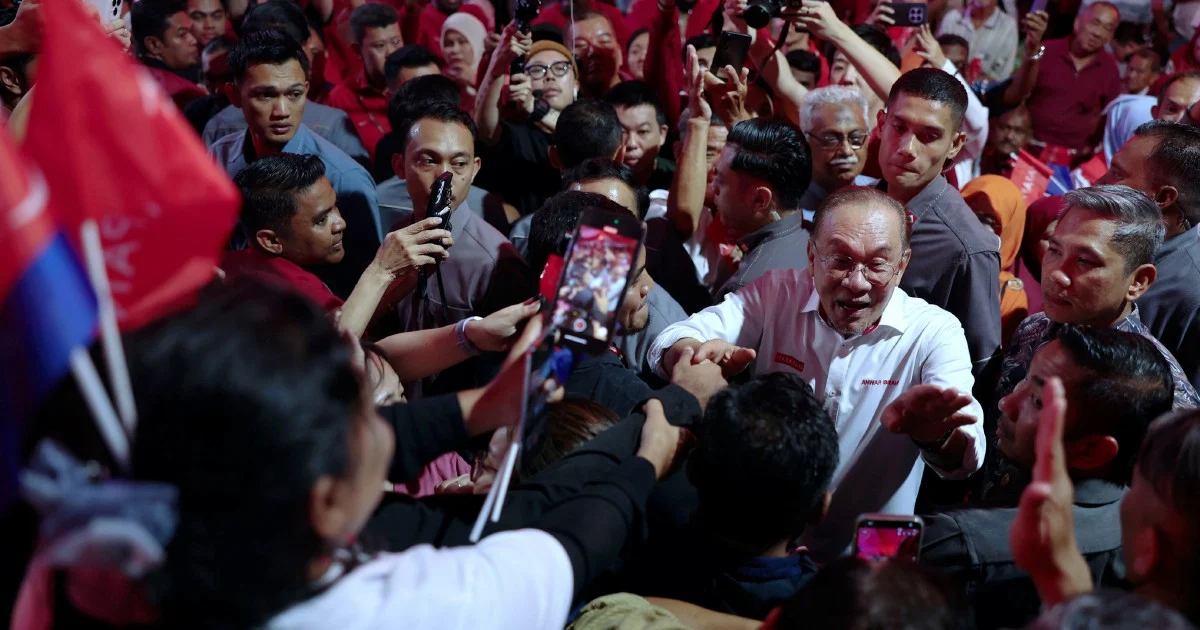
Pakatan Harapan unveiled its complete roster of 56 candidates for the Johor state election at a gathering in Tangkak today, with coalition chairman Datuk Seri Anwar Ibrahim presenting what the alliance frames as a competitive bid to wrest control of the state from Barisan Nasional's long-standing grip. The announcement represents a critical juncture in the peninsula's electoral calendar, as Johor has remained one of the more challenging territories for PH to penetrate since the coalition's formation, with the state serving as a traditional BN bastion for decades.
The unveiling of all 56 candidates—covering the entirety of Johor's state assembly constituencies—demonstrates PH's determination to mount a comprehensive challenge across the electoral map rather than concentrating resources in select districts. This strategy signals confidence within the coalition's leadership that it can compete meaningfully in rural and semi-urban areas where Barisan Nasional has historically maintained strong organisational networks and community relationships. The decision to field candidates in every seat, rather than leaving some uncontested, reflects broader coalition thinking about momentum and the symbolic importance of presenting voters with alternatives across the state.
For Malaysian political observers, the July 11 election takes on heightened significance given Johor's economic weight and demographic composition. The state's substantial population and industrial base make it electorally crucial to both coalitions' national strategic calculations. A strong performance by PH in Johor could reshape perceptions of the coalition's viability across Peninsular Malaysia, while a weak showing would reinforce narratives about the coalition's limitations outside its traditional urban strongholds and northern bases.
The composition of PH's candidate slate offers insight into the coalition's internal dynamics and how it balances representation across its constituent parties—PKR, DAP, Amanah, and aligned MPs. The selection process typically reflects ongoing negotiations between these parties over seat allocation, with attempts to satisfy demands from state-level party chapters while maintaining a coherent overall strategy. These internal arrangements often remain invisible to voters but significantly influence a coalition's capacity to execute a unified campaign and mobilise supporters effectively.
Johor's political landscape has shifted considerably over recent years, even as BN has maintained state-level control. The state witnessed substantial electoral swings in 2018 when federal realignment briefly created openings for opposition parties, though BN recovered ground in subsequent contests. Understanding the current voter sentiment in Johor requires examining which constituencies have become more competitive and where demographic shifts might advantage either coalition. Urban centres and areas with younger, more mobile populations have shown greater volatility, while agricultural and traditional rural areas have tended toward stability in their voting patterns.
Anwar Ibrahim's personal involvement in unveiling the candidates carries symbolic weight beyond mere procedural formality. As both PH chairman and Prime Minister, his presence at this event communicates that the coalition leadership considers the Johor election consequential enough to warrant direct engagement. Such visibility also allows PH to anchor its campaign narrative around Anwar's leadership vision and to contrast what the coalition characterises as its development agenda against what it frames as Barisan's legacy of entrenchment and patronage politics.
The timing of the announcement matters for campaign mechanics. Parties require several weeks to establish ground operations, distribute campaign materials, conduct voter outreach, and coordinate between federal and state-level party structures. By unveiling candidates well ahead of polling day, PH aims to allow sufficient time for these organisational tasks while keeping the election sufficiently near to maintain voter attention and engagement. The electoral calendar in Malaysia typically features such announcements several weeks before voting, giving campaigns duration to build momentum without allowing interest to dissipate prematurely.
For Southeast Asian context, Malaysia's internal electoral contests continue to draw regional attention. The Johor election offers insights into coalition dynamics, electoral competition quality, and voter behaviour within Southeast Asia's longest-established democracy. The outcome will influence both Malaysian politics specifically and broader regional understandings of how electoral contestation functions in relatively stable democratic systems within the region. International observers and regional analysts often scrutinise Malaysian state elections as bellwethers for larger democratic health and competitive dynamics.
The challenge confronting PH extends beyond candidate selection to encompassing message coherence, resource mobilisation, and connecting with Johor's diverse voter base. The state's economy, infrastructure development, education provision, and social service quality form the practical foundation upon which voters make electoral choices. PH's campaign will need to articulate concrete proposals addressing these concerns while confronting Barisan's incumbent advantages in administrative machinery and established relationships with traditional community leaders.
Looking forward, the weeks preceding July 11 will determine whether PH can translate candidate selection into actual electoral support. Campaigns in Malaysian state elections typically emphasise local grievances and personality factors alongside broader coalitional narratives. Ground-level party workers, local party chapters, and candidates' individual credibility frequently matter as much as state or federal-level messaging. The organisation and cohesion PH demonstrates in Johor over the coming weeks will test the coalition's capacity to function as an integrated political force rather than a loose collection of separate parties competing for the same voters.
Barisan Nasional's response to PH's candidacy announcement will also shape the campaign's trajectory. The incumbent coalition will likely emphasise stability, development achievements, and administrative competence while questioning PH's readiness to govern. These contrasting narratives—progress through experience versus change through renewal—form the fundamental framework through which Johor voters will evaluate their choices as July approaches.

