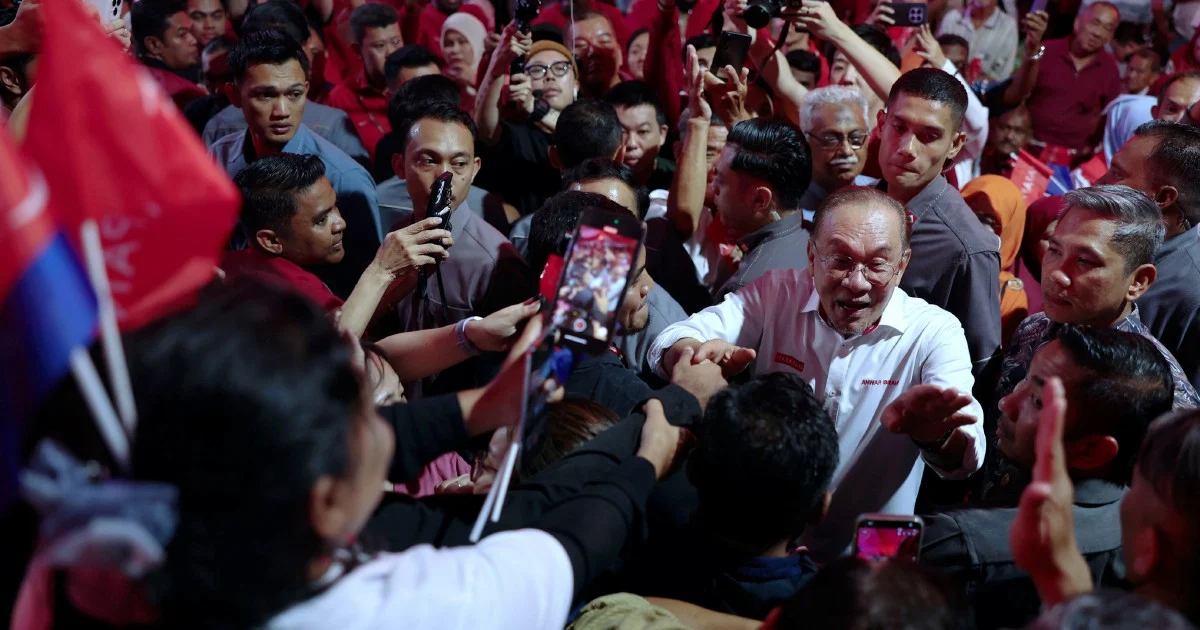
Pakatan Harapan has officially rolled out its comprehensive roster of 56 candidates for the Johor state election scheduled for July 11, with coalition chairman Datuk Seri Anwar Ibrahim making the announcement in Tangkak. The unveiling marks a critical juncture for the opposition coalition as it seeks to consolidate its electoral positioning ahead of the crucial ballot in Malaysia's second-largest state by population.
The timing of the candidate announcement reflects the strategic preparations underway across Malaysia's political landscape, where state elections have increasingly become bellwethers for national sentiment. Johor holds particular significance both economically and demographically, serving as a crucial electoral battleground that influences broader peninsular political dynamics. The state's geographic proximity to Singapore and its role as an economic hub connecting Malaysia's southern region add layers of importance to the forthcoming contest.
Packatan Harapan's decision to field a full complement of 56 candidates signals confidence in contested constituencies throughout the state, indicating the coalition intends to challenge incumbent administrations across multiple electoral divisions. The coalition's presence in state politics has evolved considerably since its 2018 federal victory and subsequent 2022 government formation at the national level, reshaping how opposition and ruling coalitions navigate state-level contests.
For Malaysian political observers, the Johor election carries implications extending beyond the state itself. The electoral outcome will provide insights into voter sentiment regarding national governance, economic management, and the performance of competing coalitions. State elections frequently serve as testing grounds where federal governments measure their popularity among grassroots constituencies, making this Johor ballot relevant to national political calculations.
The announcement comes as Malaysian politics continues navigating the complex terrain of coalition politics at multiple governance levels. Different states operate under varied political control, with some governed by Barisan Nasional, others by Pakatan Harapan, and some by smaller coalitions or independent administrations. This fragmented landscape requires political parties to calibrate their strategies carefully for each state contest.
Anwar Ibrahim's direct involvement in unveiling the candidates underscores the centrality of this election to Pakatan Harapan's strategic agenda. As Prime Minister since late 2022, Anwar's visibility in state election campaigns serves to mobilise party machinery and demonstrate coalition cohesion at crucial moments. The announcement from Tangkak, located within Johor's interior, also suggests the coalition's attention to reaching voters across diverse regions within the state.
The composition of the 56-candidate slate will likely reflect internal negotiations among Pakatan Harapan's constituent parties—the People's Justice Party (PKR), Democratic Action Party (DAP), and Amanah—plus any cooperating partners. These internal arrangements frequently generate political interest as observers assess how seat allocations reflect the relative strengths and bargaining positions of coalition members within Johor's specific context.
Johor's electoral significance stems partly from its substantial parliamentary representation and economic contributions to the national economy. The state encompasses multiple constituencies competing for attention and resources, and candidate selection processes typically involve careful consideration of local dynamics, incumbent performance, and demographic shifts. The announcement of the full slate now allows political operatives to mobilise campaign machinery across all 56 constituencies simultaneously.
The July 11 election date gives candidates and voters a defined campaign period to assess competing visions and policy platforms. For Pakatan Harapan, the election presents an opportunity to demonstrate that its federal government, in partnership with various state administrations, has delivered tangible improvements in governance and public services that resonate with Johor voters. Conversely, incumbent administrations will emphasize their track record and development initiatives.
Electoral outcomes in Johor will reverberate through Malaysia's broader political ecosystem, influencing how subsequent campaigns are formulated and how coalition alliances adjust their messaging. The state's voters include diverse demographic groups with varying priorities—from urban professionals concerned with cost of living to rural communities focused on agricultural support and infrastructure development. Pakatan Harapan's candidate slate must navigate this complexity.
The formal announcement also initiates the public scrutiny phase where candidates' backgrounds, credentials, and prior performance become subjects of detailed examination. Malaysian voters increasingly research candidate histories, assessing whether representatives have demonstrated competence and accountability in previous roles. This transparency mechanism, amplified by social media and traditional journalism, shapes how candidates build credibility during campaign periods.
As campaigns intensify following this announcement, the broader national context cannot be ignored. Economic performance, cost-of-living pressures, and public perception of governmental effectiveness at both federal and state levels will influence voter calculations. The Johor election therefore serves as a mechanism through which Malaysian voters can express satisfaction or dissatisfaction with multiple layers of governance simultaneously.

