Pakatan Harapan has made clear that any decision on who will serve as Johor Menteri Besar following a potential victory in the upcoming state election will rest entirely with the Sultan of Johor, in keeping with constitutional convention. The coalition's stance represents a deliberate positioning on a question that has generated considerable speculation in political circles and on social media regarding potential candidates for the position.
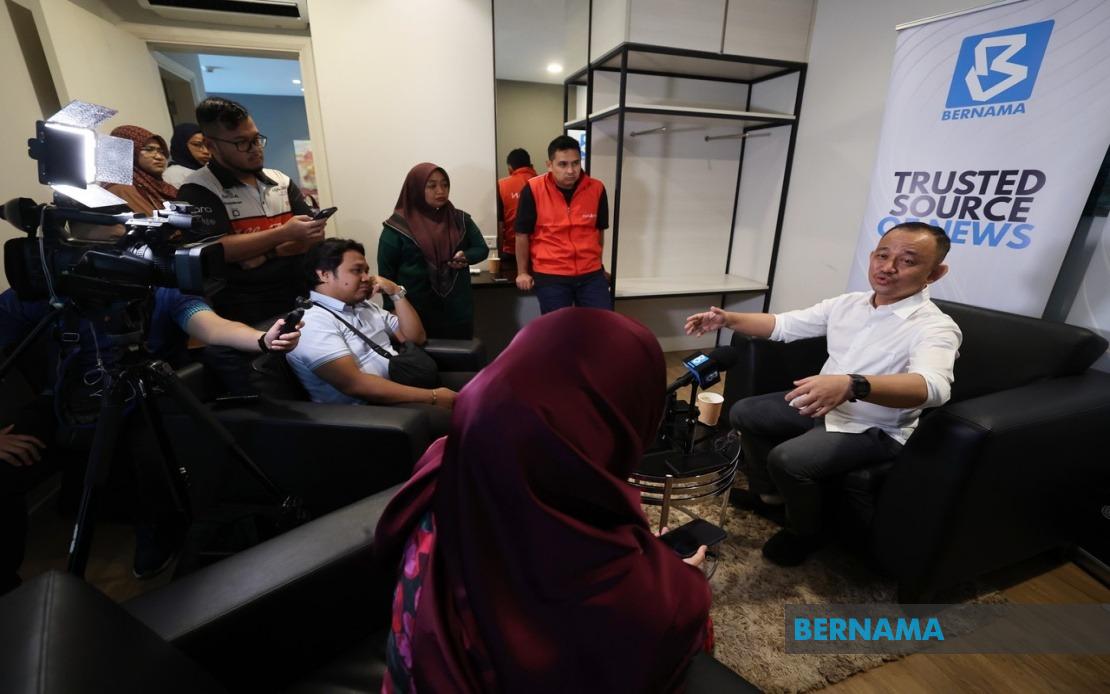
Dr Maszlee Malik, contesting the Puteri Wangsa seat as PH's candidate, articulated this position in an exclusive interview on June 29, emphasising that the coalition views the matter as fundamentally a matter of royal prerogative rather than internal party decision-making. His comments came amid widespread online discussion linking him to potential consideration for the Menteri Besar role should Pakatan Harapan emerge victorious in the 16th Johor state election.
The coalition's approach reflects a strategic calculation about navigating Malaysian constitutional monarchy principles while also managing internal expectations. By firmly locating the appointment authority with Istana Bukit Serene, PH sidesteps potential friction within its own ranks over candidacy and establishes a framework where the party cannot be accused of engineering outcomes through backroom political maneuvering. This positioning also acknowledges the Sultan's historical and constitutional role in shaping Johor's political trajectory, a sensitivity particularly important given the state's unique status within Malaysia's federal system.
Maszlee stressed that Pakatan Harapan's focus remains concentrated on demonstrating its capacity to govern effectively across the full breadth of contested seats rather than coalescing around individual figures. The coalition's messaging emphasises team-based governance and collective competence, deploying rhetoric that suggests the party functions as an integrated unit rather than revolving around particular personalities. This framing becomes significant in the context of Malaysian state politics, where personal networks and individual reputations have historically wielded considerable influence over voting patterns.
The candidate's reference to the party's complete slate of candidates as "Avengers" represents an attempt to build collective enthusiasm while projecting an image of complementary strengths distributed across constituencies. By contesting all 56 state seats, Pakatan Harapan signals comprehensive ambition and demonstrates confidence in its organisational reach across Johor's diverse geographic and demographic regions. This total engagement strategy differs markedly from more cautious approaches that involve selective contestation.
Pakatan Harapan's explicit acknowledgment of the Sultan's prerogative also carries practical implications for coalition unity. By removing internal speculation about leadership succession from the pre-election period, the coalition can concentrate on presenting a unified message to voters without the distraction of behind-the-scenes jockeying for position. Previous elections have demonstrated the damage potential when leadership questions remain unresolved until after polling concludes, creating fractures within winning coalitions and complicating the formation of stable governments.
From a broader Malaysian governance perspective, PH's deference to the Sultan's appointment authority reinforces important constitutional principles about the separation between electoral mandates and executive selections. While voters determine which coalition commands a parliamentary or state assembly majority, the actual appointment of chief executives remains a prerogative of constitutional monarchs in Malaysia's system. This distinction, properly understood and respected, prevents the conflation of electoral triumph with automatic entitlement to all positions of power.
The Johor election scheduled for July 11, with early voting commencing on July 7, arrives at a critical juncture for Pakatan Harapan's efforts to reclaim state-level power following significant losses in recent years. The coalition's performance in Johor will substantially influence broader perceptions of its viability as a national governing alternative. Voter sentiment in the state, which remains economically and strategically significant within Malaysia, carries implications extending well beyond state-level politics.
Maszlee's comments also implicitly signal that Pakatan Harapan has conducted no internal discussions formalising a preferred Menteri Besar candidate before the election. Such restraint, whether based on genuine uncertainty about electoral prospects or deliberate strategic choice, contrasts with opposition politics elsewhere in Malaysia where coalitions have sometimes pre-announced leadership selections to reassure supporters or manage factional expectations. The decision to maintain ambiguity on this question until after polling reflects confidence in the coalition's electoral appeal resting on programmatic and governance credentials rather than personality-driven politics.
The Sultan of Johor has historically maintained significant political influence within the state, and his relationship with incoming administrations proves consequential for policy implementation and bureaucratic cooperation. By explicitly acknowledging this reality, Pakatan Harapan positions itself as a coalition respectful of institutional hierarchy and constitutional norms, potentially appealing to traditional and conservative voters who value institutional continuity alongside political change. This framing permits the coalition to offer change within constitutional and cultural continuity.
Looking ahead to the election itself, Pakatan Harapan's emphasis on collective rather than individual leadership strength may prove advantageous if voters respond to messaging about institutional capacity and programmatic delivery. Conversely, the coalition risks appearing indecisive or overly deferential if circumstances require more assertive positioning on alternative governance approaches. The election results will ultimately determine whether the coalition's current tactical positioning on the Menteri Besar question has proven strategically sound.

