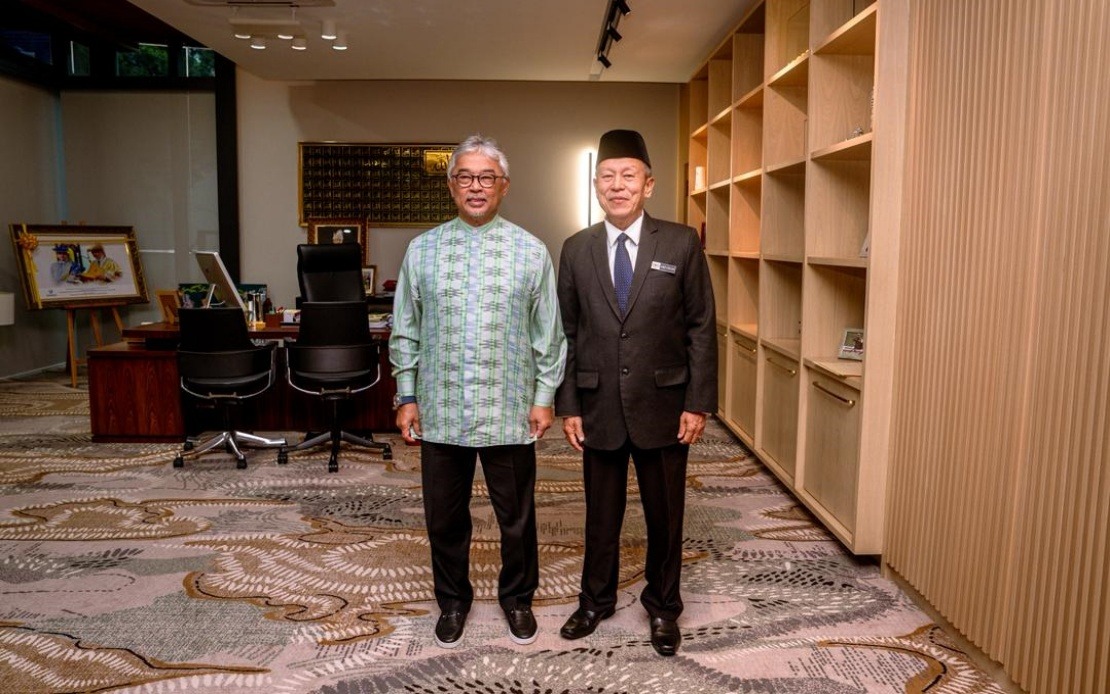
The Sultan of Pahang, Al-Sultan Abdullah Ri'ayatuddin Al-Mustafa Billah Shah, recently convened with the chief commissioner of the Malaysian Anti-Corruption Commission during a formal audience at Shahzan House in Ampang. The hour-long engagement underscored the royal institution's continued interest in the country's anti-graft machinery and broader governance frameworks.
During the meeting, Datuk Seri Abd Halim Aman briefed His Royal Highness on the latest institutional developments within MACC, a body responsible for investigating corruption allegations and enforcing ethics standards across the public and private sectors. The audience reflected a pattern of high-level dialogue between Malaysia's constitutional monarchy and executive enforcement agencies, a relationship that carries symbolic weight in a country where rulers traditionally champion constitutional values and institutional integrity.
The commission presented a comprehensive overview of its strategic initiatives aimed at fortifying transparency and accountability mechanisms throughout government and related organisations. These discussions carried particular relevance given Malaysia's ongoing efforts to rebuild confidence in public institutions following years of high-profile corruption cases that had eroded trust in governance structures. The audience provided a platform for MACC to articulate its mandate and demonstrate tangible progress in tackling systemic challenges.
Among the substantive topics explored were current governance challenges and preventative measures being deployed to address corruption before it takes root in institutional cultures. The conversation touched on mechanisms designed to enhance public perception of MACC's independence and effectiveness, an important consideration in an environment where enforcement credibility directly influences voluntary compliance with anti-corruption norms. For Malaysian readers familiar with recent institutional controversies, such dialogues signal efforts to restore public confidence through high-level engagement and transparent reporting on anti-graft operations.
Datuk Seri Abd Halim conveyed appreciation for the royal audience and the opportunity to apprise the palace of MACC's evolving role in the enforcement landscape. His expressed gratitude acknowledged the traditional role of the monarchy in upholding constitutional principles and maintaining institutional checks that prevent concentration of power. The chief commissioner's remarks reflected recognition that sustained progress against corruption requires support across multiple institutional pillars, including the royal establishment that occupies a constitutionally protected position in Malaysia's political architecture.
The MACC chief further highlighted the agency's commitment to advancing governance standards rooted in integrity and accountability. This framing positioned anti-corruption work not merely as criminal enforcement but as a foundational requirement for legitimate, effective governance capable of earning public trust. For Southeast Asian observers, Malaysia's institutional approach to anti-corruption—involving multiple stakeholders including royal institutions—represents one model for distributed oversight, though debates continue about enforcement consistency and political independence.
From a Malaysian perspective, such audiences carry significance beyond formal courtesy. The Sultan of Pahang chairs the Conference of Rulers, Malaysia's highest consultative body on constitutional matters and national affairs. Engagement between this institution and MACC signals alignment between the monarchy's constitutional guardianship role and the executive's anti-corruption priorities. This coordination becomes particularly important in a federal system where state-level governance and national institutions must work in concert to maintain integrity standards.
The timing of this audience also reflects broader regional dynamics. Across Southeast Asia, anti-corruption agencies face persistent questions about independence, political direction, and consistency in enforcement. Malaysia's MACC has navigated periods of criticism regarding selective prosecution and institutional politicisation. High-profile meetings with respected figures, including royal institutions, can serve to reinforce perceptions of institutional legitimacy, though they do not automatically resolve underlying concerns about operational independence or investigative impartiality that civil society organisations continue to monitor.
For Malaysian businesses and foreign investors evaluating the corruption control environment, signals of institutional coordination carry practical implications. When enforcement agencies receive high-level acknowledgment and support, it potentially strengthens their operational capacity and demonstrates political will to maintain standards. Conversely, observers scrutinise whether such support translates into consistent, politically neutral enforcement or becomes subject to shifting priorities aligned with dominant political coalitions. The sustainability of anti-corruption gains depends ultimately on institutional culture and individual case handling, not merely ceremonial endorsements.
The MACC's institutional position within Malaysia's governance structure remains complex. As an agency nominally independent but operating within government, its effectiveness depends on sustained funding, political insulation from partisan pressures, and bureaucratic capacity to investigate sensitively positioned subjects without triggering accusations of selective prosecution. Audiences such as this one with the Pahang Sultan provide opportunities for the commission to contextualise its work within broader constitutional frameworks and reinforce messaging about institutional alignment on integrity principles.
Moving forward, the substantive outcomes of such high-level engagements matter as much as their symbolic value. Whether discussions translate into enhanced cooperation on specific investigations, resource allocation, or institutional support mechanisms remains to be seen through MACC's ongoing enforcement record. Malaysian stakeholders, from civil society to business communities, will continue assessing whether these institutional dialogues produce measurable improvements in corruption deterrence and governance accountability across federal and state administrations. The audience thus represents both a reaffirmation of institutional commitments and a moment for evaluating whether Malaysia's anti-corruption framework continues strengthening or faces new structural constraints.

