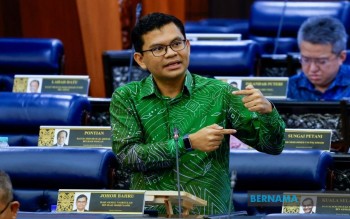
Malaysia's government is urging small and medium enterprises to take advantage of the substantial untapped reserves available through the Bank Negara Malaysia (BNM) Small and Medium Enterprise Stabilisation Relief Facility (SME SRF). Economy Minister Akmal Nasrullah Mohd Nasir disclosed during parliamentary proceedings that more than RM4 billion of the original RM5 billion allocation remains unclaimed, presenting a significant opportunity for MSMEs grappling with cash flow difficulties and operational disruptions in an uncertain economic climate.
The facility, which has processed approvals for more than RM700 million across over 1,000 SMEs as of mid-June 2026, underscores persistent gaps between available support and actual uptake among eligible businesses. This disparity suggests that while the government has made substantial relief capital available, awareness or accessibility barriers may be preventing many companies from securing the financing they need. The continuing availability of such substantial funds indicates the government's commitment to providing a safety net for enterprises struggling with working capital challenges stemming from supply chain disruptions and broader macroeconomic headwinds.
The SME SRF operates within a broader ecosystem of government-backed financing guarantees designed to reduce barriers for small businesses seeking credit. The government has mobilised an additional RM5 billion through Syarikat Jaminan Pembiayaan Perniagaan Bhd (SJPP), the national credit guarantee corporation, to complement direct lending facilities. This dual-track approach aims to address liquidity constraints by both providing direct relief financing and lowering the risk premium that financial institutions typically attach to MSME lending. For Malaysian businesses, this architecture represents a meaningful policy response to the friction that often exists between credit-worthy enterprises and banking institutions during periods of economic stress.
Accessing the facility has been streamlined to encourage participation, with participating financial institutions obligated to process applications within seven working days. This timeframe represents an attempt to remove bureaucratic delays that can prove fatal to businesses operating with limited cash reserves. Economy Minister Akmal advised SMEs to approach their existing banking relationships directly to explore tailored solutions that align with their specific operational and sectoral needs. This distributed delivery model leverages the distribution networks and customer relationships of established financial institutions rather than creating new administrative channels, potentially accelerating fund disbursement.
Beyond relief financing, the government is pursuing a more comprehensive employment and economic stabilisation agenda through the Progressive Acceleration for Capability and Employability (PACE) Economic Resilience Package, valued at over RM710 million. This initiative reflects recognition that business continuity cannot be sustained through financing alone; enterprises require a stable labour market and a workforce equipped with relevant skills. The package encompasses four strategic pillars that address interconnected dimensions of economic resilience: direct social protection for displaced workers, skills training and job placement support, protection and development of gig economy participants, and targeted assistance for young talent and entrepreneurial ventures.
The employment insurance dimension of PACE deserves particular attention for Malaysian readers, as it signals an evolution in social safety nets. PERKESO, the national social security institution, has received more than RM580 million to strengthen the Employment Insurance System, providing income replacement and support services for workers who have experienced job losses. This commitment reflects acknowledgment that joblessness creates downstream demand destruction that amplifies economic downturns. When workers lose income, they reduce consumption, which creates additional stress for retail and service sector businesses, creating a negative feedback loop. By providing targeted income support, the government aims to dampen this multiplier effect.
Complementing employment insurance, the government has allocated RM100 million through the Human Resource Development Corporation (HRD Corp) for skills training and job placement services, operationalised through the MYFutureJobs platform. This digital infrastructure attempt aims to connect displaced workers with available employment opportunities more efficiently than traditional labour market intermediaries. The recognition that skills mismatches often persist even when job vacancies exist suggests a sophisticated understanding of structural unemployment challenges facing Malaysia's labour market. Training investments targeting gig workers represent another policy innovation, with RM20 million through the Skills Education Fund Corporation acknowledging the growing importance of non-traditional employment arrangements in Malaysia's economy.
The government has additionally committed RM10 million through TalentCorp to support industrial training programmes operated by SMEs and start-ups. This initiative addresses dual objectives: developing Malaysia's human capital while simultaneously strengthening the productive capacity of smaller enterprises that often lack internal resources for comprehensive training programmes. For young workers and fresh graduates, these programmes can provide pathway opportunities that might otherwise be unavailable in a contracting labour market.
Paralleling financial and employment support, the government is intensifying surveillance of supply chain dynamics and commodity pricing across essential sectors. This monitoring encompasses manufacturing, food production, agriculture, and services industries that form critical input-output chains within Malaysia's economy. Given the protracted global supply disruptions that have characterised the post-pandemic period, such vigilance represents an attempt to identify and address bottlenecks before they cascade into widespread business failures. Economy Minister Akmal signalled that a comprehensive ministerial statement addressing global supply chain challenges would be presented to Parliament the following Monday, pending legislative approval for debate.
The parliamentary questions that prompted these ministerial responses originated from concerns about rising job losses and business downsizing triggered by supply constraints and macroeconomic uncertainty. These concerns, raised by opposition MP Mohd Syahir Che Sulaiman representing the Bachok constituency, reflect anxieties that extend across Malaysia's political spectrum regarding economic resilience. The government's multifaceted response—combining direct financing relief, employment insurance expansion, skills development, and supply chain monitoring—suggests a recognition that addressing contemporary economic challenges requires coordinated intervention across multiple policy domains rather than reliance on any single instrument.
For Malaysian businesses considering the SME SRF, the transparent articulation of available funds and streamlined application processes removes several traditional barriers to accessing government support. However, the gap between allocated capital and approved financing may also indicate that information asymmetries persist, suggesting that chamber of commerce bodies, industry associations, and financial institutions should intensify outreach to ensure that eligible enterprises understand their options. In a regional context where SME financing gaps remain substantial across Southeast Asia, Malaysia's willingness to deploy RM5 billion in direct relief and an additional RM5 billion in guarantee facilities demonstrates policy commitment, though successful implementation ultimately depends on actual uptake by eligible businesses navigating operational challenges.

