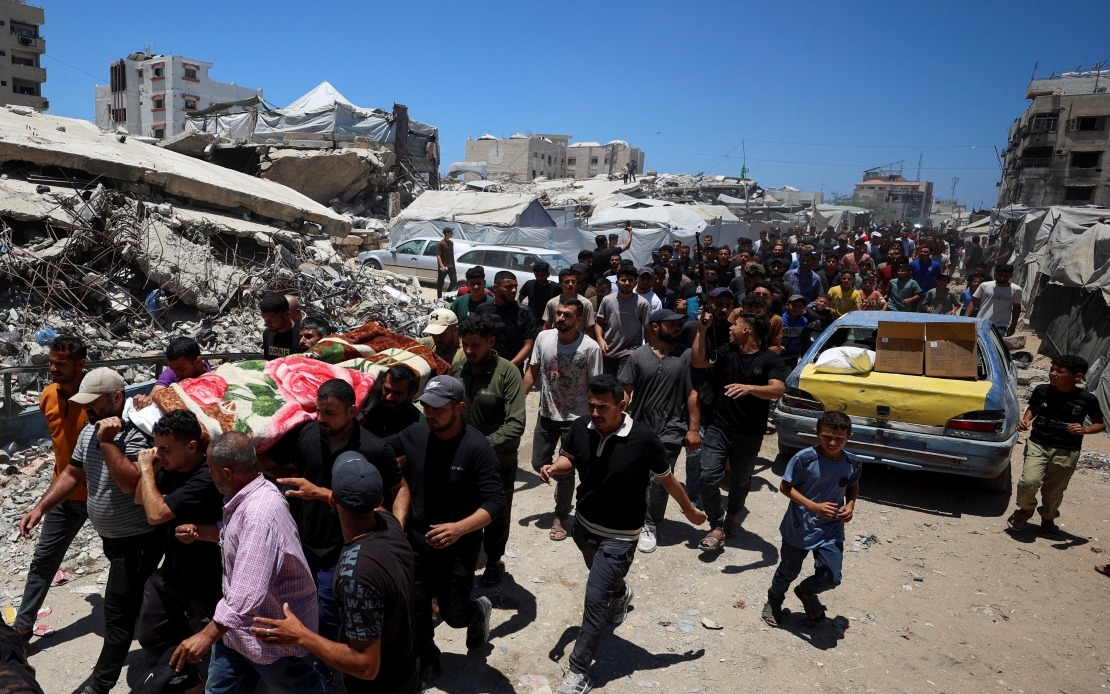
The humanitarian catastrophe in Gaza has worsened dramatically even after the implementation of a ceasefire, with Palestinian authorities documenting 1,021 additional deaths from Israeli military operations since the truce took effect. This grim figure, released by the Palestinian Prime Minister's Office, brings the cumulative death toll in the enclave since October 2023 to 73,032—a staggering toll that underscores the scale of destruction in the coastal territory. The continuation of military operations despite ceasefire arrangements signals the fragile and contested nature of the current pause in hostilities, leaving civilians in perpetual danger.
The humanitarian situation across Gaza has reached critical levels, with the Palestinian government's official communication channels describing conditions as rapidly deteriorating. Residents face persistent Israeli bombardments alongside severe restrictions on the delivery of humanitarian aid, creating a dual crisis of immediate violence and systematic deprivation. The water crisis represents one of the most acute challenges, as contaminated supplies and destroyed infrastructure have forced the vast majority of the population to depend on limited humanitarian assistance for drinking water—a situation that poses serious disease risks in an already fragile environment.
The scale of physical destruction is staggering. More than three-quarters of Gaza's housing stock—specifically 76.6 per cent—has been either destroyed or severely damaged in military operations. This catastrophic loss has displaced nearly one million Palestinians, who now live in makeshift tent settlements offering minimal protection from the elements and disease. The housing crisis compounds every other humanitarian challenge, as displaced families lack secure shelter, sanitation facilities, and basic living conditions necessary for human dignity.
Recent military operations have targeted multiple population centers across Gaza, including air and drone strikes in Nuseirat, Al-Mawasi, Khan Younis, and Gaza City. These attacks have continued to claim civilian lives and deteriorate living standards for residents already struggling with shortages of food, clean water, and medical supplies. International observers and humanitarian organizations have documented these strikes and their impact on civilian populations, raising questions about the protection of non-combatants during operations that ostensibly fall within a ceasefire framework.
The plight of children in Gaza has drawn particular international concern. According to the United Nations Children's Fund, 265 Palestinian children have been killed and more than 400 others have sustained injuries since the ceasefire announcement. These figures underscore how the conflict continues to claim the youngest and most vulnerable members of society, with long-term implications for Gaza's future generations. International humanitarian organizations including Oxfam have brought these statistics before the United Nations Security Council, urging member states to pressure Israeli authorities to allow unfettered humanitarian access and cease operations that endanger civilians.
Beyond Gaza, the occupied West Bank has experienced a surge in forced displacement of Palestinians, according to reports from the United Nations Office of the High Commissioner for Human Rights. Settler violence, home demolitions, movement restrictions, and forced evictions have escalated, creating a pattern of displacement that extends across the West Bank including East Jerusalem. This pressure on Palestinians across multiple territories suggests a broader strategic approach affecting the Palestinian population beyond the immediate conflict zone in Gaza.
Agricultural destruction represents another dimension of the humanitarian crisis often overlooked in casualty discussions. Palestinian Ministry of Agriculture records document the destruction of over 7,200 trees, including more than 1,200 olive trees—plants central to Palestinian livelihoods and cultural heritage—resulting in estimated losses exceeding US$5.17 million. Concurrent arson attacks targeting mosques in the villages of Jiljilya and Mazra' al-Nubani have added to the destruction of civilian infrastructure and religious sites. These attacks on agricultural and religious assets suggest systematic targeting of Palestinian economic and cultural foundations.
Military operations in the West Bank refugee camps of Jenin, Tulkarem, and Nour Shams have forcibly displaced more than 33,000 Palestinians since the beginning of 2025 alone. The refugee camp population, already experiencing decades of displacement and instability, faces renewed pressure and movement restrictions that further constrain their already limited freedoms. These operations compound historical grievances and suggest an intensification of activity in territories technically under Palestinian administrative control.
Conditions in Israeli detention facilities have emerged as a separate humanitarian concern. Prisoners' advocacy organizations have raised alarms about deteriorating conditions, severe overcrowding, and the spread of infectious diseases within detention institutions. The combination of poor sanitation, inadequate medical care, and crowded conditions creates environments conducive to disease transmission and psychological trauma among detainees, many of whom remain held without trial for extended periods.
Despite the overwhelming humanitarian challenges and ongoing conflict, Palestinian educational institutions have continued functioning under extraordinary constraints. The Palestinian government has completed preparations for the annual General Secondary Education Examination, which will involve approximately 91,000 students, including roughly 37,000 from Gaza. Remarkably, Gaza's examination candidates will sit for their tests electronically for the third consecutive year, a testament to educational persistence amid destruction. This effort to maintain educational continuity represents an attempt to preserve normalcy and future opportunity even as present conditions deteriorate.
For Malaysian and Southeast Asian observers, the situation in Gaza demonstrates the humanitarian costs of prolonged conflict and the limitations of ceasefire arrangements without comprehensive political settlements. The scale of displacement, destruction, and civilian casualties raises questions about international humanitarian law enforcement and the mechanisms available to protect civilian populations in conflict zones. The continuation of military operations despite ceasefire frameworks illustrates how fragile temporary truces can be without underlying political agreements addressing root causes of conflict.

