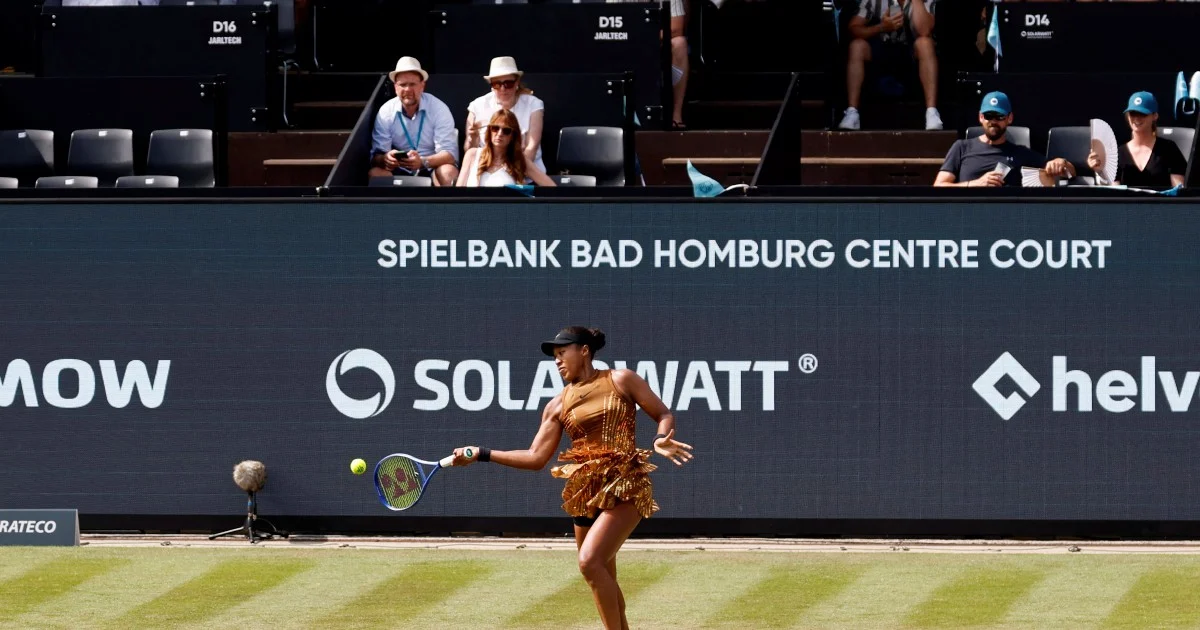
Naomi Osaka reached the quarterfinals of the Bad Homburg tournament in Germany on Tuesday, dismissing Belgium's Elise Mertens with a composed 6-3, 6-3 victory that showcased her ability to recover from early competitive difficulties. The Japanese star's path through the second round demonstrated resilience despite grappling with both the oppressive heat at the German venue and her continued tendency to struggle early in matches before finding her rhythm.
Osaka's performance against Mertens follows a familiar pattern from her recent campaigning on grass courts. The former world number one has faced persistent challenges establishing dominance in opening sets across her return to competitive tennis this season. Against Mertens, she encountered another subdued beginning where her powerful baseline game failed to generate its customary authority. Yet rather than allowing this sluggish commencement to derail her advancement, Osaka methodically elevated her intensity as the opening set progressed, ultimately seizing control before Mertens could capitalise on any early momentum.
The grueling atmospheric conditions at Bad Homburg presented an additional obstacle for both competitors. The sweltering German summer heat, which has tested players throughout the tournament, appeared to take its toll on energy reserves and movement patterns. However, Osaka's superior physical conditioning and court intelligence allowed her to manage these environmental challenges more effectively than her opponent. Her service game remained comparatively steady, and her ability to dictate rallies from the baseline gradually became more pronounced as the match unfolded across the two sets.
Mertens, ranked outside the top 50 in world standings, entered the encounter as a capable grass-court operator with respectable tournament experience. The Belgian competitor has shown the capacity to trouble higher-ranked adversaries on quick surfaces where her reliable groundstrokes can prove effective. Nevertheless, Osaka's eventual ascendancy underscored the quality differential between the two players when operating at full capacity. Once the Japanese player found her tactical footing, she systematically broke down Mertens's resistance with increasingly aggressive shot selection and superior movement patterns.
The quarterfinal berth represents a crucial milestone in Osaka's ongoing rehabilitation following her extended absence from professional competition. Her recent tournament appearances have been sporadic, and she has worked through the inevitable adjustment period required to return to match sharpness after prolonged time away from competitive pressure. Each advance through tournament rounds provides valuable rhythm and match practice heading into the latter stages of the grass-court season, with Wimbledon looming as the season's most prestigious objective for elite players.
Osaka's grass-court credentials remain considerably strong despite her recent competitive inconsistency. Her powerful serve and aggressive baseline game possess natural affinity for the fast surface, where points tend to resolve quickly and aggressive tennis receives premium reward. Her two Grand Slam titles demonstrate her capacity to perform at the sport's highest level, and her proven experience on major stages suggests that tournament progression could accelerate as she continues rebuilding match fitness and competitive confidence.
The Bad Homburg tournament itself occupies a notable position in the grass-court preparation calendar. Held in the week immediately preceding Wimbledon, the German event traditionally attracts elite players seeking final-stage competitive sharpening before the year's most important tennis championship. For Osaka, the opportunity to progress through multiple rounds against varied opposition provides precisely the competitive exposure necessary to refine her game before Wimbledon's demands.
Looking ahead, Osaka faces progressively stiffer competition as the tournament structure narrows toward its culmination. The quarterfinal draw will likely pit her against players ranked considerably higher in world standings, potentially including seeded competitors who have performed consistently throughout the season. These matchups will offer genuine examination of her current form and competitive readiness, revealing whether her performance against Mertens represented genuine restoration of her characteristic dominance or merely a successful negotiation of a manageable obstacle.
Osaka's ability to overcome early-match tentativness and environmental adversity against Mertens suggests that her recent return to serious competition is beginning to yield productive results. The trajectory appears encouraging, though genuine assessment of her current standing requires observation of how she performs against increasingly formidable opposition. For Malaysian tennis enthusiasts and Southeast Asian followers of women's tennis, Osaka's continued progress carries particular interest given her global prominence and the increasing investment across the region in developing elite female players capable of competing at comparable levels.
The implications of Osaka's advancing deep into grass-court tournaments extend beyond individual tournament success. Her participation and competitive performances at events like Bad Homburg help maintain elevated visibility for women's tennis in major markets and contribute to the sustained commercial viability of elite women's professional tennis infrastructure. As the sport continues navigating post-pandemic challenges and seeking renewed audience engagement, marquee players returning to competitive prominence carries measurable significance for the broader professional tennis ecosystem.

