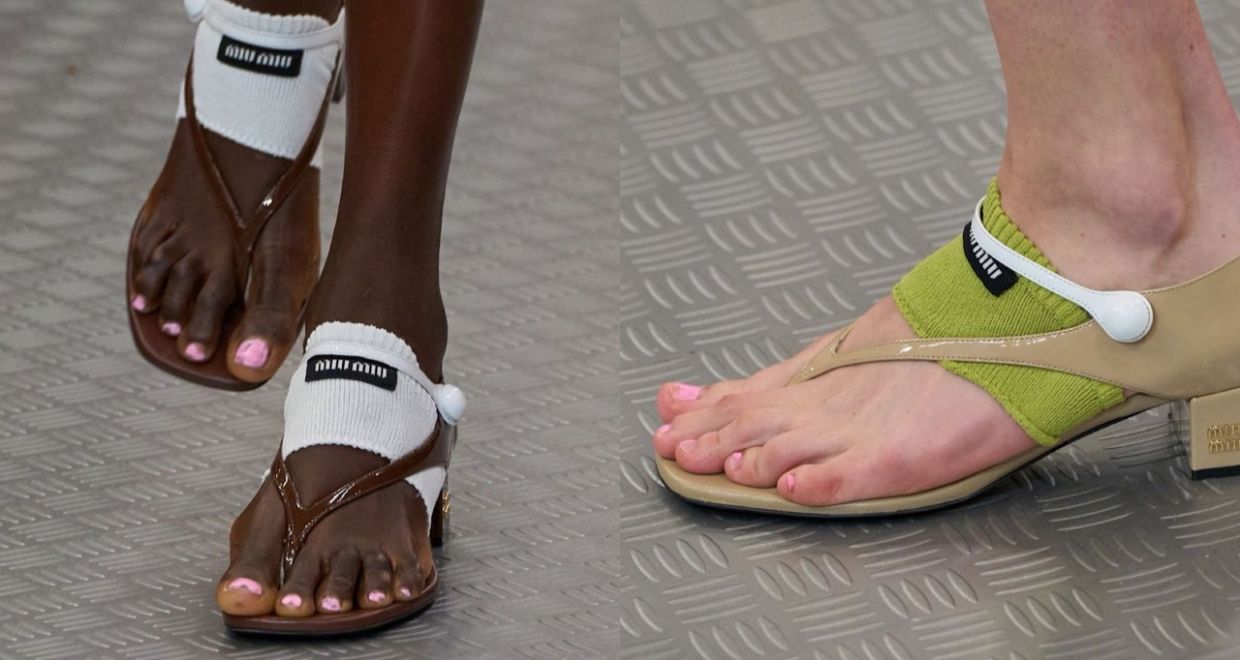
The eternal summer dilemma of choosing between bare feet and full socks may finally have a solution gaining traction across Asian fashion markets. Open-toe socks, a deceptively simple concept where fabric covers only the foot's arch while leaving toes completely exposed, are carving out surprising momentum among style-conscious consumers navigating the region's increasingly warm seasons. Retailers across South Korea and beyond are capitalising on this unusual hybrid, which sits comfortably in the paradoxical space between minimalism and coverage that many tropical and subtropical shoppers struggle to navigate.
The phenomenon gained particular momentum during an early heat wave in South Korea, which accelerated consumer appetite for lightweight summer footwear categories. Data from online retail platforms reveals striking growth patterns: summer shoe sales including mules, slides, and flip-flops jumped 80 percent between May 31 and June 7 compared to the previous year, according to fashion platform W Concept. More dramatically, style commerce platform Ably reported that flip-flop sock transactions surged 1,664 percent over a one-month period from mid-May to mid-June, while search interest climbed 3,227 percent. These figures suggest something beyond casual adoption—they point to a genuine shift in how consumers are thinking about summer footwear pairings.
The trend's origins trace to the haute couture sphere, where luxury brand Miu Miu introduced an unconventional take on socks in its 2025 Spring/Summer collection. Rather than the traditional full-coverage design, the Italian fashion house presented hosiery that wrapped only around the arch, creating an aesthetic that seemed initially impractical but carried immediate creative prestige. Celebrity endorsement accelerated adoption, particularly when actor Cha Jung-won showcased the look on social media, pairing sky-blue flip-flops with beige knit leg warmers in a styling choice that would have seemed absurd mere months earlier but now reads as deliberate fashion intelligence.
What distinguishes contemporary open-toe socks from their winter cousins is material philosophy. Rather than prioritising insulation and warmth, modern versions employ sheer fabrics, mesh construction, and loosely knit materials that emphasise breathability and visual impact. This represents a fundamental reimagining of what socks can accomplish in warmer months—transforming them from purely functional layers into styling accessories that introduce colour, texture, and visual interest to otherwise straightforward summer shoe pairings. The distinction matters significantly for Southeast Asian consumers accustomed to year-round heat, where traditional winter hosiery genuinely becomes unwearable during peak seasons.
Retail experts articulate the psychological appeal of this category with surprising clarity. Representatives from luxury platform 29CM describe open-toe socks as a "summer cheat code" for elevating predictable footwear combinations. The positioning acknowledges consumer anxiety: bare feet feel insufficient in certain styling contexts, while conventional socks feel oppressively stuffy and dated. Open-toe versions resolve this tension by allowing foot exposure while maintaining visual connection between foot and shoe, creating layered styling possibilities that feel both fresh and intentional. This positioning speaks directly to fashion-forward consumers who resist appearing unmeasured or unthinking in their aesthetic choices.
Practicality grounds this trend beyond pure aesthetics. The fabric covering the foot's upper surface meaningfully reduces friction and chafing that frequently emerges from flip-flop straps, a consideration that resonates particularly during extended wear. For regions experiencing monsoon seasons—relevant to significant portions of Southeast Asia including Malaysia—open-toe socks paired with rain boots offer skin irritation prevention while maintaining seasonal appropriateness. This dual functionality of visual interest combined with genuine comfort improvement strengthens the trend's staying power beyond momentary fashion whimsy.
Styling guidance emerging from fashion professionals emphasises accessible entry points for consumers experimenting with the format. Foundational neutral shades including grey, black, and white pair intuitively with existing wardrobe staples, requiring minimal aesthetic risk. Grey socks with either black flip-flops or ballerina flats complement denim, Bermuda shorts, and satin skirts through conventional colour harmony. For consumers seeking bolder expression, vivid alternatives including yellow, pink, and sky blue create deliberate visual statements, while intentionally mismatching sock and shoe colours introduces playful tension that reads as sophisticated rather than careless.
The styling framework emphasises restraint in remaining wardrobe elements, recognising that open-toe socks inherently command visual attention. When socks and footwear already function as focal points, the remainder of the outfit benefits from simplicity—allowing coordinating elements like t-shirts, shorts, or basic skirts to recede and permit the lower half to maintain design prominence. Patterns introduced through socks pair particularly effectively with equally patterned tops featuring dots or floral elements, creating cohesive visual narratives rather than chaotic eclecticism.
For Malaysian and broader Southeast Asian consumers, this trend carries particular relevance given climate conditions and contemporary fashion consciousness. The region's persistently warm temperatures make traditional hosiery genuinely uncomfortable during extended daytime hours, yet streetwear culture increasingly values intentional styling that extends to footwear treatment. Open-toe socks offer a culturally intelligent compromise that respects both environmental conditions and aesthetic expectations. Fashion editors like Je Hye-yoon articulate a fundamental shift in sock philosophy: these items transition from hidden functional necessities to visible design elements worthy of deliberate curation and expression.
The broader implications suggest that seasonal fashion boundaries continue fragmenting as consumer demands become more nuanced and regional climate realities demand practical solutions. Rather than importing Northern Hemisphere seasonal frameworks wholesale, Asian markets increasingly generate homegrown solutions addressing specific environmental and cultural contexts. Open-toe socks exemplify this evolution—they emerge from genuine need while achieving creative expression, ultimately suggesting that the most compelling trends often solve real problems while looking compelling in the process.

