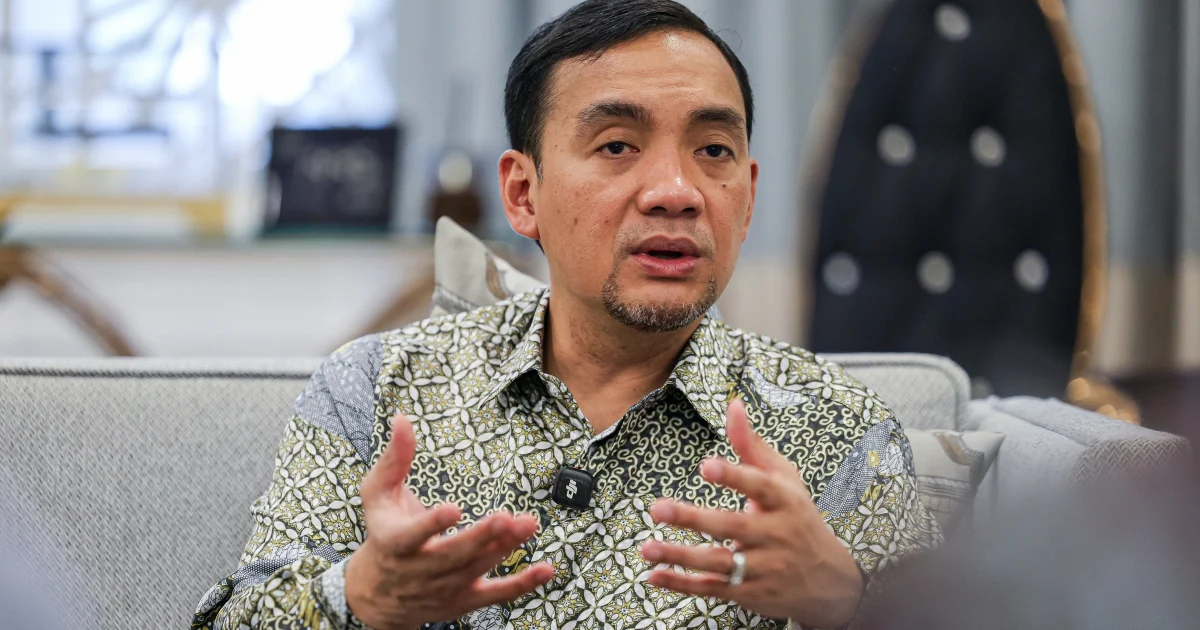
Datuk Onn Hafiz Ghazi, serving as caretaker Menteri Besar of Johor, has publicly dismissed allegations that he attributed the dissolution of the state assembly to a direct order from the palace. The claim in question had been attributed to him by Datuk Dr Mohd Puad Zarkashi, marking a sharp point of contention in Johor's ongoing political dynamics.
The denials underscore the delicate relationship between the executive and the constitutional monarchy in Malaysia's federal structure. When a state assembly faces dissolution, the constitutional process involves multiple players—the Menteri Besar, the Sultan, and the state assembly itself—each with defined roles and responsibilities. Any suggestion that the palace unilaterally "ordered" such a consequential political move touches on fundamental questions about the exercise of executive discretion within constitutional bounds.
Johor, as one of Malaysia's largest and most influential states, holds particular significance in the national political landscape. The state serves as an economic powerhouse and has historically played a crucial role in federal coalition-building. Political stability or instability in Johor thus carries ripple effects across regional and national politics, making statements by its top officials matters of genuine public interest and careful interpretation.
Onn Hafiz's position as caretaker Menteri Besar places him in a transitional administrative role, typically assumed when an assembly is dissolved and fresh elections are being prepared. During such periods, the Menteri Besar operates under constrained authority, managing day-to-day governance while the electoral machinery moves forward. In this context, clarifying who initiated critical decisions becomes particularly important for maintaining transparency and public confidence in institutions.
The nature of the dispute reveals how political communication can be easily misconstrued or weaponised in Malaysia's competitive landscape. Whether Onn Hafiz's original remarks were misquoted, taken out of context, or deliberately misrepresented remains unclear from the available evidence. Such disputes over what was actually said during political exchanges have become increasingly common, with different factions interpreting the same statements through vastly different lenses.
From a constitutional standpoint, the Sultan of Johor possesses certain prerogatives, including acting on advice regarding assembly dissolution. However, this power is typically exercised on the recommendation of the Menteri Besar or following a loss of confidence in the government. The distinction between being advised and being ordered reflects important constitutional principles about executive accountability and the proper relationship between political leadership and constitutional institutions.
The public denial by Onn Hafiz appears designed to reaffirm that his government's decisions, even if ultimately executed through formal constitutional mechanisms involving the palace, originated from political judgment and necessity rather than external imposition. This narrative carries implications for how voters and political observers understand governance—whether officials are executing their own vision for state administration or merely implementing directives from above.
Johor's recent political history has witnessed significant shifts in coalitions and power alignments, contributing to an environment where each statement by senior officials is scrutinised for hidden meanings or strategic positioning. Onn Hafiz's clarification may therefore reflect not only a desire to set the record straight but also a calculated attempt to project autonomous leadership ahead of electoral consolidation.
For Southeast Asian observers and Malaysian readers outside Johor, such exchanges illuminate how constitutional monarchies function in practice across the region. The interplay between formal constitutional roles and political reality often diverges from textbook descriptions, and managing perceptions about this relationship remains central to maintaining both institutional credibility and political legitimacy.
The disagreement between Onn Hafiz and Dr Mohd Puad Zarkashi also touches on broader questions about political accountability and communication in Malaysian governance. When significant decisions are announced, clarity about who determined them and why becomes essential for democratic accountability. If palace involvement is merely formal endorsement of executive recommendations, saying so explicitly prevents misunderstandings that could undermine public trust in institutions.
Moving forward, this dispute may influence how political figures in Johor and elsewhere articulate their relationship with constitutional authorities. The careful language now required around such matters reflects the high stakes involved in managing perceptions about governance, institutional autonomy, and the proper exercise of political and royal prerogatives in Malaysia's complex constitutional framework.

