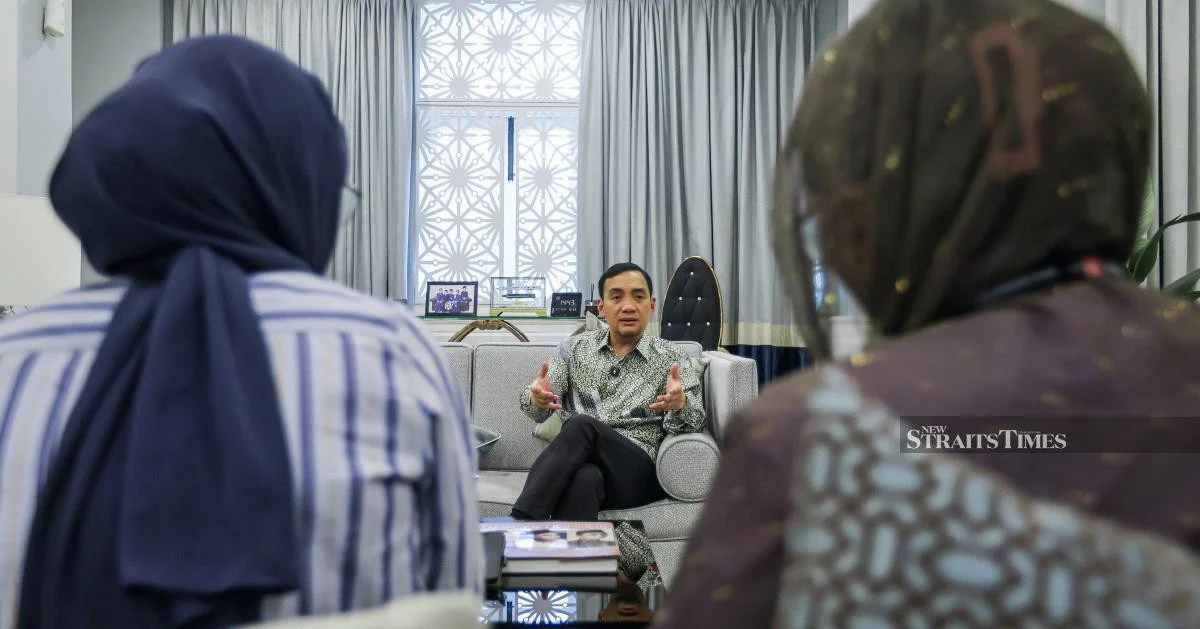
Datuk Onn Hafiz Ghazi, serving as caretaker Johor Menteri Besar, has raised pointed questions about the opposition's preparedness to lead the state, using their delayed announcement of a chief ministerial candidate as evidence of organisational shortcomings. The timing of his remarks underscores the intensifying political battle ahead of Johor's state elections, with both coalitions vying for voters' confidence in their capacity to administer Southeast Asia's second-largest state by economy.
The caretaker leader's challenge reflects a broader campaign strategy employed by governing coalitions across Malaysia: questioning opposition competence and governance readiness. This approach attempts to shift electoral discourse away from policy specifics toward character and organisational capability, a tactic that has proven effective in previous Malaysian state contests. By highlighting the opposition's apparent lack of internal coordination in selecting a chief ministerial nominee, Onn Hafiz implicitly suggests that voters cannot trust an undisciplined political force to manage state affairs.
The absence of an opposition menteri besar announcement carries tangible political weight in Malaysian state elections. Voters often consider such declarations crucial indicators of a coalition's seriousness and internal unity. When an opposition bloc cannot agree on its chief executive candidate before campaigning begins, it signals potential governance complications that might extend beyond election season. This becomes especially significant in Johor, where the Menteri Besar position traditionally carries substantial influence over state development, resource allocation, and bureaucratic direction.
Johor's political significance extends well beyond its borders. As Malaysia's economic powerhouse in the southern region and gateway to the Klang Valley industrial corridor, the state's governance directly affects not only local prosperity but also regional economic dynamics and investment flows. A transition of power—should it occur—would reshape Johor's trajectory on industrial policy, infrastructure development, and cross-border economic cooperation with Singapore. Investors and neighbouring states carefully monitor such transitions, making the opposition's apparent disorganisation a legitimate governance concern.
Onn Hafiz's questioning also serves to energise the ruling coalition's grassroots supporters. By presenting the opposition as internally fractious and unprepared, he reinforces the narrative that continuity and stability favour the incumbent administration. This messaging is particularly potent in Malaysian politics, where voters frequently weigh perceived competence and order against the risks associated with untested alternatives. The opposition's silence on its chief ministerial candidate inadvertently amplifies such narratives.
However, the opposition's delay in announcing a candidate may reflect more complex political calculations than simple disorganisation. Coalition partners often withhold such announcements strategically, using them as leverage points in internal negotiations or as mechanisms to build momentum closer to the official campaign period. The timing also allows flexibility should electoral circumstances shift or should opinion polls suggest a different candidate might perform better. Nevertheless, from a public perception standpoint, such delays invite scrutiny and criticism from rival coalitions.
For Malaysian voters across the peninsula observing Johor's political contest, the state election serves as a testing ground for coalition strategies and governance priorities. The opposition's response to Onn Hafiz's challenge—whether through prompt candidate announcements, policy clarifications, or counter-narratives about the incumbent administration's record—will substantially shape campaign momentum. Similarly, the ruling coalition's efforts to leverage organisational advantages against perceived opposition weaknesses will determine how voters ultimately evaluate their choices.
The larger context involves ongoing consolidation within Malaysia's political landscape. Johor's election occurs as both major coalitions struggle with internal coherence and strategic direction at the national level. A convincing victory for either side in Johor could provide psychological momentum for subsequent contests and reinforce particular coalition narratives about governance capability. Conversely, a narrow outcome might suggest that Malaysian voters are genuinely undecided between competing visions for the state's future.
Onn Hafiz's intervention also illustrates how caretaker government figures navigate their peculiar constitutional position. While technically non-partisan administrators during the election period, caretaker leaders frequently employ their official platform to advance ruling coalition interests through carefully framed criticisms of opposition rivals. This blurs conventional boundaries between administrative neutrality and campaigning, a phenomenon that regularly surfaces in Malaysian electoral contests and occasionally draws scrutiny from election observers and civil society organisations.
The opposition's eventual announcement of its menteri besar candidate will prove decisive in shifting electoral narratives. Should they present a credible, widely-accepted nominee with strong administrative credentials and coalition support, they can effectively neutralise Onn Hafiz's present criticism and refocus campaign discourse on substantive governance issues. Conversely, prolonged silence or announcement of a divisive candidate would validate the caretaker leader's present questioning and potentially consolidate support for the incumbent administration among undecided voters concerned about governance stability.
Johor voters ultimately hold the power to resolve such competing claims about competence and readiness. Their verdict on Onn Hafiz's challenge—delivered through electoral outcomes—will indicate whether they view the opposition's apparent organisational gaps as disqualifying or whether they believe fresh leadership merits consideration despite coordination difficulties. The state's economic future, infrastructure priorities, and regional relationships may well hinge on how Malaysian voters weigh such governance concerns against their desire for political change.

