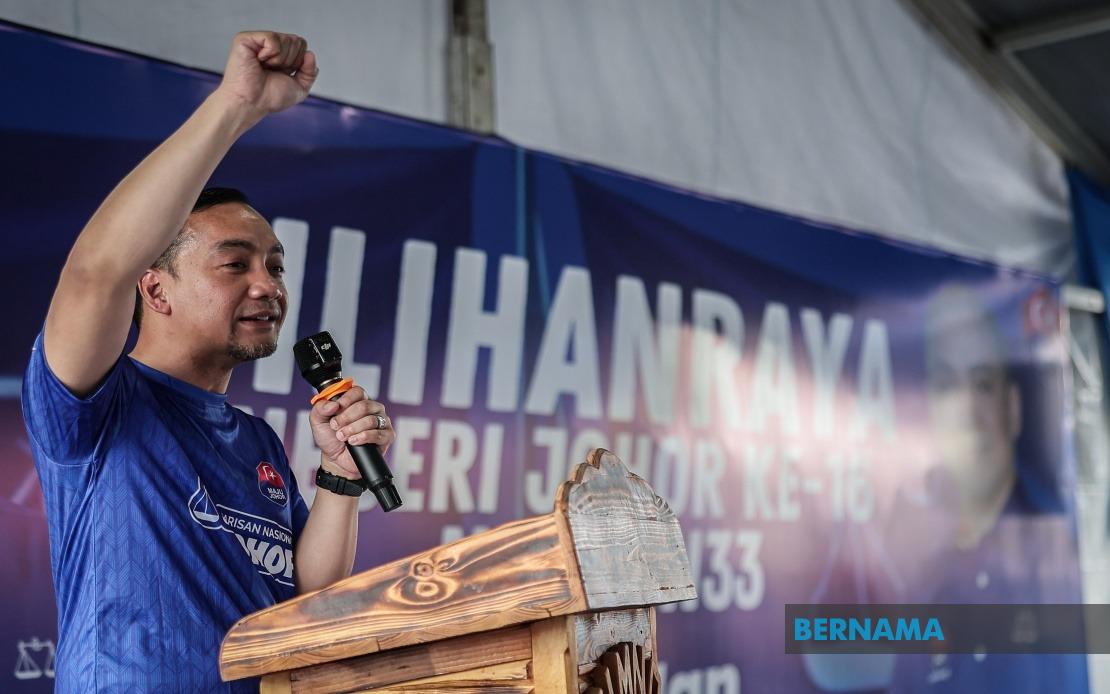
The Barisan Nasional appears to be riding a wave of optimism in the Endau state seat, where candidate Alwiyah Talib has generated what coalition officials describe as encouraging voter enthusiasm during the final stretch of campaigning. Johor Menteri Besar Datuk Onn Hafiz Ghazi, speaking at a campaign event in Mersing on June 29, attributed the positive reception to Alwiyah's standing as a proven administrator and her decision to rejoin BN after a period with rival Perikatan Nasional. The coalition is treating this momentum as crucial momentum builders with polling set for July 11.
Alwiyah's political journey illuminates broader realignments within Malaysia's electoral landscape. Originally elected to the Endau seat under BN's banner during the 14th General Election, she subsequently joined Bersatu and contested the 2022 Johor state election as a Perikatan Nasional candidate, winning by a comfortable margin of 3,041 votes despite competition from four other contestants. Her return to BN signals the kind of fluid political movements that have characterised Malaysian politics in recent years, particularly as parties vie for experienced candidates capable of holding marginal or competitive seats.
Onn Hafiz's framing of Alwiyah's candidacy within the concept of Rumah Bangsa—UMNO president Datuk Seri Dr Ahmad Zahid Hamidi's umbrella initiative emphasising coalition unity and inclusivity—reflects how BN leadership is attempting to construct a narrative around defections and returns. Rather than portraying her movement as opportunistic, the coalition presents it as consistent with principles of national unity and pragmatic governance. This rhetorical strategy matters because it normalises candidate mobility and provides cover for voters concerned about backing politicians perceived as switching sides for personal gain.
The Endau campaign event, styled as "Santai ONN X ONN Bersama Menteri Besar Johor," underscores how contemporary Malaysian political campaigns blend grassroots engagement with entertainment and accessibility. By adopting a relaxed, personable format rather than formal rallies, BN appears to be adapting its campaign methodology to contemporary voter preferences, particularly among younger demographics and urban populations increasingly sceptical of traditional political theatre. Onn Hafiz's presence alongside both Alwiyah and BN's Tenggaroh candidate Mohd Youzaimi Yusof aimed to project unified leadership across multiple constituencies.
For context within the broader Johor political environment, the state has historically been BN's strongest bastion, though recent electoral cycles have demonstrated vulnerability to challenges from PAS-led coalitions and other opposition groupings. The positioning of multiple BN candidates in the Endau-Tenggaroh corridor suggests the coalition views this district as strategically significant, possibly reflecting demographic or swing-voter concentrations that could influence overall state results. Johor's political complexion carries disproportionate weight in national calculations given its size, economic importance, and historical role as a BN stronghold.
Alwiyah's appeal as articulated by BN emphasises her track record of constituent service and administrative capability, qualities that transcend party affiliation in voter calculations. Onn Hafiz's comment that "she has always worked for the people" regardless of her party registration attempts to shift evaluation criteria away from partisan consistency toward performance metrics—a potentially effective argument in elections where voters prioritise bread-and-butter issues over ideological considerations. This messaging resonates particularly in constituencies like Endau, likely comprising mixed urban and rural populations with diverse economic interests.
The campaign's smooth progression, as Onn Hafiz reported, contrasts with previous Johor electoral cycles that occasionally witnessed heated confrontations or logistical complications. This relative tranquility may reflect both BN confidence and opposition restraint, or alternatively, lower overall campaign intensity suggesting voters view the outcome as largely predetermined in certain areas. Early voting scheduled for July 7 provides additional logistics and represents a growing feature of Malaysian elections, potentially affecting campaign strategies and voter mobilisation efforts in ways that differ from previous contests.
Regionally, the Johor election holds implications beyond state boundaries. As Malaysia's largest opposition-ruled state by population alongside Selangor, and as a traditional BN stronghold recently threatened by opposition incursions, Johor's 2023 results will shape calculations for the next federal election and influence confidence within UMNO-led structures. A decisive BN victory would reinforce narratives of coalition resilience, while opposition gains would suggest persistent weakness in the coalition's traditional support base. Southeast Asian observers watching Malaysian politics as a bellwether for democratic competition in the region would similarly scrutinise whether established parties can adapt to voter demands through candidate renewal strategies like Alwiyah's integration.
The Rumah Bangsa framing, though emphasising unity, also acknowledges fissures within BN that necessitate inclusive messaging. By welcoming defectors and portraying flexibility as principled rather than expedient, BN attempts to present itself as a broad-based coalition capable of accommodating diverse political voices while maintaining coherence. Whether voters accept this self-presentation will be evident in polling results, but the messaging reflects how coalitions attempt to manage internal tensions while projecting unified purpose to electorates.
As voting approaches, the intensity of ground-level campaigning often peaks during final weeks when volunteer mobilisation, targeted advertising, and direct voter contact accelerate. BN's apparent confidence in Endau, communicated through senior leadership visibility and positive framing of local reception, aims to generate self-fulfilling momentum—voters perceive the candidate as winning and subsequently back the perceived frontrunner. Whether Alwiyah's community reception translates into the supermajority BN seeks across multiple constituencies will ultimately determine whether this optimism proves justified or merely reflects campaign-period aspiration.

