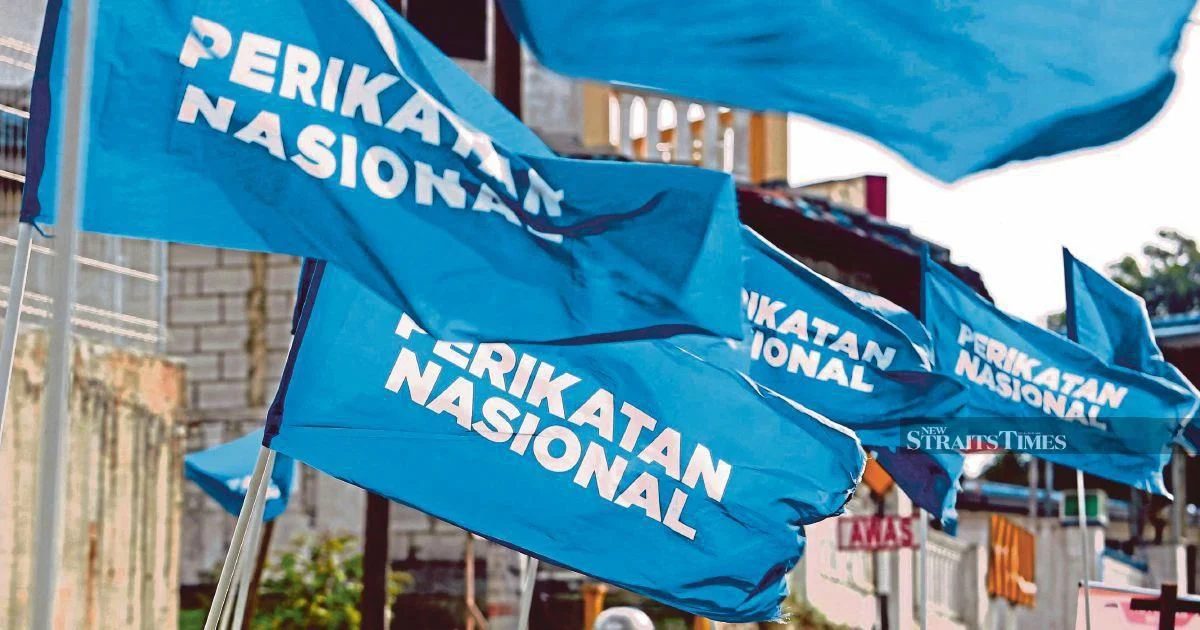
The internal tensions afflicting Perikatan Nasional deepened yesterday when Pas leadership publicly questioned Bersatu's entitlement to deploy the PN coalition logo for the forthcoming elections in Johor and Negri Sembilan. The challenge represents the latest manifestation of simmering discontent within the broader coalition structure, signalling that foundational disputes over branding rights and organizational authority remain unresolved among the member parties.
Pas officials, speaking from their stronghold in Kota Baru, underscored that the authority to sanction usage of the PN logo rests exclusively with the coalition's chairman. This position fundamentally contests any unilateral decision by Bersatu to employ the shared electoral branding, implying that the party's leadership has either overstepped procedural boundaries or acted without securing the necessary formal clearance. The assertion carries implications beyond mere administrative protocol, suggesting deeper disagreements about power distribution and decision-making hierarchies within the coalition framework.
The dispute points to unresolved governance questions that have plagued Perikatan Nasional since its formation. Member parties have long wrestled with defining clear mechanisms for resolving internal conflicts and establishing who possesses authority to make critical decisions on behalf of the coalition. Without transparent and widely accepted protocols, individual parties risk making moves that other partners perceive as presumptuous or self-serving, breeding further mistrust and fragmentation.
Bersatu's apparent decision to use the PN logo without explicit authorization from the coalition chairman reveals the absence of binding agreements or enforceable guidelines governing such matters. This situation reflects a broader problem within Malaysian coalition politics: many partnerships are built on personal relationships and informal understandings rather than comprehensive institutional structures. When relationships deteriorate or leadership changes occur, these ad-hoc arrangements quickly become sources of contention rather than stabilizing forces.
For Malaysian voters in Johor and Negri Sembilan, such internal squabbles carry practical significance. Electoral campaigns become muddied when coalition members display conflicting messages about organizational unity and decision-making processes. Voters seeking clarity about which parties genuinely function as cohesive political entities may grow sceptical when public disagreements expose underlying structural weaknesses. This erosion of confidence can translate into unpredictable electoral outcomes, as voters lose faith in whether coalitions can effectively deliver on campaign promises.
The timing of this clash, occurring immediately before critical state-level elections, heightens its political consequences. Both Johor and Negri Sembilan represent strategically important territories where Perikatan Nasional has invested considerable effort to build momentum. Campaign coherence and unified presentation typically influence electoral performance, and visible internal disputes risk diluting the coalition's appeal to undecided voters who value stability and organizational discipline. Opposition parties, meanwhile, gain obvious ammunition to highlight PN's dysfunction.
Pas's position on logo authorization reflects its interests in maintaining organizational control and preventing any single member party from dominating coalition representation. By insisting that only the chairman possesses approval authority, Pas seeks to enforce a mechanism that protects minority partners' interests and prevents larger or more aggressive parties from unilaterally claiming coalition resources or branding. This defensive posture indicates that Pas leadership views Bersatu's actions as a potential precedent that could undermine the coalition's foundational principle of collective decision-making.
The logo dispute must be understood within the context of broader Perikatan Nasional dynamics, where personality-driven politics and ideological differences regularly create friction. Bersatu and Pas operate from somewhat different political bases and have distinct organizational cultures. Bersatu, originating from a split within UMNO, maintains close connections to Malaysia's Malay-Muslim middle class and business interests. Pas, rooted in Islamist movements, draws support from voters prioritizing Islamic governance principles. These different constituencies sometimes generate conflicting policy preferences and electoral strategies, manifesting in arguments about representation and resource allocation.
The chairman-led authorization structure that Pas champions offers theoretical advantages for coalition stability. Centralizing decisions about logo usage and other major matters theoretically prevents maverick parties from undermining collective strategy. However, such centralization also risks concentrating power in ways that smaller or less-favoured partners perceive as exclusionary. The effectiveness of this arrangement ultimately depends on the coalition chairman's perceived neutrality and acceptance by all member parties—a condition that may not currently exist within Perikatan Nasional.
Moving forward, this logo controversy necessitates that Perikatan Nasional either formalize and enforce explicit protocols governing such matters or accept ongoing disputes that damage coalition credibility. Malaysian political coalitions have historically struggled with institutionalization, often relying on ad-hoc arrangements that collapse when trust erodes. Whether PN can establish binding governance structures before upcoming elections remains uncertain, but the current trajectory suggests internal divisions will only intensify without concrete institutional reforms.
For the Johor and Negri Sembilan campaigns specifically, resolution of this dispute carries material consequences. Unclear branding and authorization create voter confusion and provide opposition parties with easy attack points. Both state elections offer Perikatan Nasional opportunities to strengthen its position ahead of the subsequent general election cycle, making the stakes unusually high. Yet instead of unified campaign preparations, coalition members are instead publicly contesting fundamental matters of organizational authority.