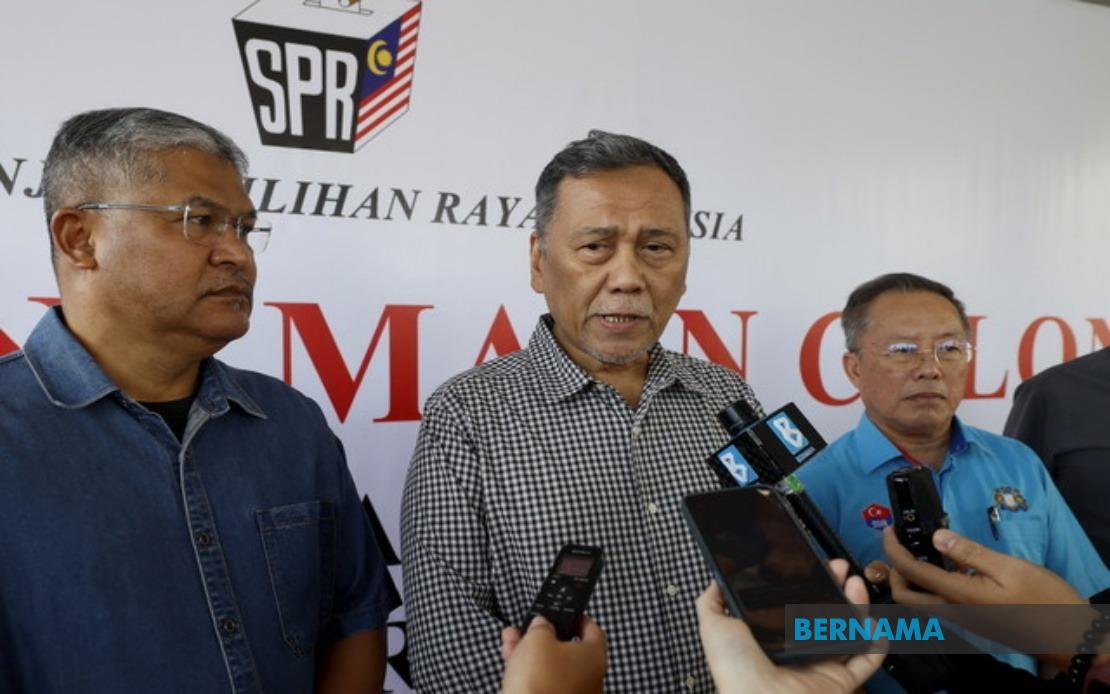
As Johor prepares for its state election on July 11, the Election Commission disclosed that nomination form sales have reached 593, yet only 133 candidates have formally committed to contesting by paying their required deposits. Election Commission chairman Datuk Seri Ramlan Harun acknowledged the disparity during an inspection of the Maharani constituency nomination centre in Muar, noting that the final tally would likely increase substantially before the formal nomination process commences tomorrow morning.
The gap between forms purchased and deposits paid reflects a common pattern in Malaysian electoral cycles, where prospective candidates often take time to secure party endorsement, arrange financing, and finalise administrative requirements before making their participation official. Ramlan's statement that candidates still have until tomorrow morning to complete formalities suggests the commission anticipates a surge in deposit payments in the final hours before the deadline. This last-minute rush is typical in Malaysian elections, as candidates sometimes wait for confirmation of their electoral divisions or settle internal party selection disputes before proceeding.
With 56 state seats contested across Johor, the nomination-to-confirmation ratio indicates that roughly one in four form purchasers had moved forward with deposit payments by the reporting deadline. This conversion rate, while seemingly low, does not necessarily signal weak electoral interest. Many prospective candidates may have purchased forms speculatively or to explore candidacy options before making financial commitments, a practice particularly common among independent candidates and those from smaller parties testing their viability in specific constituencies.
The Election Commission has deployed comprehensive preparations across all 56 nomination centres statewide, having conducted two consecutive trial runs to ensure smooth operations. Ramlan's emphasis on readiness underscores the logistical complexity of managing simultaneous nominations across multiple constituencies. The Maharani returning officer, Zainal Eran, provided specific details about crowd management, detailing how only the candidate, proposer, and one designated supporter would be permitted inside nomination centres, while additional party supporters would occupy designated field areas separated by barriers.
The security arrangements reveal the Election Commission's concern about maintaining order during the nomination process, a critical juncture in electoral campaigns when emotions often run high and inter-party tensions surface. By physically segregating supporters of different political parties and restricting interior access to essential personnel, authorities aim to prevent confrontations and ensure the nomination process remains dignified and procedurally sound. Such measures have become standard practice in Malaysian elections, reflecting lessons learned from previous electoral cycles.
The political landscape for the Johor contest encompasses three major coalitions contesting vigorously for influence in Malaysia's southern stronghold. Pakatan Harapan has committed to fielding candidates across all 56 seats, with PKR contributing 20 candidates, Amanah 19, and DAP 17. This comprehensive slate demonstrates the coalition's determination to challenge traditional power structures in a state where Barisan Nasional has historically maintained significant influence. The distribution of seats among the three parties reflects internal coalition negotiations and assessments of constituency-level competitiveness.
Barisan Nasional, the traditional ruling coalition, likewise plans to contest all 56 seats, with UMNO fielding 36 candidates, MCA 16, and MIC four. This comprehensive approach mirrors Pakatan Harapan's strategy, indicating both coalitions view the election as a significant ideological and political contest that demands maximum deployment of resources and candidates. The allocation of seats among Barisan's component parties reflects their respective membership bases and historical electoral performance in particular regions of Johor.
Perikatan Nasional's strategy differs markedly from its larger rivals, adopting a selective approach with PAS contesting 11 seats, Bersatu 16, the Malaysian Indian People's Party five, and Pejuang one. This more limited footprint suggests Perikatan is focusing its resources on constituencies where component parties assess they have competitive advantages or existing support bases. The Malaysian United Democratic Alliance will contest four seats, while Parti Sosialis Malaysia will field a single candidate, indicating the participation of smaller political entities seeking to build electoral presence or establish policy platforms.
Of particular interest is Parti Bersama Malaysia's inaugural foray into electoral politics, committing to contest 15 state seats. The party's entry into competitive electoral politics represents an attempt to establish itself as a viable political force in Johor. New parties often use state elections as testing grounds to develop campaign machinery, refine messaging, and gauge public receptivity before contesting federal elections, where competition intensifies considerably.
The electoral calendar established by the Election Commission provides candidates and voters with clear timelines for campaign activity. With nomination day set for tomorrow, early voting scheduled for July 7, and polling day designated for July 11, the compressed timeline compresses the campaign period into approximately two weeks. This relatively brief campaign window, compared to federal elections, reflects the state-level nature of the contest but still permits parties to mobilise supporters and articulate policy positions.
The Johor dissolution on June 1 triggered the electoral process following political developments within the state that necessitated a return to voters. The state's electoral significance extends beyond Johor itself, as results often provide indicators of broader electoral sentiment that may influence national political calculations. Johor's substantial population and economic importance render the state a bellwether for Malaysian politics, with outcomes frequently analysed for implications regarding federal-level power dynamics and coalition viability.
The nomination process commencing tomorrow will crystallise which prospective candidates ultimately secured party endorsement and financing necessary to contest. The conversion of nomination forms into confirmed candidates will provide insight into party organisational effectiveness and the strength of electoral competition across constituencies. Subsequent analysis of which constituencies face multiple-cornered contests versus straight fights will indicate where competition concentrates most intensely and which parties have consolidated support effectively.

