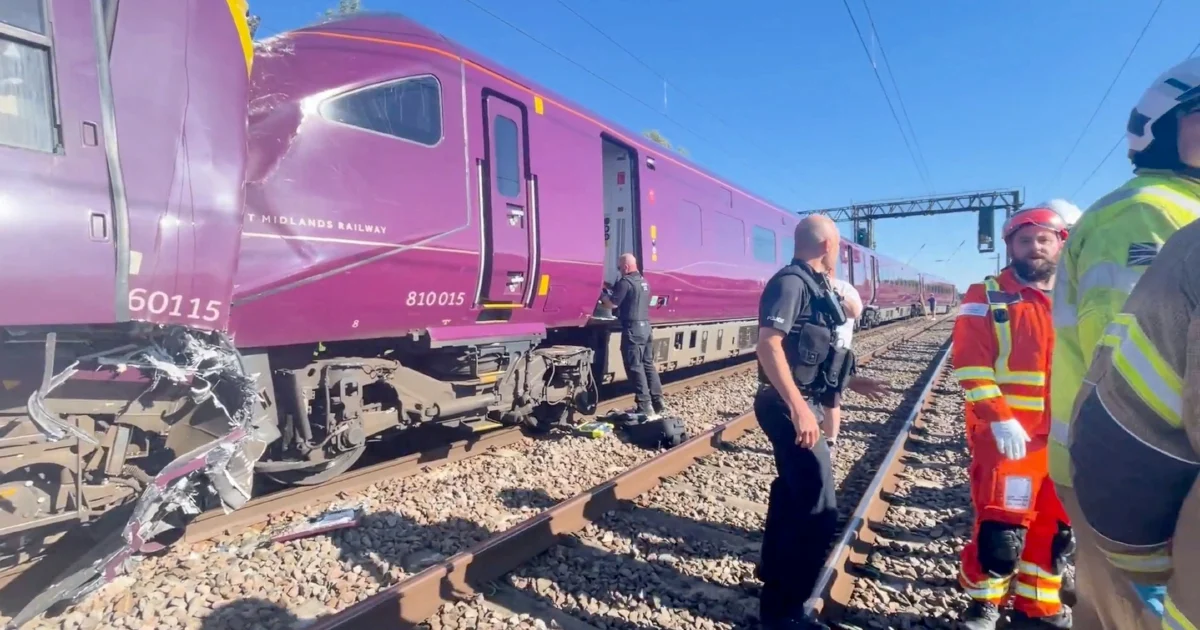
A tragic railway collision north of London has claimed one life and left numerous passengers injured, with emergency authorities warning that a significant number of casualties were in grave condition. The accident, which occurred when two passenger trains came together on Friday, triggered a major emergency response operation involving rescue services across the region.
According to statements from UK emergency services, the scale of casualties stretched across the full spectrum of injury severity, though particular concern surrounded 11 individuals whose injuries were classified as "very serious". This designation typically indicates conditions requiring immediate medical intervention and specialist hospital care. The precise circumstances leading to the trains coming together remain under investigation by railway authorities.
The location of the collision—in the densely populated area north of London—amplified the immediate challenge facing emergency responders. Railway corridors serving the capital region carry some of Britain's busiest traffic, meaning the accident has significant implications for regional transport networks. The response operation required coordination among multiple emergency agencies working simultaneously to extract passengers from the wreckage, stabilise the injured, and clear the affected railway line.
Incidents of this nature are relatively uncommon on modern British railways, where decades of investment in safety systems and signalling technology have substantially reduced collision risks. When such accidents do occur, they typically result from rare combinations of mechanical failure, human error, or exceptional circumstances that circumvent standard safeguards. The investigation into Friday's collision will likely examine all factors contributing to the trains' path convergence.
For passengers aboard both trains, the experience represented a sudden and traumatic departure from routine commuting or travel. Many would have been entirely unaware of danger seconds before impact, confronting rapid shifts from normal activity to emergency situations. The psychological impact on survivors—particularly those who witnessed serious injuries to fellow passengers—extends beyond immediate physical trauma.
The broader railway community in the United Kingdom will be closely monitoring the official investigation that typically follows such incidents. Rail operators, safety regulators, and transport authorities conduct thorough post-accident reviews to identify any systemic weaknesses requiring remediation. Findings from these investigations often lead to refinements in operational procedures, infrastructure maintenance protocols, or technological upgrades.
From a Southeast Asian perspective, this incident underscores the critical importance of railway safety standards as transport networks across the region expand. Malaysia's railway infrastructure, including the extensive Klang Valley integrated transport system and growing high-speed rail corridors, operates under safety frameworks partly informed by international best practices. The UK's experience with this collision and subsequent investigation contributes valuable lessons to the global rail safety community.
The incident will inevitably prompt discussion around resource allocation for railway infrastructure maintenance and modernisation. Britain's National Rail network, operated through various private companies under government regulation, maintains ageing infrastructure alongside newer sections. Investment decisions balancing safety enhancements against budgetary constraints represent perpetual challenges for rail operators worldwide. Events like this collision frequently accelerate policy conversations around funding priorities.
For the families and loved ones of those affected, the collision represents an immediate crisis requiring navigation of hospital systems, emergency communication channels, and evolving information about injured individuals. The relatives of the person who died face the additional burden of grief, alongside participation in investigative processes and potential legal proceedings that may emerge from the incident.
The recovery process extends beyond immediate medical treatment. Railways resuming normal operations following major accidents require thorough safety assessments and clearance procedures. Lines affected by the collision will remain disrupted during investigation work and remediation, potentially affecting thousands of daily commuters and passengers across the wider region.

