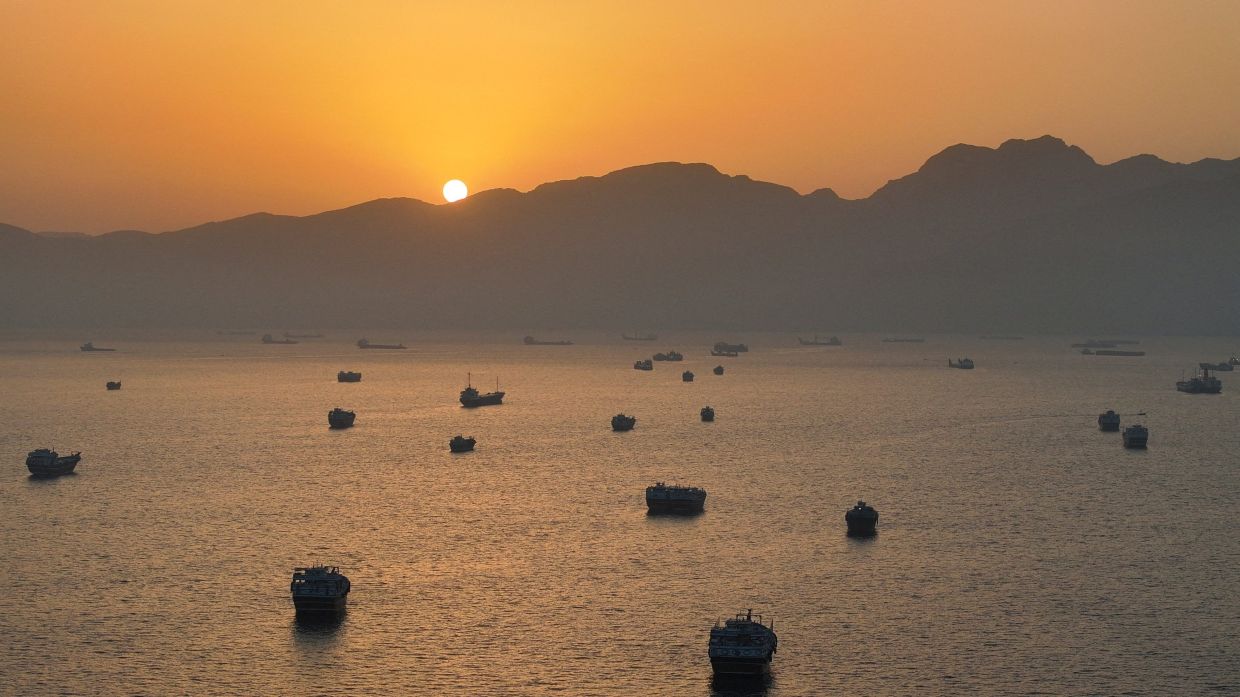
The logjam clogging the Strait of Hormuz is beginning to ease as an interim agreement between Iran and the United States creates space for stranded tankers to resume their journeys to global markets. On Wednesday, three major crude carriers—together carrying 5 million barrels of oil—were navigating through the strategic waterway, marking a tangible shift in shipping patterns that had frozen the region's logistics for months. Two of the vessels are destined for Asian refineries, underscoring how the Middle East's supply crisis has rippled directly into the region's energy sector and manufacturing base.
The VL Breeze, a Very Large Crude Carrier operated under South Korean registry and chartered by the country's Hyundai Oilbank, cleared the strait with 2 million barrels of Qatari condensate and Abu Dhabi crude bound for Daesan in South Korea. Simultaneously, the VLCC Plata Carrier, chartered by India's Oil Corporation, departed with 2 million barrels of Saudi crude, while the Suezmax-class Prudent Warrior exited with 1 million barrels of Iraqi Basrah crude destined for Sohar in Oman. The convergence of these movements—particularly the dual focus on South Korean and Indian buyers—signals that Asian demand for Persian Gulf crude remains robust despite months of supply uncertainty.
The breakthrough represents a gradual unwinding of a bottleneck that has constrained global oil markets since the outbreak of conflict in the Middle East. Shipping analysts estimated last week that approximately 90 million barrels of crude remained trapped within the Gulf, a figure that underscores both the severity of the logistical crisis and the enormous supply potential waiting to be released. The interim accord between Tehran and Washington has substantially reduced the geopolitical risk premium that kept many vessel operators and insurance providers cautious about routing through one of the world's most critical energy chokepoints.
South Korea's maritime ministry reported that four vessels operated by South Korean shipping companies transited the strait and are now en route to their final destinations, with one heading home to the peninsula and others bound for third countries. However, the scale of the problem remains evident: eighteen of the twenty-six vessels that became stranded since the conflict began are still anchored within Gulf waters, meaning roughly two-thirds of the trapped fleet has yet to resume normal operations. This uneven progress suggests that while confidence is gradually returning, many operators remain cautious about committing their assets to the region.
Oman's establishment of temporary maritime corridors, developed in coordination with the International Maritime Organization, has provided a structured pathway for vessels to depart safely without traversing the most contested shipping lanes. The sultanate has pledged to maintain open passage through the strait without imposing transit tolls, a commitment that removes a significant financial disincentive for vessel operators. The dual corridor system—with designated northern and southern routes flanking the conventional shipping channel—offers operators flexibility and reduced exposure to security risks, though it remains unclear whether all departing vessels are utilizing these formal channels.
Liquefied natural gas markets are showing similar signs of recovery, with two empty LNG tankers—the Shandong Redwood and Milaha Qatar—recently spotted crossing westward through the strait to collect cargoes from Qatar. This latest movement brings the total number of empty LNG carriers transiting to load at Qatar to nine vessels, the highest tally recorded since hostilities began. The scale of LNG vessel activity suggests that major gas exporters anticipate a rapid normalization of operations and are positioning assets to capitalize on pent-up demand.
Qatar's Prime Minister Sheikh Mohammed bin Abdulrahman al-Thani conveyed an optimistic timeline to international media outlets, indicating that the gas-rich state expects to restore full liquefied natural gas production within weeks rather than months. This projection carries significant implications for global energy markets, as Qatar remains among the world's largest LNG exporters, serving customers across Asia, Europe, and beyond. A return to normal Qatari supply would provide crucial relief to markets that have grown accustomed to tight conditions and elevated prices across both crude oil and natural gas futures.
For Malaysia and the broader Southeast Asian region, the gradual decompression of Hormuz-related supply constraints carries immediate relevance. Malaysian refineries, petrochemical facilities, and power generation plants depend heavily on stable supplies of crude oil and gas from the Middle East, and extended disruptions threaten industrial operations and consumer energy prices. The reopening of maritime pathways and the prospect of increased supply availability should moderate the inflationary pressures that have complicated economic policymaking across the region.
The interim nature of the Iran-United States accord introduces an element of uncertainty that market participants cannot ignore. While current momentum appears positive, the fragility of the arrangement means that any escalation in tensions or diplomatic breakdown could rapidly reverse the gains already achieved. Shipping companies and energy traders are likely monitoring negotiation developments closely, balancing the incentive to move trapped cargoes against the risk of renewed disruptions that could strand vessels and assets once again.
Global crude prices have already begun reflecting expectations of increased supply, with the psychological weight of the bottleneck lifting from sentiment indicators. However, analysts caution that prices will remain sensitive to signals about the durability of the interim accord and the timeline for fully restoring normal flows through the Strait of Hormuz. The combination of gradual tanker exits and rising LNG vessel movements suggests that market confidence, though fragile, is genuinely shifting toward normalization rather than further deterioration.

