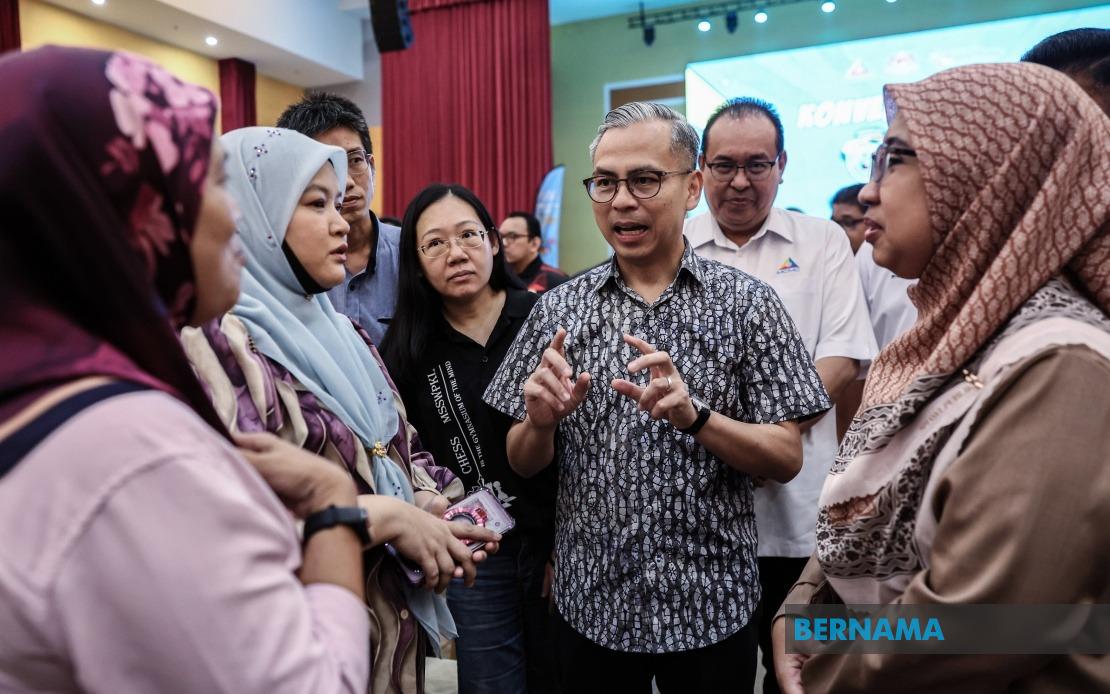
PKR's Information Chief Datuk Seri Fahmi Fadzil has moved to reassure party members and the broader political establishment that Nurul Izzah Anwar's temporary leave from her position as deputy president will not create any operational gaps or undermine the party's capacity to function effectively. Speaking at a press conference following the launch of the Kuala Lumpur-level Safe Internet PIBG Convention 2026, Fahmi outlined the transition arrangements and emphasised the continuity of PKR's administrative machinery and strategic direction despite the high-profile personnel adjustment.
The PKR Central Leadership Council made the decision to reject Nurul Izzah's outright resignation while approving her request for temporary leave, a middle-ground resolution that allows her to step back from formal responsibilities without formally severing ties with the party apparatus. This approach suggests the council sought to preserve her status within PKR's organisational structure while accommodating her stated need to prioritise personal commitments and academic pursuits, specifically her doctoral studies. The distinction between resignation and approved leave carries significant political weight in a party context, as it prevents a permanent vacancy while signalling respect for her individual circumstances.
Fahmi disclosed that Vice-President Datuk Seri Saifuddin Nasution Ismail has been entrusted with temporarily assuming the responsibilities and functions traditionally associated with the deputy president portfolio. This delegation maintains a clear chain of command and ensures that critical decision-making authority within PKR's leadership structure remains vested in an experienced senior figure. Saifuddin Nasution's appointment to this interim role underscores the party's confidence in his ability to manage deputy-level portfolios while maintaining the momentum of existing party initiatives and policy coordination among the broader PKR membership.
Fahmi reiterated that Nurul Izzah continues to maintain her status as a full party member and that her contributions to PKR's broader political struggle remain valued and anticipated. This statement addresses potential concerns that a leave of absence might signal diminished engagement or commitment to the party's long-term objectives. By framing her departure from formal duties as temporary and situational rather than ideological or strategic, PKR leadership sought to prevent narrative drift that might suggest internal fractures or declining confidence in party direction among its senior cohort.
When pressed on speculation regarding Subang MP Wong Chen's potential parliamentary seat vacancy, Fahmi declined to confirm or elaborate on unverified reports, stating that he possessed no current information on the matter. He indicated that any such development would require official announcement through Dewan Rakyat Speaker Tan Sri Johari Abdul, thus deferring to established parliamentary protocols and constitutional procedures. This circumspection reflects standard practice in Malaysian political communication, where changes to parliamentary representation typically involve formal notification processes rather than media speculation or informal discussion.
On the broader question of whether the next general election might be advanced ahead of the currently anticipated timeline, Fahmi firmly stated that no such planning was underway within government circles. He reiterated that the Federal Government's present focus remains centred on maintaining administrative stability and advancing its reform agenda. The Communications Minister indicated that the general election is anticipated to occur by the end of next year at the latest, aligning with constitutional and statutory frameworks governing electoral scheduling, thereby providing clarity on the government's medium-term planning horizon.
Fahmi highlighted the continued commitment of Unity Government component parties to sustaining their support for Prime Minister Datuk Seri Anwar Ibrahim's leadership through the remainder of the current term. This emphasis on coalition cohesion carries particular significance given Malaysia's experience with previous coalition governments that fractured due to internal disagreements or defections. The explicit acknowledgment of component party commitment reflects an understanding that stability messaging remains crucial for investor confidence, economic management, and the successful execution of policy initiatives that require sustained political backing.
The PKR official outlined that both Pakatan Harapan and the broader Unity Government coalition remain focused on implementing the comprehensive reform agenda that the government has positioned as central to its mandate. These efforts encompass diverse policy domains and institutional improvements that require sustained coordination across multiple government agencies and political entities. The framing of reform implementation as an ongoing priority suggests that despite personnel changes at the PKR level, the government's substantive policy commitments remain unchanged.
Fahmi noted that outstanding matters requiring continued attention include the implementation of Royal Commission of Inquiry recommendations concerning Lembaga Tabung Haji's operations during the 2014 to 2020 period. This reference indicates the government's determination to address legacy governance issues and institutional accountability questions from previous administrations. The Hajj savings fund remains a significant concern for Malaysian Muslim pilgrims and their families, making the implementation of RCI recommendations both a practical governance matter and a symbolic indicator of the government's commitment to institutional reform and fiduciary responsibility.
Looking ahead, Fahmi hinted that Prime Minister Anwar Ibrahim would shortly announce several significant policy measures or initiatives that would generate positive outcomes for both the Malaysian population and the national interest more broadly. While deliberately vague regarding specifics, this forward-looking statement suggested that the government has additional announcements pending that might address outstanding policy questions or respond to evolving national priorities. Such hints from government spokespersons typically precede major policy releases or organisational announcements, providing the political communications apparatus opportunity to set expectations and frame narratives in advance of formal disclosure.

