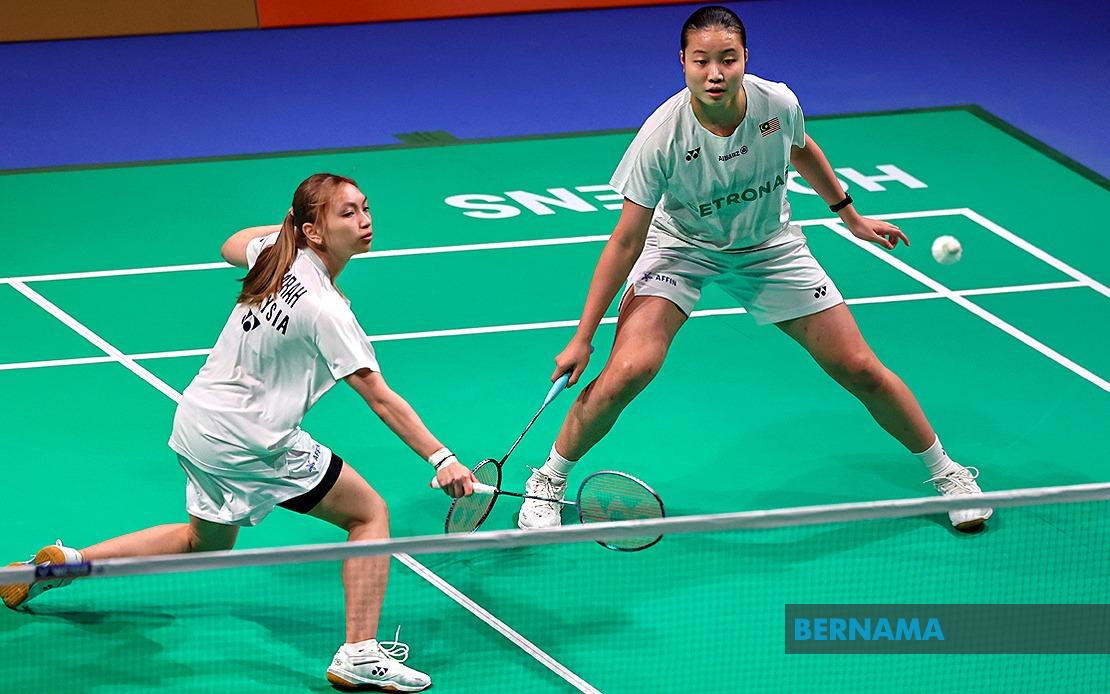
Malaysian badminton's emerging teenage sensation Noraqilah Maisarah Ramdan has embraced a methodical strategy alongside partner Low Zi Yu, establishing the world's top 50 as a foundational objective rather than pursuing lofty goals that might derail their long-term development. At just 18 years old, the accomplished player recognizes that sustainable progress requires patience and incremental gains rather than overambitious leaps, setting a measured tone for how the pair intends to navigate their professional careers on the international circuit.
When discussing her partnership's direction, Noraqilah stressed the importance of avoiding the trap of premature expectations. Rather than fixating on distant milestones, she and Zi Yu have chosen to concentrate on tangible, achievable targets that build confidence and momentum. This philosophy extends beyond mere ranking points; it encompasses the tactical and mental development required to compete consistently against the world's elite, a lesson many young players learn through costly mistakes when they advance too rapidly.
Currently positioned at 70th in the global standings, the Malaysian pair has already begun demonstrating the kind of upward trajectory that validates their measured approach. The gap between their present ranking and the top 50 may appear substantial, but Noraqilah views it as a realistic climbing distance—one that can be conquered through systematic tournament participation and performance refinement. Breaking into the top 50 would represent a meaningful validation of their partnership's viability without placing them under the crushing pressure that comes with pursuing top-tier positions prematurely.
The significance of achieving top-32 status holds particular importance for professional badminton players, as this threshold unlocks access to major tournaments that generate both ranking points and prize money. Noraqilah acknowledged this strategic reality, yet she demonstrated maturity in maintaining her focus on immediate objectives. The distinction reveals how experienced young athletes think—understanding the ultimate destination while remaining committed to each intermediate step that makes the journey possible rather than overwhelming.
A striking indicator of the pair's genuine improvement manifested recently at the Australian Open, where they delivered a compelling performance against Taiwan's Hsieh Pei Shan-Hung En Tzu, the eighth-ranked doubles combination. This victory proved especially significant given their historical struggles against Taiwanese opponents, where they previously lacked the tactical flexibility and competitive edge to mount genuine challenges. The contrast between their earlier inability to apply pressure and their recent competitive intensity demonstrates concrete evidence of their partnership's maturation.
The two-month interval between encounters against the same Taiwanese pair provided an instructive case study in athlete development. Rather than viewing the improved showing as merely a fortunate reversal, Noraqilah interpreted it as confirmation that their training regimen and strategic adjustments were yielding measurable results. This analytical perspective suggests both players possess the mental discipline required for extended campaigns, recognizing that competitive sport rewards those who learn and adapt systematically across multiple meetings with the same opponents.
For Malaysian badminton enthusiasts and administrators, the emergence of this young pairing offers encouraging prospects. Noraqilah's maturity in discussing career objectives without hyperbole contrasts refreshingly with the tendency in some sporting circles to trumpet breakthrough moments prematurely. Her recognition that sustained improvement requires cumulative effort rather than spectacular individual victories indicates the kind of professional mindset that typically distinguishes players who maintain success over extended periods from those who fade after early promise.
The partnership's training methodology and tactical development merit close attention, particularly given Malaysia's strong badminton infrastructure and coaching resources. Young pairs with this kind of philosophical grounding and demonstrated capacity for concrete improvement often emerge as key contributors to national teams within a few years. The combination of youth, existing world-class opposition experience, and measured ambition creates conditions favorable for sustained upward momentum.
Looking forward, the pair's progression through the rankings will likely follow an uneven path—some tournaments delivering breakthrough performances while others yield disappointing results. Noraqilah's framework for viewing their career appears equipped to absorb such fluctuations without triggering the panic or despair that derails young athletes. By anchoring their ambitions to sequential, achievable targets, she and Zi Yu have established psychological resilience alongside technical competence.
For regional badminton observers, this Malaysian duo represents the kind of patient talent development that produces sustainable competitive advantage. Their ranking trajectory over the coming 12 to 18 months will provide valuable insight into whether their philosophical approach translates into the consistent results required for top-50 penetration and beyond. Should they achieve this initial target, the foundation they have built through measured progression will position them well for the more ambitious goals that necessarily follow.