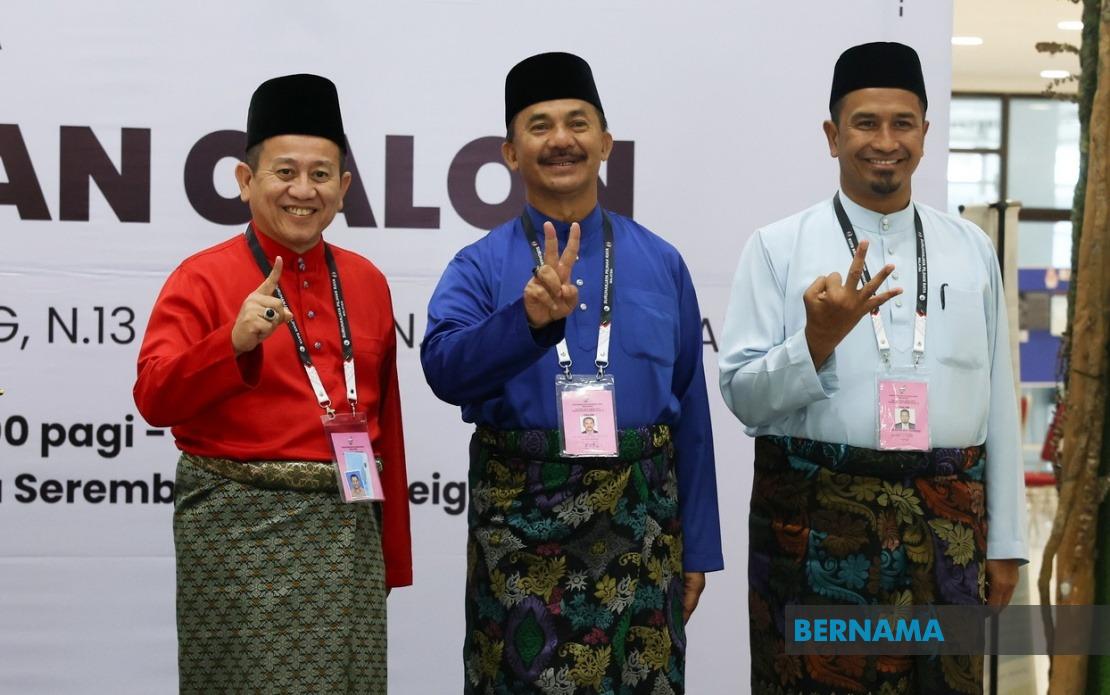
The 16th Negeri Sembilan State Election is shaping up as a contest marked by substantial generational renewal, with political parties across the spectrum introducing numerous newcomers to challenge for the 36 State Legislative Assembly seats. This deliberate infusion of fresh talent reflects broader attempts by established coalitions to reinvigorate their campaigns and appeal to voters seeking alternative leadership beyond familiar faces that have dominated state politics in recent years.
Pakatan Harapan, fielding candidates for all 36 constituencies, has committed most decisively to this generational transition by selecting 24 new candidates, meaning two-thirds of its roster comprises debut contestants. This extensive candidate overhaul signals the coalition's confidence in emerging political talent while simultaneously acknowledging voter appetite for change. The coalition has nevertheless retained several high-profile incumbents whose experience and stature remain valuable, including Negeri Sembilan PH Chairman Datuk Seri Aminuddin Harun, who is relocating from his traditional Sekamat stronghold to contest the Linggi seat. This strategic repositioning of established figures alongside newcomers creates a balanced ticket designed to maintain momentum in areas of traditional strength while expanding reach into contested territory.
Among PH's retained heavyweight is DAP Secretary-General and Transport Minister Anthony Loke, who continues to represent the Chennah constituency. Loke's prominence at the federal level provides the coalition with significant campaign visibility and underscores DAP's continued central role within the PH alliance structure. His continued presence in the contest ensures that national-level political dynamics remain relevant to state-level voting considerations, potentially influencing how voters calibrate their preferences between local and broader coalition concerns.
Barisan Nasional has adopted a more conservative approach to candidate renewal, fielding 13 new faces among its 25 total nominations. This lower proportion of newcomers reflects BN's traditional reliance on tested incumbency and established networks, though the inclusion of nearly half the slate as debut candidates still represents meaningful generational evolution for the coalition. UMNO Deputy President and Foreign Minister Datuk Seri Mohamad Hasan continues his representation of the Rantau seat, anchoring BN's campaign with ministerial credibility and seniority. Meanwhile, Negeri Sembilan BN Chairman Datuk Seri Jalaluddin Alias defends his 2023 victory in the Pertang constituency, while UMNO veteran Datuk Ismail Lasim shifts from Senaling to contest Juasseh, repositioning his candidacy to align with evolving demographic or strategic considerations.
Perikatan Nasional's presence across 11 constituencies introduces further competitive complexity to the election landscape. Through its coalition of component parties—including PAS, Gerakan, Wawasan, and MIPP—PN combines both established candidates and newcomers, though specific proportions vary across component parties. This multiparty arrangement allows PN to present itself as an alternative to both PH and BN, potentially appealing to voters dissatisfied with either major coalition while maintaining sufficient political experience to suggest governing capacity.
Parti Pribumi Bersatu Malaysia's independent participation in this election marks a notable shift in its strategic positioning. Unlike the 2023 state election when Bersatu contested under the Perikatan Nasional banner, the party now fields 24 candidates using its own logo, signaling organizational independence and distinct political identity. Datuk Tun Faisal Ismail Aziz's candidacy represents Bersatu's commitment to fielding emerging talent, while Negeri Sembilan Chairman Hanifah Abu Bakar's defence of the Labu seat grounds the party's campaign in experienced local representation. This dual-track approach allows Bersatu to establish itself as a standalone force while retaining sufficient institutional knowledge to mount credible campaigns.
Smaller parties including Parti Berjasa, ASLI, and PSM each field single candidates, providing ideological diversity and grassroots representation in specific constituencies. Additionally, four independent candidates compete, reflecting a degree of localized political entrepreneurship where individuals seek representation outside formal party structures. This fragmented field expands voter choice substantially, though it also distributes opposition votes across multiple non-BN, non-PH options, potentially benefiting whichever major coalition achieves greater vote consolidation.
The age range among candidates further illustrates the generational diversity characterizing this election. PH's Datuk Abd Latiff A Tambi, at 70 years old, represents the traditional political establishment, while Bersatu's Leevineshwaraan Murugan, at 23, exemplifies the youth-oriented recruitment strategies adopted by contemporary Malaysian political organizations. This generational breadth creates interesting contrasts within individual constituencies and party slates, with voters directly comparing different age cohorts and experience levels when evaluating alternatives.
The Election Commission confirmed 103 total candidates registered after the nomination closure at 10 am, establishing the final competitive field. Early voting occurs on July 28, with polling day scheduled for August 1. This compressed campaign timeline concentrates political messaging and activity, potentially amplifying the impact of established candidates' visibility while challenging newcomers to achieve rapid name recognition and voter connection. The substantial number of new candidates competing simultaneously means that traditional advantages derived from incumbency and institutional support face more significant challenges than in previous election cycles.
For Malaysian voters in Negeri Sembilan, this election cycle presents genuine competitive diversity across major coalitions. The prominence of new candidates means that state-level politics cannot simply default to retrospective judgments about previous performances; instead, voters must actively evaluate emerging political talent and newer candidates' substantive policy positions and personal credentials. The presence of numerous newcomers, combined with retained senior figures across all major coalitions, creates a genuine choice between continuity and change, experience and fresh perspectives. This dynamic potentially increases voter engagement by presenting genuinely distinct candidate portfolios and forcing more deliberate electoral decision-making rather than automatic support based on coalition affiliation alone.

