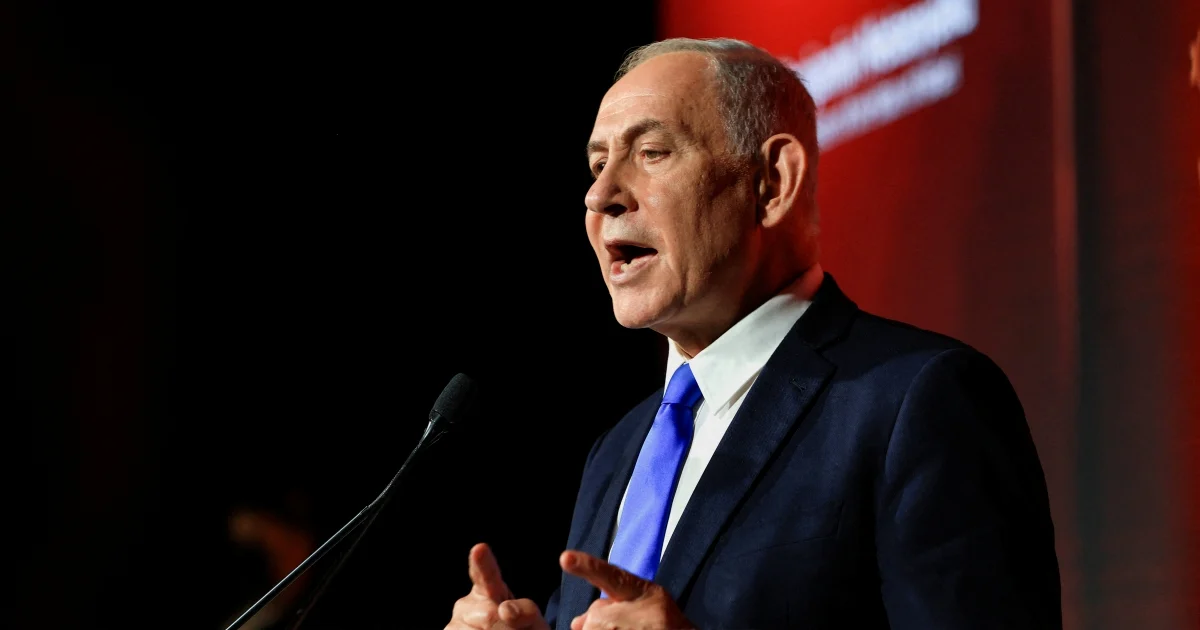
Israeli Prime Minister Benjamin Netanyahu has committed to maintaining Israeli military forces in southern Lebanon indefinitely, signalling a prolonged military engagement in the border region as tensions persist across the Middle East. Speaking on Sunday, Netanyahu stated that Israeli troops would stay in the area "as long as necessary", leaving open the duration of what has become an increasingly complex cross-border operation.
The statement reflects Israel's evolving strategy towards southern Lebanon, where Israeli forces have conducted operations targeting Hezbollah positions. The open-ended commitment suggests that Tel Aviv views the deployment not as a temporary incursion but as a potentially long-term military presence, contingent on security assessments that remain fluid. The vagueness of Netanyahu's timeline underscores the absence of a clear exit strategy, a characteristic that has defined Israeli military operations in the region over recent decades.
For Southeast Asian observers, particularly Malaysia, Israel's expanding military footprint in southern Lebanon has broader implications for regional stability. The Levant remains a critical crossroads where the interests of multiple powers intersect, and any protracted Israeli military presence risks deepening sectarian and geopolitical fractures that could eventually ripple across international shipping lanes and energy security concerns affecting the wider region. Malaysian policymakers have traditionally advocated for diplomatic solutions to Middle Eastern conflicts, making Israel's indefinite commitment to military operations a development worthy of close monitoring.
Netanyahu simultaneously reinforced Israel's stated determination to prevent Iran from acquiring nuclear weapons, framing this objective as integral to Israeli national security. This dual emphasis—maintaining troops in Lebanon while confronting Iranian nuclear ambitions—reflects how Israeli security doctrine has become increasingly intertwined with regional power competition. The Iranian nuclear programme has remained a focal point of international diplomatic efforts and sanctions, with the Joint Comprehensive Plan of Action (JCPOA) serving as the primary multilateral framework governing Iran's atomic activities.
The connection between these two security concerns is strategically significant. Iran's alleged support for Hezbollah, the Lebanese militant organisation designated as a terrorist entity by Israel and several Western nations, creates a nexus between Israeli operations in southern Lebanon and broader tensions over Iranian regional influence. By maintaining forces in Lebanon, Israel positions itself to monitor and potentially intercept Iranian weapons transfers destined for Hezbollah, thereby linking its military deployment directly to its counter-proliferation objectives.
For Malaysia and other Southeast Asian nations with commercial interests in Middle Eastern stability, the implications are considerable. Hezbollah's activities, Iranian regional expansion, and Israeli military responses all contribute to an unstable security environment that threatens freedom of navigation in the Persian Gulf and Strait of Hormuz, through which significant volumes of Malaysian-bound energy supplies transit. Any escalation involving Iran, Hezbollah, or Israel has the potential to disrupt global energy markets and increase insurance costs for regional shipping.
The indefinite nature of Netanyahu's commitment also raises questions about the humanitarian toll on Lebanese civilians. Southern Lebanon has experienced decades of conflict and instability, with the civilian population bearing the heaviest burden. International humanitarian organisations have expressed concerns about displacement, civilian casualties, and the destruction of civilian infrastructure resulting from military operations. Malaysia's established diplomatic tradition of supporting Palestinian rights and Arab causes generally means that Israeli military expansion is likely to generate critical responses within Malaysian political and civil society circles.
Israel's stated commitment to preventing Iranian nuclear acquisition reflects the longstanding strategic assessment that a nuclear-armed Iran would fundamentally alter the Middle Eastern balance of power. Israeli security experts argue that Iran's purported nuclear ambitions, combined with its support for anti-Israeli armed groups, represent an existential threat. However, this narrative is contested internationally, with many analysts and diplomats arguing that the Iranian nuclear programme is primarily civilian-oriented and that Iran remains bound by the restrictions outlined in the JCPOA, despite the United States' 2018 withdrawal from the agreement.
The broader geopolitical context matters significantly for understanding Netanyahu's statements. Israeli domestic politics has become increasingly polarised, with right-wing coalition partners pressuring the government to adopt maximalist security positions. Netanyahu's emphasis on military strength and regional deterrence appeals to this constituency, even if such rhetoric complicates diplomatic resolution of underlying conflicts. For regional observers including Malaysia, such domestic political dynamics shape international negotiations and security outcomes in unpredictable ways.
Looking forward, Netanyahu's declaration suggests that Israeli-Lebanese border tensions will remain a persistent feature of Middle Eastern politics. The absence of a defined endpoint for military operations complicates efforts by neighbouring countries and international mediators to broker durable ceasefire arrangements or longer-term political settlements. Lebanon itself remains institutionally fragile, with competing political factions and the dominant position of Hezbollah complicating any international peace process.
For Malaysian stakeholders—whether government officials, business interests, or civil society organisations—the trajectory of Israeli military engagement in southern Lebanon warrants sustained diplomatic attention. As a nation committed to multilateral conflict resolution and international law, Malaysia may find opportunities to contribute through existing regional forums and organisations to advancing dialogue and de-escalation initiatives that could reduce the risks of wider Middle Eastern conflagration.

