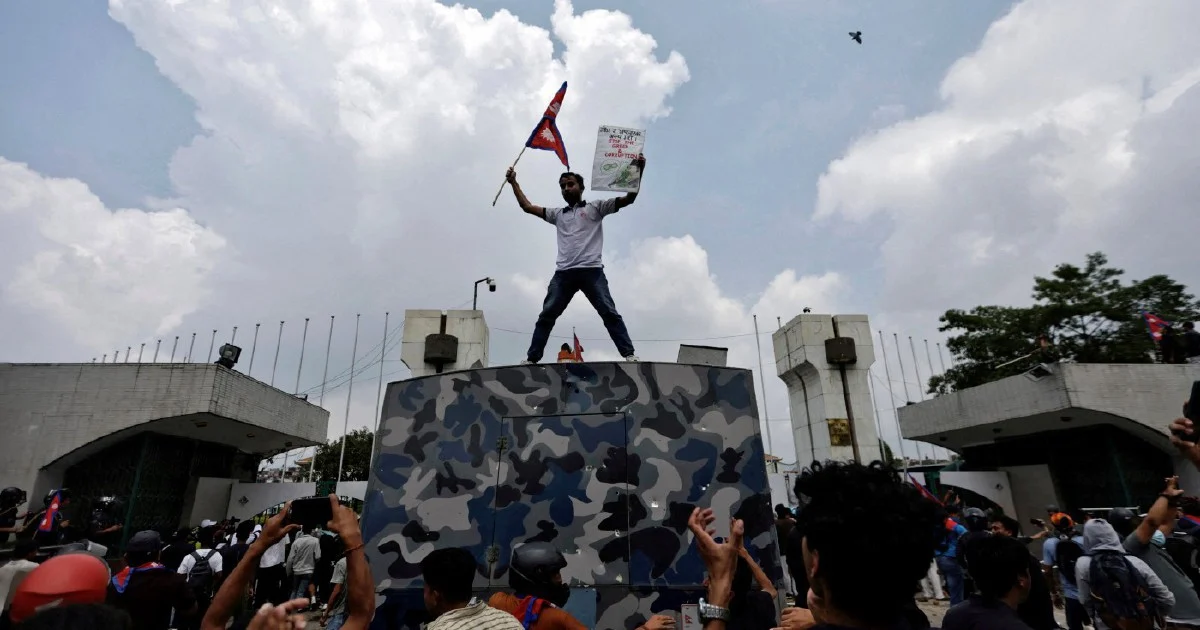
Nepal's former finance minister Bishnu Prasad Paudel was taken into custody late Monday evening on suspicion of money laundering, according to police statements released following the arrest. The detention represents a significant escalation in the country's anti-corruption enforcement as the current administration, largely driven by younger Generation Z political actors, intensifies its focus on purported misconduct during earlier government tenures.
The arrest signals a turning point in Nepal's approach to financial accountability, where the fresh political order has positioned itself as a reformist force committed to dismantling what it characterises as systemic corruption embedded within the state apparatus. Paudel, who previously held responsibility for managing the nation's finances, now faces serious allegations centred on the illicit movement and concealment of money, a charge that strikes at the heart of public trust in institutional stewardship of national resources.
This development arrives amid broader momentum within Nepal's justice system to hold former officials accountable for their actions in office. The Gen Z-influenced government has prioritised the examination of financial irregularities and illicit transactions that allegedly occurred during past administrations, framing such prosecutions as necessary for restoring institutional credibility. The targeting of high-profile figures like Paudel underscores the political will to pursue cases involving senior economic policymakers, individuals whose roles placed them in positions of substantial influence over public funds.
The implications of Paudel's arrest extend beyond the individual case, reflecting broader questions about governance standards and financial transparency that resonate throughout South Asian political and economic circles. Nepal's struggle with corruption has historically constrained investment confidence, complicated bilateral relations, and undermined development efforts across the region. A demonstrable commitment to prosecuting alleged financial crimes—particularly those involving former ministers—may signal to international partners and domestic stakeholders that systemic reforms are gaining institutional traction.
For Malaysian observers, Nepal's experience offers instructive parallels regarding the relationship between political transition and accountability mechanisms. Like Malaysia, Nepal has grappled with the challenge of investigating alleged misconduct by previous administrations without allowing prosecutions to devolve into purely partisan weaponisation. The success or failure of the Paudel case will provide crucial data points for how newer governments throughout Southeast and South Asia can balance genuine reform objectives with the risks of selective justice.
The arrest also illuminates the vulnerability of former officeholders once they lose the protective umbrella of executive power. Paudel's transition from an incumbent with administrative authority to a suspect in police custody exemplifies the precarious position that politically displaced elites inhabit. In the South Asian context, such reversals of fortune frequently precipitate complex legal proceedings that can extend for months or years, creating prolonged uncertainty regarding ultimate culpability and consequences.
Nepal's financial sector and international trade relationships may experience secondary effects from the heightened anti-corruption posture. Foreign investors and development partners often scrutinise the integrity of a nation's financial governance when evaluating long-term commitments. Aggressive prosecution of alleged laundering schemes, if perceived as credible and non-partisan, could potentially strengthen Nepal's standing among institutional lenders and bilateral donors who condition assistance on governance improvements. Conversely, if proceedings appear selective or politically motivated, they might fuel scepticism about judicial independence and institutional credibility.
The investigation into Paudel's alleged activities will likely unveil complex financial transactions, cross-border money movements, and intermediary arrangements that characterise contemporary money laundering methodologies. Such investigations typically involve cooperation between Nepal's financial intelligence units, banking regulatory authorities, and international law enforcement partners, particularly given the transnational nature of illicit financial flows. The sophistication required to trace and prosecute such cases tests the investigative capacity and technical expertise available within Nepal's law enforcement institutions.
The generational dimension of Nepal's current political leadership—with Gen Z figures driving policy priorities—introduces distinctive perspectives on corruption and institutional reform. Younger political actors, often less invested in the patronage networks that sustained previous administrations, may demonstrate greater willingness to pursue accountability mechanisms that older generations resisted or obstructed. However, this same generational transition also carries risks of inexperience in managing politically sensitive prosecutions and navigating the institutional complexities that accompany high-profile cases.
For the region more broadly, Nepal's anti-corruption initiative represents part of a larger continental awakening regarding financial crime and illicit asset flows. Southeast Asian nations including Malaysia, Indonesia, and Thailand have similarly escalated enforcement efforts against alleged corruption, signalling a growing regional consensus that accountability mechanisms strengthen rather than destabilise governance. Nepal's alignment with this trajectory suggests evolving South Asian norms around the prosecution of financial misconduct, even when perpetrators occupied elevated positions within previous governments.
The coming months will prove critical in determining whether authorities can substantiate the money laundering allegations against Paudel and construct a prosecutable case that withstands legal scrutiny. The proceedings will test Nepal's judicial infrastructure, police investigative capabilities, and the political commitment to due process, elements that remain under development throughout much of South Asia. Observers in Malaysia and neighbouring countries will monitor the case's progression as a bellwether of institutional capacity for managing high-stakes financial crime prosecutions within resource-constrained jurisdictions.

