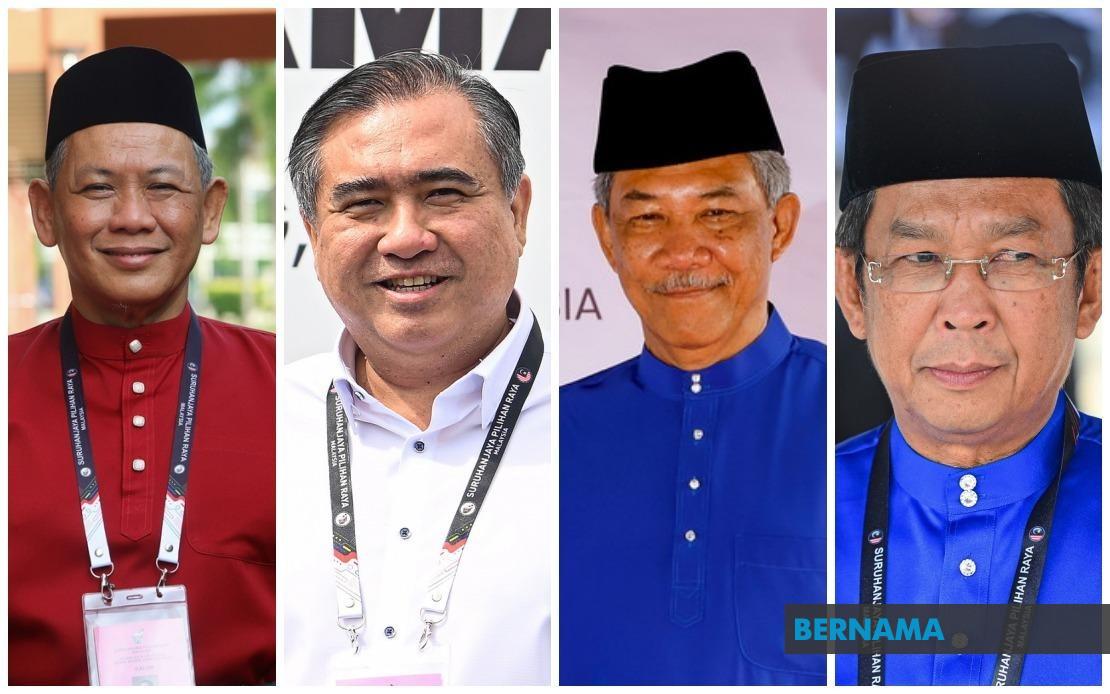
The 16th Negeri Sembilan state election has emerged as a more open contest than many anticipated, with none of the state's established political powerbrokers assured of victory as nomination rounds concluded on July 18. Senior figures representing all major coalitions find themselves in genuinely competitive races, signalling a shift in the state's electoral dynamics and suggesting voter sentiment remains fluid despite their incumbency or prominence at federal level.
Among those facing unexpectedly strong challenges is Datuk Seri Aminuddin Harun, Pakatan Harapan's state chairman and caretaker Menteri Besar, who holds the additional weight of PKR's vice-presidency. Contesting in the Linggi constituency, Aminuddin confronts a three-way battle against sitting representative Datuk Mohd Faizal Ramli of Barisan Nasional and Bersatu's Datuk Zamri Md Said. This three-cornered contest exemplifies the fractured opposition landscape that has characterized Malaysian politics since 2020, with Bersatu's continued presence splitting what might otherwise be a binary contest.
The situation for Anthony Loke, DAP's national secretary-general and the incumbent Transport Minister, proves equally challenging despite holding one of the opposition's traditional strongholds. Loke contests Chennah, which the Democratic Action Party has controlled since the 2013 state election. Yet his challenger, Negeri Sembilan MCA Youth chief Siow Kong Choon fielded by Barisan Nasional, demonstrates that even opposition bastions remain vulnerable to determined Barisan campaigning. The fact that a cabinet-level minister requires serious effort to retain his seat underscores how contested this particular electoral round has become.
In Rantau, Datuk Seri Mohamad Hasan, Foreign Minister and UMNO deputy president widely known as Tok Mat, encounters what amounts to a generational test. The 70-year-old faces Dr Azizul Hakim Mahdi of Pakatan Harapan, a figure half his age, in a straight contest. Mohamad's personal association with Rantau extends nearly two decades, having represented the constituency continuously since 2004, yet this lengthy tenure appears insufficient guarantee against a well-executed opposition challenge. His experience and federal ministerial portfolio weigh against him in an election where voters may be inclined toward fresh representation.
The Pertang constituency presents another significant battle involving senior figures. Datuk Seri Jalaluddin Alias, UMNO's Negeri Sembilan chief, who has held the seat since 2013, confronts a three-cornered contest against Mohd Umry Abdul Khois representing Pakatan Harapan and Bersatu's Mohd Faizal Fadli Mohd Idrus. This particular race exemplifies the broader fracturing of electoral contests across the state, where multi-cornered fights have become the norm rather than exception, potentially benefiting candidates with stronger grassroots organization over those relying primarily on incumbency advantage.
The Nilai constituency demonstrates the complexity reached by certain contests in this election. Here, DAP's national deputy chairman and incumbent J. Arul Kumar faces an unprecedented five-cornered battle. Competing against him are Datuk Lai Chien Kong from Barisan Nasional, Bersatu's Datuk V. Saravana Kumar, Berjasa's Zamani Ibrahim, and independent Omar Mohd Isa. Such fragmentation creates unpredictable scenarios where plurality rather than majority may determine outcomes, potentially disadvantaging front-runners if opposition votes split.
Similarly, Sri Tanjung features a five-way contest involving incumbent Dr G. Rajassekaran from Pakatan Harapan, who faces four opponents: Barisan Nasional's A. Achutan, independents Saravanan Arumugam and Islah Wahyudi Zainudin, and Bersatu's Leevineshwaraan Murugan. The inclusion of Murugan, at merely 23 years old the election's youngest candidate, reflects Bersatu's strategy of fielding fresher political faces, potentially appealing to younger voters dissatisfied with established politicians across all coalitions.
The overall candidate composition reveals Pakatan Harapan's organizational advantage, with the coalition fielding all 36 candidates across the state's constituencies, compared to Barisan Nasional's 25, Bersatu's 24, and Perikatan Nasional's 11. This distribution suggests Pakatan's confidence in contesting every seat, though broader candidate numbers need not translate into seat victories if vote efficiency proves problematic. The remaining slots comprise individual candidates from Berjasa, ASLI, PSM, and four independents, collectively representing 103 total candidates pursuing the 36 available seats.
The campaign period, officially commencing after nomination closure and extending through July 31, provides a compressed 14-day window for parties to mobilize supporters and articulate their platforms. Early voting has been scheduled for July 28, with general polling set for August 1. This compressed timeline favors parties with established organizational machinery, though it simultaneously restricts opportunities for challengers to build momentum through extended campaigning.
For Malaysian observers, the Negeri Sembilan election carries significance beyond the state's boundaries. As a relatively compact electoral arena with sophisticated urban constituencies alongside traditional rural bases, the state functions as an effective barometer for broader shifts in voter preference. The intensity of challenges faced by federal-level figures suggests that ministerial position or national profile provides insufficient insulation against local electoral pressures. Voters appear inclined to assess candidates on state-specific concerns rather than automatically extending support based on federal responsibilities.
The prevalence of three and five-cornered contests across numerous constituencies introduces genuine unpredictability into what might otherwise be binary opposition-versus-government competitions. Bersatu's persistent presence alongside other coalition players suggests the 2020-era realignment of Malaysian politics remains actively contested rather than settled. The genuine competitiveness facing established figures demonstrates that electoral dominance in Malaysian state politics remains contingent rather than assured, with recent political transformations having shifted voter behavior in ways that even experienced politicians cannot take for granted.

