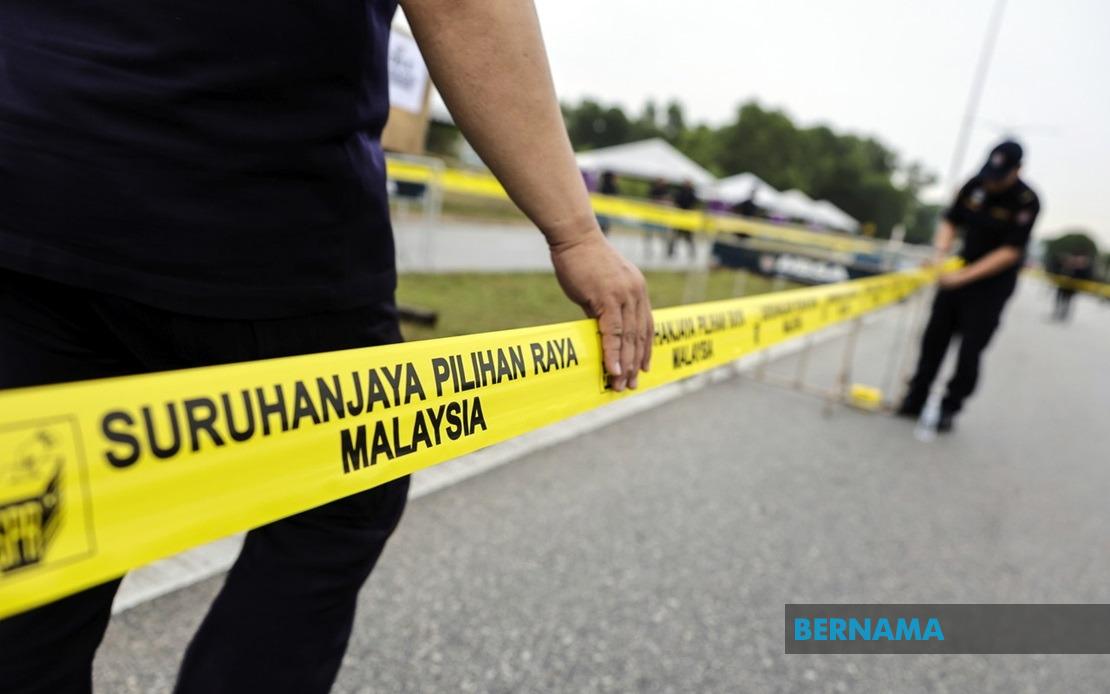
Voters and political candidates in Negeri Sembilan can anticipate predominantly clear skies during tomorrow morning's nomination proceedings for the state's 16th electoral contest, according to the Malaysian Meteorological Department. The weather authority has issued a generally optimistic forecast for most districts, though officials caution that atmospheric conditions will deteriorate significantly by afternoon, with widespread thunderstorm activity anticipated across the region. This mixed outlook comes as the state prepares for a compressed election cycle that will culminate in voting just two weeks away.
Dr Mohd Hisham Mohd Anip, the MetMalaysia director-general, outlined a nuanced weather picture during briefings in Seremban. The northern and central portions of the state—encompassing Jelebu, Jempol, Kuala Pilah, Rembau and Tampin—should experience settled conditions through the morning nomination period. However, the coastal district of Port Dickson and the state capital Seremban itself face prospects of rain during the same window, potentially affecting voter and candidate movement between nomination centres. The divergence in weather patterns across the state reflects typical tropical monsoon variations that favour elevated terrain while bringing moisture to lower-lying coastal areas.
The afternoon transition presents a more uniform challenge. Thunderstorms are anticipated to develop across substantially all districts as afternoon heating intensifies atmospheric instability. This is characteristic of the convective weather patterns that dominate Malaysia during the inter-monsoon periods, when rapid daytime heating creates conditions conducive to explosive shower development. Officials have attempted to reassure the public that rainfall, while potentially dramatic in appearance and sound, should remain brief and spatially scattered rather than evolving into sustained downpours that would materially impede electoral activities.
Temperature forecasts indicate the typical tropical range that Negeri Sembilan residents experience throughout the year. Overnight lows will fluctuate between 23 and 24 degrees Celsius, providing marginally cooler conditions during the early morning hours when nomination proceedings commence. Daytime maximums are projected to reach between 32 and 33 degrees Celsius, representing the intense solar heating characteristic of the region. For candidates and their supporters who will spend extended periods at nomination centres and in public campaigning, these temperatures underscore the importance of adequate hydration and sun protection, particularly given the physical exertion involved in the nomination process.
The MetMalaysia director-general has advised all stakeholders—encompassing candidates, their campaign teams, polling workers, and the voting public—to maintain vigilance regarding weather updates throughout nomination day and the subsequent campaign period. The department's website and social media channels will provide real-time meteorological data, allowing organisers to adjust schedules or logistical arrangements should conditions prove more severe than current forecasts suggest. This advisory reflects recognition that elections, while politically essential, must accommodate practical constraints imposed by environmental conditions, particularly in a maritime tropical setting where weather can shift with limited warning.
Nomination proceedings will unfold across eight designated centres throughout the state, operating within a compressed two-hour window from 9:00 am to 10:00 am. This concentrated timeframe reflects election regulations designed to streamline the formal candidacy registration process. The Election Commission's returning officers will subsequently announce the confirmed candidate slate once nomination closes, concluding the formal registration phase. Weather conditions during these specific morning hours thus assume particular significance, as logistical disruptions could cascade into the afternoon candidate announcement proceedings.
The electoral landscape reflects a fragmented political ecosystem characteristic of contemporary Malaysian state-level contests. Pakatan Harapan has declared comprehensive participation, contesting all 36 available seats with an allocation that assigns PKR 16 positions, DAP 11, and Amanah nine. This total reach reflects the coalition's strategic commitment to maximising representation in the state assembly. Barisan Nasional has adopted a more selective approach, fielding candidates for 25 seats distributed among UMNO (16), MCA (7), and MIC (2), suggesting a calculated strategy targeting winnable constituencies. Perikatan Nasional rounds out the major coalitions, announcing 11 contestations comprising PAS (5), Wawasan (4), with single candidates fielded by Gerakan and MIPP.
Beyond the three dominant coalitions, several smaller entities have registered electoral participation. ASLI, PSM, and Berjasa each field single candidates, representing ideological or communal constituencies within the broader electorate. Bersatu, historically a significant player in Malaysian politics, is expected to unveil its candidacy roster later today, potentially introducing additional competitive dynamics into various constituencies. This multiplicative candidate field reflects the increasingly splintered nature of Malaysian electoral competition at the state level, where traditional two-coalition dominance has given way to multi-polar contestation.
The electoral mathematics will ultimately determine among 889,490 eligible voters, a figure drawn from the latest electoral roll released by the Election Commission. Ordinary voters comprise 867,151 of this total, representing the bulk of the electorate. However, special provisions facilitate early voting for military personnel and their spouses (16,884 individuals) and police personnel eligible to cast ballots ahead of the August 1 general polling day (5,455 individuals). This early voting opportunity accommodates the operational requirements of the security sector while maintaining democratic participation.
The state assembly itself comprises 36 total seats, having been dissolved on June 5 to trigger this electoral cycle. The compressed timeline between dissolution and the August 1 polling day reflects both electoral commission scheduling and coalition strategic preferences regarding the political calendar. Early voting on July 28 will precede general polling by four days, allowing security personnel and military staff to participate without disrupting operational readiness. The entire process, from today's nominations through August 1 polling, will unfold across approximately two weeks—a concentrated campaign period that traditionally favours incumbents and well-resourced organisations capable of executing rapid voter contact programmes.
For Negeri Sembilan's political stakeholders, tomorrow's weather, while superficially a mere meteorological consideration, intersects with the practical mechanics of nominating candidates and commencing campaigning. Afternoon thunderstorms might dampen public gatherings or candidate visibility events, potentially affecting early campaign momentum. Fair morning conditions should permit smooth nomination logistics, ensuring that all qualified aspirants can complete registration formalities without weather-induced complications. Yet the broader electoral significance extends far beyond atmospheric conditions: the 16th state election represents a consequential moment for determining Negeri Sembilan's governance trajectory, with multiple coalitions competing intensively for the 36-seat assembly majority.

