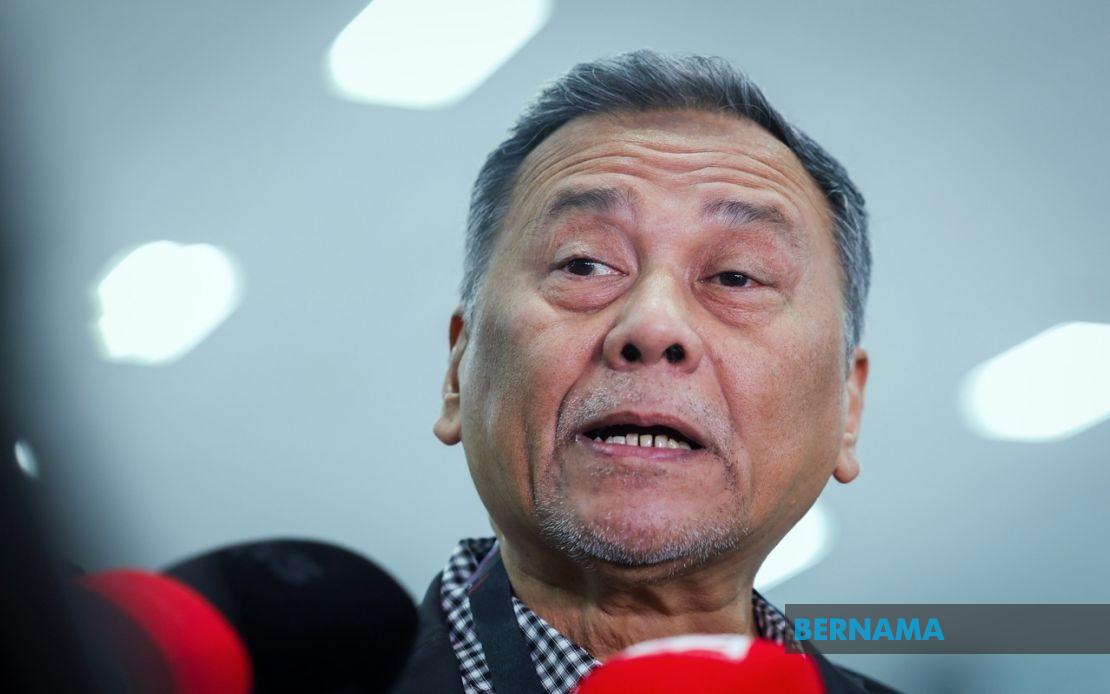
The Election Commission has given the Negeri Sembilan state election a clean bill of health regarding vote-buying and money politics, with its chairman Datuk Seri Ramlan Harun announcing that no official complaints of bribery or corrupt electoral practices have been lodged during the campaign period that began on July 18. The assertion comes as the state prepares for polling day, with all logistical preparations confirmed to be complete and 859,760 registered voters set to cast their ballots across 36 State Legislative Assembly seats.
While the EC maintains it has received no formal allegations of vote-buying, Ramlan clarified that any substantive complaints about corruption would fall outside the commission's direct purview. Instead, parties suspecting money politics are directed to file reports with the Malaysian Anti-Corruption Commission (MACC) or the Royal Malaysian Police (PDRM), reflecting the institutional separation between electoral administration and criminal investigation. This distinction underscores how Malaysia's election oversight operates across multiple agencies rather than through a single centralised mechanism.
Despite the absence of vote-buying complaints, the EC recorded 267 minor election offences throughout the Negeri Sembilan campaign, a figure that demonstrates active monitoring even if infractions remained at the lower end of the severity scale. These breaches were addressed with appropriate corrective measures as they emerged, suggesting the commission maintained vigilance over technical compliance with electoral rules, from poster placement to campaign financing disclosures, even as the broader integrity of the voting process remained uncontested.
The distinction between minor offences and serious corruption allegations matters significantly for understanding electoral health. Minor infractions—such as improper signage or procedural irregularities—are inherent to any large-scale election, whereas systematic vote-buying would signal deeper institutional failures. The EC's characterisation of recorded violations as minor suggests the campaign proceeded within broadly acceptable parameters, though it raises questions about whether the absence of complaints reflects genuine electoral cleanliness or incomplete reporting mechanisms.
For Malaysian readers following regional governance trends, the Negeri Sembilan election carries implications beyond the state itself. Negeri Sembilan has historically served as a bellwether for national political sentiment, and the conduct of this election may presage patterns in future national polls. Should the state election indeed proceed without major corruption scandals, it would reinforce public confidence in Malaysia's electoral machinery during a period when democratic institutions face scrutiny across Southeast Asia.
Ramlan expressed confidence that polling centres throughout Negeri Sembilan would operate without impediment when voting commences, with all 859,760 registered voters—including 7,391 postal voters—expected to participate smoothly. The commission deployed 15,344 election officers to manage the voting process, a substantial mobilisation of personnel designed to ensure every voter encountered properly trained officials and well-organised procedures. This workforce concentration reflects the logistical intensity required to administer democratic elections in Malaysia.
Voting commenced at 8 am on election day, with the EC projecting that preliminary results would be available as early as 10 pm, with complete tallies expected before midnight. This timeline demonstrates the operational efficiency the commission has developed through successive elections, allowing for rapid result dissemination while maintaining vote-counting integrity. The speed of result declaration has become a point of public focus in Malaysian elections, with voters and political parties expecting same-day outcomes.
The Election Commission's pre-election inspection of the Tampin Perdana Hall vote-counting centre and parallel verifications at other counting locations throughout Negeri Sembilan represented standard protocol aimed at identifying any technical deficiencies before voting commenced. Such advance preparations—including ballot box verification and equipment testing—form the unglamorous foundation of electoral credibility, often overlooked by media coverage focused on campaign dynamics and political messaging.
For comparative context within Southeast Asia, Malaysia's approach to election monitoring reflects its relatively mature democratic infrastructure compared to younger democracies in the region. The existence of a dedicated Election Commission with statutory powers, supported by separate anti-corruption and law enforcement agencies, demonstrates institutional layering designed to distribute oversight responsibilities. However, this distribution sometimes creates ambiguity about which agency bears primary responsibility for particular violations, potentially creating gaps in accountability.
The public communication channels established for voters to track the Negeri Sembilan election through Bernama's dedicated portal represented the contemporary expectation that electoral authorities provide real-time information and transparency. Digital engagement with election processes has become standard practice globally, allowing voters to verify procedures, understand timelines, and develop confidence in outcomes through observable information rather than relying solely on official pronouncements.
Looking ahead, the absence of vote-buying allegations during this campaign provides a baseline for assessing future elections. Should subsequent state or national polls show elevated corruption complaints, it would suggest either deteriorating electoral conduct or improved complaint mechanisms. Conversely, sustained clean campaigns across multiple elections would indicate institutional arrangements capable of deterring money politics through consistent enforcement and public scrutiny.
The Negeri Sembilan election ultimately tests whether Malaysia's institutional mechanisms—the Election Commission's procedural oversight, the MACC's corruption investigations, and public awareness of electoral integrity—function effectively in concert. While the EC's report of clean conduct is encouraging, such outcomes depend fundamentally on the voluntary compliance of political actors respecting democratic norms and accepting electoral rules as legitimate constraints on their ambitions.

