Pakatan Harapan is entering the Negeri Sembilan state election campaign with a straightforward strategy: underscore the administrative competence and integrity of incumbent Menteri Besar Datuk Seri Aminuddin Harun as the antidote to voter concerns about governance and economic stability. The coalition's leadership believes the two-term record of the Port Dickson MP provides sufficient political capital to defend its 2023 parliamentary majority in the state and secure a fresh mandate from the 889,490 registered voters preparing to cast ballots on August 1.
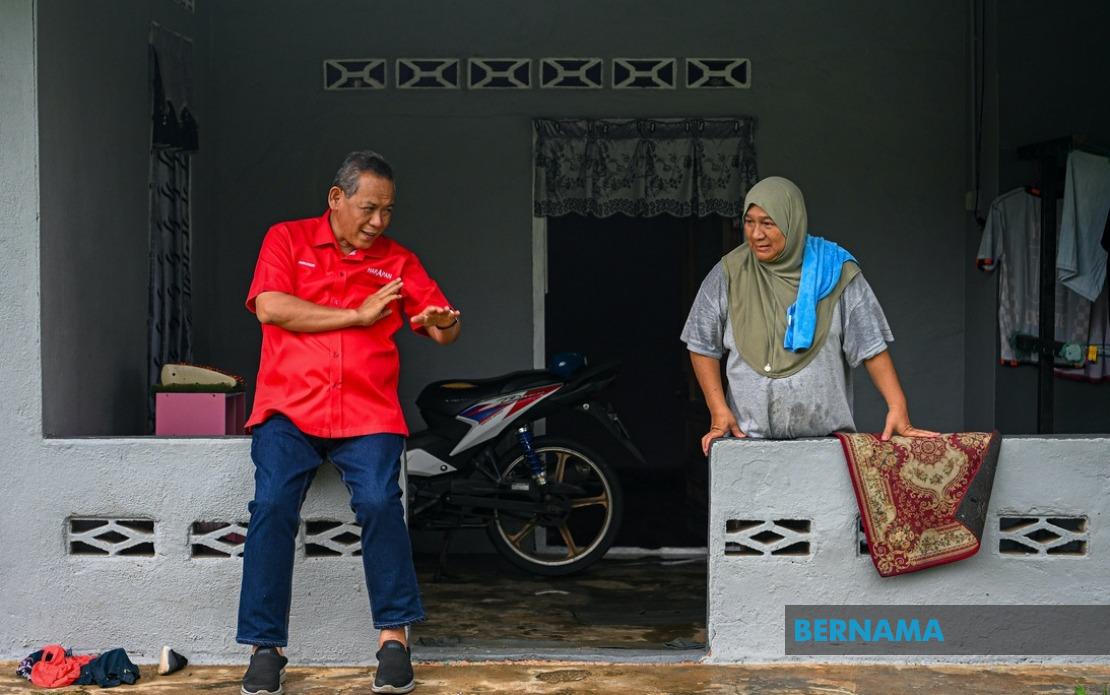
Datuk Seri Amirudin Shari, the PKR vice-president serving as PH's election director, conveyed this confidence during campaign activities in Seremban earlier this week. According to Amirudin, the opening three days of grassroots campaigning had generated tangible momentum among ordinary voters, with feedback from party operatives on the ground consistently highlighting satisfaction with Aminuddin's tenure. This data from party machinery is particularly significant because it reflects sentiment beyond formal campaign rallies, where turnout and enthusiasm can be difficult to gauge accurately.
The message being transmitted to voters centres on the absence of major corruption scandals or administrative failures under PH's stewardship of the state. Amirudin emphasised this distinction explicitly, noting that voters he encountered during campaign activities had not raised substantive grievances against the sitting government. In Malaysian electoral politics, where concerns about misgovernance and financial impropriety remain prominent in public discourse, the ability to campaign as the "clean" option carries considerable weight, particularly among middle-class and older voters who prioritise institutional stability over sweeping policy changes.
Amirudin, who also serves as Selangor Menteri Besar, acknowledged that this positive reception might not be fully evident in large public gatherings, where attendance figures and crowd enthusiasm can sometimes paint misleading pictures. Instead, he pointed to the systematic feedback mechanisms embedded within PH's grassroots organisational structure as more reliable indicators of electoral sentiment. This distinction highlights an important dimension of Malaysian campaign dynamics: the divergence between visible spectacle and quieter interpersonal political persuasion conducted through community networks and informal conversations.
The coalition is also positioning Prime Minister Datuk Seri Anwar Ibrahim's national leadership as an electoral asset for state-level candidates. Amirudin referenced the Johor state election outcomes, where PH achieved significant gains partly through the spillover effect of positive public perception of the federal government's economic management. The implication is that voter confidence in Anwar's handling of national affairs—including efforts to stabilise the ringgit, manage inflation, and pursue infrastructure projects—creates a halo effect that benefits state-level party contenders seeking voter endorsement.
The coalition's organisational infrastructure will be tested across all 36 state constituencies, with PH defending the 17 seats it secured in the 2023 election. That previous outcome established PH as the dominant political force in Negeri Sembilan, ahead of Barisan Nasional's 14 seats and Perikatan Nasional's five seats. Defending a slim parliamentary majority—17 out of 36 seats represents less than 48 per cent of the legislature—requires disciplined campaigning and effective voter mobilisation, particularly in marginal constituencies where swings of just a handful of votes could determine seat outcomes.
The electoral register for this contest encompasses 867,151 ordinary voters, alongside 16,884 military personnel and spouses eligible for early voting, and 5,455 police officers designated as early voters. This composition reflects the presence of significant federal defence and security force installations within Negeri Sembilan, which has historically supported BN candidates. The early voting mechanism, scheduled for July 28, will reveal preliminary trends before main polling on August 1, offering campaign strategists early indicators of momentum before final push activities.
PH's manifesto, scheduled for public unveiling during the campaign period, will articulate the coalition's vision for the state's next electoral term. According to campaign messaging, the platform will blend continuation of existing policy initiatives with fresh proposals designed to address constituent concerns regarding economic opportunity, infrastructure development, and social services provision. The communication strategy appears intended to position PH as both a proven administrator capable of delivering results and an innovator prepared to introduce new solutions to emerging challenges.
The dissolution of the Negeri Sembilan State Legislative Assembly on June 5 initiated the formal electoral timeline, with campaign activities spanning several weeks before voting concludes on August 1. This extended campaign period permits sustained grassroots mobilisation and allows competing coalitions to refine their messaging based on public reception and emerging issues during the campaign itself. For Negeri Sembilan voters, the election represents an opportunity to evaluate whether PH's governance record over nearly two terms justifies continued political confidence, or whether the electorate wishes to signal preference for alternative political arrangements and leadership.
For Malaysian political observers, the Negeri Sembilan outcome will provide valuable insights into voter sentiment regarding coalition governance, economic management at the state level, and the extent to which federal government performance influences state-level electoral outcomes. A PH victory would reinforce the coalition's dominance in peninsular state politics, while losses would indicate potential vulnerability ahead of future national elections. The Negeri Sembilan contest thus carries significance extending beyond state-level politics into the broader Malaysian political landscape.

