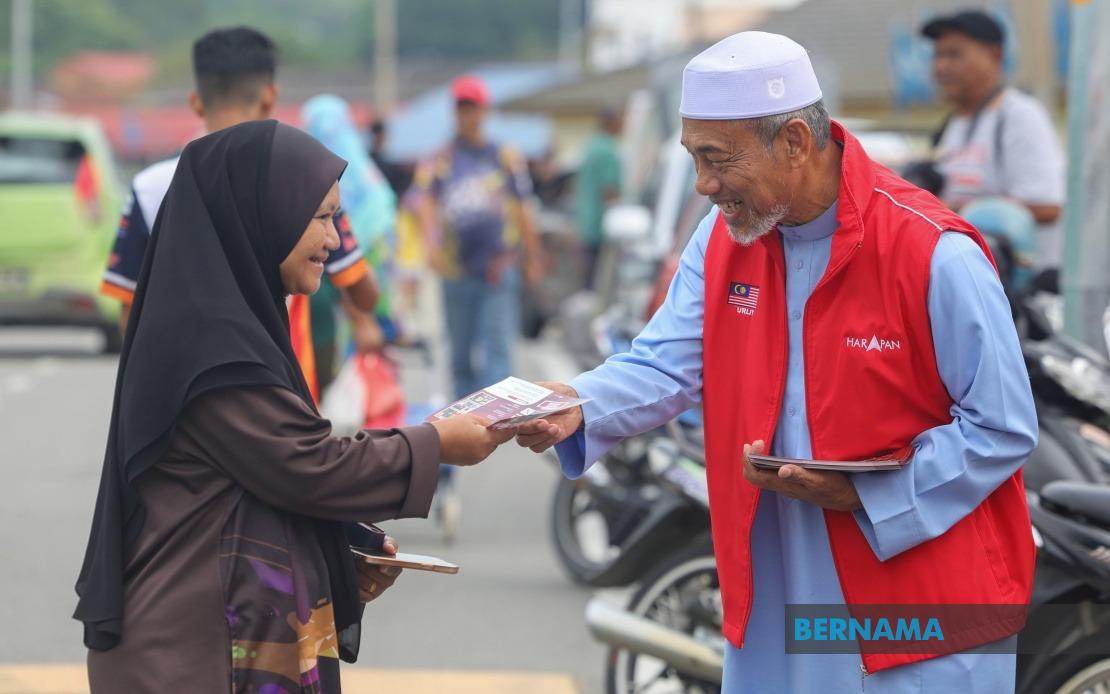
The race for Negeri Sembilan's statehouse has entered a critical phase as candidates representing the Pakatan Harapan coalition, Barisan Nasional, and other contenders sharply increased their campaign tempo on the second day of campaigning, with twelve days remaining before voters head to the polls on August 1. The frantic schedule underscores the competitive nature of the 16th Negeri Sembilan State Election and reflects the strategic importance both coalitions place on retaining or capturing control of the state government.
Menteri Besar Datuk Seri Aminuddin Harun, seeking re-election in the Linggi constituency, exemplified the intensity of this push by beginning his day with Subuh prayers at a local mosque and following up with breakfast sessions and extended walkabouts across multiple residential areas and neighbourhoods. His itinerary took him through Pasir Panjang town, several residential developments, and traditional villages, with a dedicated engagement session held with members of the Indian community—a demographic that carries considerable electoral weight in the state. Aminuddin, who simultaneously holds positions as Negeri Sembilan's Pakatan Harapan chairman, PKR state chairman, and PKR vice-president, articulated the strategic logic behind such sustained personal contact, framing the campaign as an opportunity to understand constituents' concerns directly and reinforce his commitment to delivering inclusive development across Linggi and the broader state.
The Pakatan Harapan's ground game extended well beyond the Menteri Besar's efforts. DAP secretary-general Anthony Loke, the incumbent defending his Chennah state seat, opened his campaign day with a market walkabout in central Seremban before pivoting to an evening dinner programme designed to cultivate community support. Similarly, other PH candidates adopted comparable strategies, with aspirants for Seri Menanti and Serting constituencies scheduling eight or more separate programmes daily. These events ranged from market visits and informal voter encounters at hawker centres to structured community meetings, each designed to project accessibility and demonstrate a candidate's willingness to engage voters on their home ground rather than relying solely on rallies or formal announcements.
Candidates interviewed for this report consistently emphasised that informal grassroots interaction—breakfasts with residents, mingling at markets, casual conversation at business establishments—created environments conducive to genuine dialogue about local grievances and development priorities. This approach represents a deliberate pivot away from top-down messaging, acknowledging that voters in Negeri Sembilan, like elsewhere in Malaysia, increasingly expect direct access to candidates and expect those seeking their votes to demonstrate understanding of parochial concerns ranging from infrastructure maintenance to healthcare access to employment opportunities.
The Barisan Nasional coalition maintained its own aggressive schedule, with incumbent Rantau assemblyman and BN deputy chairman Datuk Seri Mohamad Hasan conducting similar grassroots engagement from party polling district centres and community spaces. Negeri Sembilan's UMNO machinery, traditionally the BN's backbone, coordinated campaign activities through its state liaison committee leadership, mixing formal party-organised events with community outreach programmes targeting specific demographic groups including the Orang Asli population. This dual-track approach—combining party infrastructure with personalised candidate visibility—reflects BN's institutional advantages as the long-established governing coalition at the federal level, though it seeks to reclaim lost ground in Negeri Sembilan.
The electoral stakes in Negeri Sembilan carry implications extending beyond the state's boundaries. As a bellwether state reflecting broader peninsular political sentiment, the results will provide important early signals regarding voter sentiment heading into the longer electoral cycle ahead. The state's diverse demographic composition—encompassing urban, semi-urban, and rural constituencies with varying ethnic and religious compositions—makes it a microcosm of Malaysian electoral dynamics. Both Pakatan Harapan and Barisan Nasional recognise that momentum from a strong showing here can reverberate across the region and influence political narratives nationally.
The Election Commission dissolved the Negeri Sembilan State Legislative Assembly on June 5, with August 1 designated as polling day and July 28 as the date for early voting. Approximately 889,490 registered voters are eligible to participate, comprising 867,151 ordinary voters alongside 16,884 military personnel and their spouses and 5,455 police personnel entitled to vote early. This voter base's size and composition underscore the resources both coalitions are investing in the state, with the intensity of campaign scheduling reflecting calculations about which constituencies are genuinely competitive and where voter persuasion efforts can feasibly shift outcomes.
The compressed timeline—with only twelve days from the campaign's second day until election day—has created urgency that manifests in candidates' packed schedules. Multiple programmes daily maximise visibility across dispersed communities and permit candidates to demonstrate stamina and commitment to potential voters. The strategy assumes that personal appearances and direct voter engagement generate support that mass media advertising cannot replicate, particularly in an era of declining traditional media consumption among younger demographics and increasing fragmentation of information sources.
Observers tracking the Negeri Sembilan election note that the intensity of grassroots campaigning this cycle may reflect declining confidence among both coalitions in their ability to secure victory through institutional or structural advantages alone. Pakatan Harapan's need to defend its state government against potential voter fatigue or specific policy disappointments, combined with Barisan Nasional's efforts to rebuild credibility after federal electoral setbacks, has translated into campaigns that prioritise shoe-leather organising and face-to-face voter contact. Whether such intensive ground-level engagement translates into substantive shifts in voter preference, or merely consolidates existing support bases, will become clear only after the ballots are counted.

