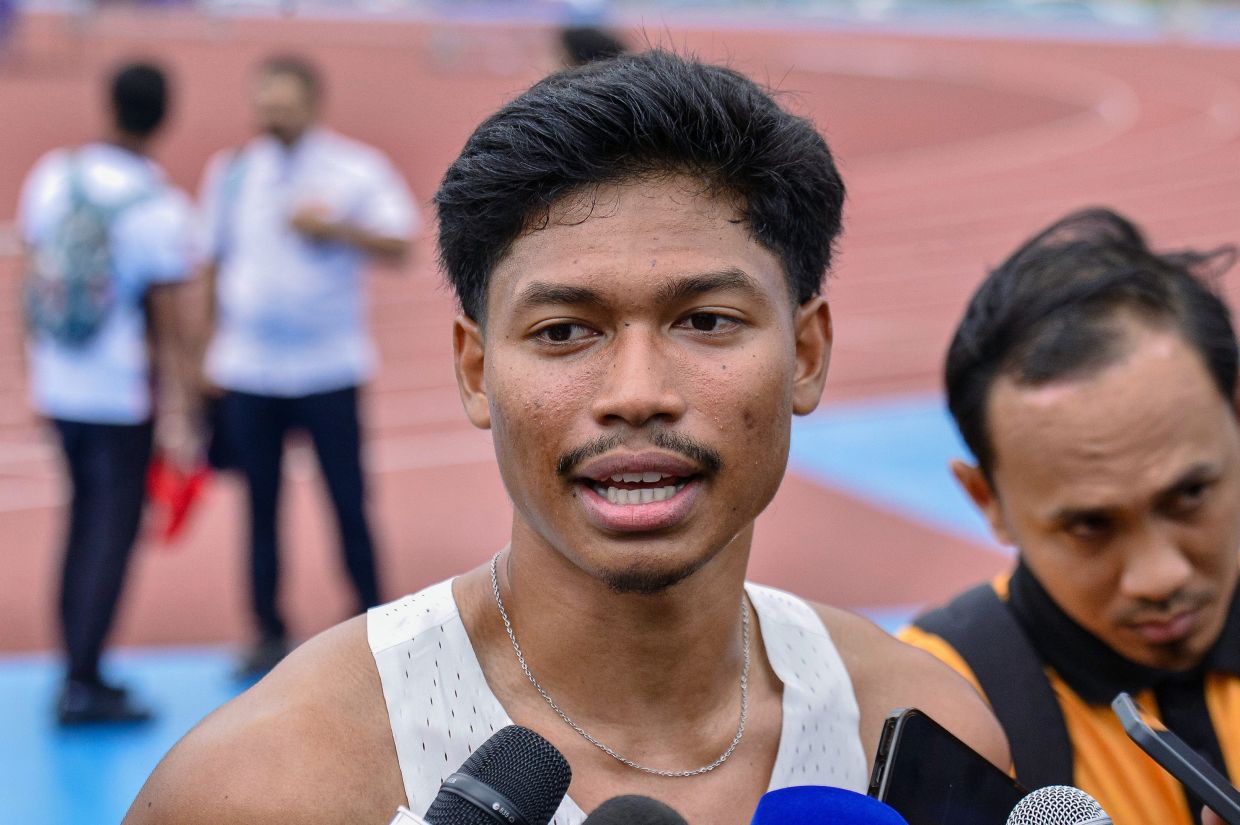
Mohd Azeem Fahmi, Malaysia's promising sprinting talent, is embarking on the next chapter of his educational journey by enrolling for postgraduate studies at Universiti Malaya. The national representative recently completed his undergraduate programme at Auburn University in Alabama and has already begun engagement with UM's leadership to facilitate his transition. During a formal courtesy visit to the institution's leadership offices, Azeem was received by vice-chancellor Prof Datuk Seri Dr Noor Azuan Abu Osman, signalling institutional backing for his ambitious dual commitment to academic excellence and athletic performance.
The meeting underscored UM's proactive approach to supporting elite student-athletes. Beyond the vice-chancellor's participation, the gathering included Associate Prof Dr Zulkarnain Jaafar, dean of the Faculty of Sports and Exercise Sciences, and Afizal Abu Othman, director of the university's Sports Centre. This institutional convergence reflects the university's recognition that world-class athletes require coordinated support systems encompassing academic, athletic, and pastoral dimensions. The vice-chancellor explicitly committed to establishing a comprehensive pathway that would enable Azeem to balance rigorous postgraduate coursework with his competitive training regimen and international competition schedule.
UM's selection as Azeem's destination for postgraduate study builds upon the institution's established reputation as a breeding ground for Malaysia's sporting elite. The university boasts an impressive roster of accomplished athletes who have translated their academic credentials into sustained careers both within and beyond sport. Diving phenomenons Datuk Pandelela Rinong, Ooi Tze Liang, and Bryan Nickson Lomas all emerged from UM, establishing the institution as a preferred pathway for athletes seeking to complement their sporting ambitions with recognised qualifications. More recently, former national women's doubles shuttler Vivian Hoo graduated from the Faculty of Sports Science in 2019, demonstrating UM's continuing appeal across different sporting disciplines and at various levels of national representation.
Azeem's decision to continue his studies in Malaysia rather than pursue opportunities at Auburn represents a strategic choice with implications for the domestic athletics landscape. Having relocated to the United States in January 2023 to study exercise physiology and kinesiology, the sprinter benefited from training under renowned coach Ken Harnden whilst simultaneously acquiring specialist knowledge in human movement science. This combination of elite coaching and rigorous academic training in performance-related disciplines positions him uniquely to contribute to Malaysia's athletics development ecosystem upon completing his master's degree.
The timing of Azeem's return to Malaysia coincides with a period of considerable momentum in his competitive career. At the Malaysian Open held recently at Universiti Putra Malaysia Serdang, the 21-year-old secured gold medals in two significant events. His individual triumph in the men's 100 metres showcase his capability at sprint distances, whilst his contribution to Malaysia's men's 4x100 metres relay team victory alongside Danish Iftikhar Mohd Roslee, Pengiran Aidil Auf Hajam, and Mohd Armin Zahryl demonstrated his value within a team context. These performances, achieved upon his recent return from America, suggest that the transition from Auburn's training environment has been smooth and that his competitive sharpness remains intact.
The intersection of Azeem's trajectory and UM's institutional priorities reflects broader trends in Malaysian sports development. As the country seeks to elevate performance standards across athletic disciplines, the integration of world-class coaching, cutting-edge sports science knowledge, and structured academic qualifications becomes increasingly important. Athletes who can combine elite training with tertiary education in performance-related fields become multipliers within their sporting communities, potentially translating their knowledge into coaching roles, sports management positions, or policy influence once their competitive careers conclude.
Azeem's background in exercise physiology and kinesiology from Auburn, coupled with advanced postgraduate study at UM, would equip him with credentials highly relevant to multiple career pathways. Whether he pursues formal coaching roles, positions within national sports organisations, or transitions into sports medicine and rehabilitation, his academic foundation provides strategic optionality. This educational diversification is particularly important for Malaysian athletes, as it reduces career vulnerability should injury or age-related decline in performance occur, a reality that affects most individual sport practitioners.
UM's commitment to facilitating Azeem's academic and athletic development also carries implications for the broader Malaysian sports ecosystem. Universities that successfully support elite athletes while maintaining rigorous academic standards become institutional brands in their own right, attracting both talented recruits and enhanced investment. The university's proactive engagement with Azeem signals to other potential student-athletes that balancing competitive sport with postgraduate education is not merely possible but actively encouraged and resourced. This messaging could influence recruitment decisions among Malaysia's emerging athletic talent pool, particularly those weighing options between remaining domestically or pursuing opportunities abroad.
As Azeem settles into his postgraduate programme at UM, his journey represents a case study in talent development that extends beyond the conventional athlete-as-specialist model. The transition from Auburn to Universiti Malaya does not signify a retreat from international competitive exposure but rather a deliberate recalibration that prioritises long-term career construction. By establishing himself within Malaysia's premier educational institution whilst maintaining training relationships and competition opportunities, Azeem positions himself to contribute meaningfully to national athletics at both immediate and strategic levels. His return also demonstrates that elite performance and rigorous academic engagement are complementary rather than contradictory pursuits within the contemporary sports environment.

