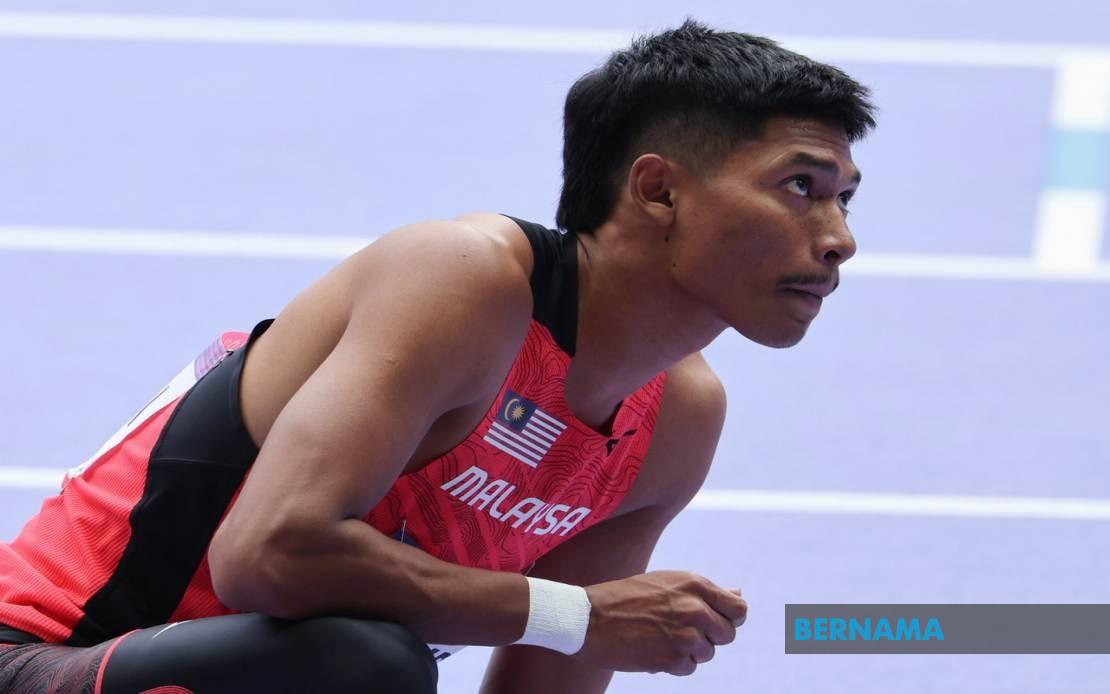
National sprint champion Muhammad Azeem Mohd Fahmi has declared his intention to establish his professional athletics career in Malaysia following the completion of his four-year degree at Auburn University in the United States. The 22-year-old, who holds the national 100-metre record with a time of 10.09 seconds, made clear during media engagements that he has no immediate plans to relocate back to America despite the athletic opportunities that remain available there.
Azeem's decision to anchor himself in Malaysia reflects a deliberate shift in priorities after an extended period overseas. Having spent the past four years pursuing higher education while simultaneously developing his athletic capabilities at one of the United States' respected university sports programmes, the sprinter now feels compelled to reconnect with the support network that has sustained his career trajectory. He emphasised that his closest relationships—encompassing family members, parents, siblings, coaching staff, and lifelong friends—constitute the bedrock of his achievements and warrant significant personal investment at this stage of his life.
The emotional dimension of Azeem's choice speaks to broader patterns within Malaysian athletics, where athletes frequently face the tension between pursuing international opportunities and maintaining deep community and family connections. His explicit commitment to spending quality time with loved ones after an extended separation underscores that professional athletic development need not come at the complete expense of personal relationships, a message that resonates particularly within Malaysian cultural values that prioritise family cohesion.
Regarding his training structure going forward, Azeem has fashioned a hybrid coaching arrangement that leverages both international expertise and local knowledge. His American coach Ken Harnden, who oversaw his development at Auburn, will continue designing his training programmes from a distance. However, the day-to-day supervision and implementation of these plans will fall to Muhammad Amir Izwan Tan Abdullah, a domestic coach positioned to provide immediate feedback, injury management, and practical guidance within Malaysia's athletic infrastructure. This arrangement reflects a pragmatic approach that maintains access to high-level international coaching methodology whilst ensuring consistent local oversight.
The sprinter's educational ambitions extend beyond his recent bachelor's degree completion. He has articulated plans to pursue postgraduate study at the master's level, though he has deliberately sequenced this objective behind his immediate athletic commitments. Rather than immediately enrolling in a master's programme, Azeem intends to allocate several months exclusively to intensive training and competition preparation. This prioritisation signals his recognition that his current athletic window—at 22 years old and holding the national record—represents a critical period for achieving international competitive benchmarks and building his reputation within regional and global sprint circles.
For Malaysian athletics stakeholders, Azeem's decision to remain domestically carries significant implications. The retention of a world-class sprinter within the national system strengthens the competitive foundation of local track and field programmes and provides inspiration for younger athletes pursuing similar excellence. His presence at Malaysian training facilities and competitions enhances the visibility and credibility of the sport within the country, while potentially attracting greater investment and support from sporting bodies and sponsors committed to developing elite domestic talent.
The sprinter's situation also highlights the evolving landscape of Malaysian sports development, where athletes increasingly gain world-class exposure through overseas university programmes before returning to apply their enhanced capabilities within their home countries. Auburn University's athletics programme, ranked among America's most competitive, has provided Azeem with training partners, coaching expertise, and competitive experience at levels rarely accessible domestically. His return to Malaysia with this accumulated knowledge and refined technique represents a potential enrichment of the local athletic environment.
Azeem's commitment to maintain training under Ken Harnden's remote guidance demonstrates how distance and geography no longer necessarily constrain access to elite coaching perspectives. Modern communication technologies and detailed programme design enable international coaches to provide meaningful input to athletes training thousands of kilometres away. This model potentially opens pathways for other Malaysian athletes seeking to combine domestic residence with international coaching input, addressing the historical tension between family and geographical considerations on one hand and athletic development on the other.
The sprinter's decision also emerges at a time when Malaysian athletics continues its efforts to develop world-competitive performers in the explosive power events. Sprint performance has historically represented a relative weakness within Malaysia's athletic portfolio compared to distance running capabilities. Azeem's 10.09-second 100-metre mark, whilst impressive domestically, reflects the significant performance gap that exists between Malaysian sprinters and international elite performers, whose times regularly dip below 10 seconds. His training intensity over the coming months, supported by sophisticated coaching input, may contribute toward narrowing this gap and establishing benchmarks that inspire subsequent generations of Malaysian sprinters.
Looking ahead, Azeem's trajectory will likely inform discussions within Malaysian sports policy regarding how best to support athletes operating at the intersection of advanced education and elite athletic performance. His decision to prioritise athletics during the forthcoming period suggests confidence in achieving significant competitive results within the near term, outcomes that could substantially elevate the profile of Malaysian sprinting on regional and potentially international platforms. The coming months will prove critical in determining whether this commitment translates into the performance improvements necessary to establish Malaysia as a serious contender within Southeast Asian and broader Asian sprint competitions.

