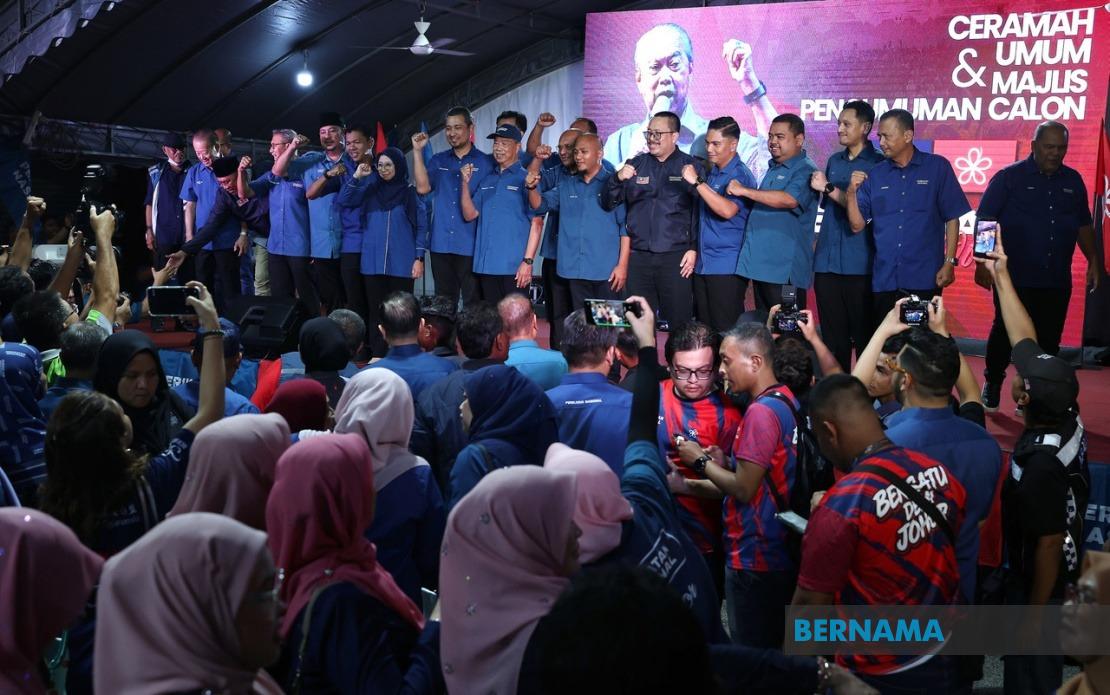
Tan Sri Muhyiddin Yassin, president of Parti Pribumi Bersatu Malaysia, has officially unveiled the party's complete roster of 16 candidates competing in the forthcoming Johor State Election. The announcement took place at a packed event held at the Pagoh Parliamentary Service Centre in Taman Pagoh Jaya, Muar, where party leadership and supporters gathered to hear the slate of hopefuls who will carry Bersatu's banner in the closely watched state polls.
The timing of the announcement comes as the political landscape in Johor enters a new phase following the dissolution of the State Assembly on June 1. This dissolution set the stage for the electoral exercise, with the Election Commission formally establishing June 27 as nomination day for candidates wishing to contest in any of the 56 state constituencies. The actual voting will take place on July 11, giving parties and candidates roughly two weeks for campaigning.
Bersatu's decision to contest 16 seats reflects the party's strategic positioning within Johor's political arena. The party, which has been a significant player in Malaysian politics at both federal and state levels, is competing alongside other coalitions and independent candidates in what promises to be a competitive election. The 16-seat contest represents a meaningful presence in the assembly, though Bersatu will need to consolidate support across multiple constituencies to achieve a substantial parliamentary presence.
Among the candidates announced, Mohd Idzharruddin Mohd Nasirruddin has been fielded in the N8 Bukit Pasir constituency. This selection reflects Bersatu's attempt to position candidates across different demographic and geographic profiles within the state. Bukit Pasir, located in the central part of Johor, represents a diverse electoral area where the party believes it can make headway with its chosen representative.
The public ceramah held alongside the formal announcement served as an opportunity for party leadership to articulate Bersatu's vision for Johor and outline the key issues the party intends to champion during the campaign period. Such events are crucial in Malaysian politics, allowing candidates to connect directly with voters and present their policy platforms in a grassroots setting. For Bersatu, which has experienced shifts in its political fortunes over recent years, these candidature announcements and public engagements are critical for rebuilding momentum ahead of the July 11 poll.
The Johor election carries particular significance for Malaysian politics beyond the state itself. Johor is the second-most populous state in Malaysia and has historically served as a bellwether for national political trends. The outcome of this election will provide insights into voter sentiment regarding state governance, economic management, and the broader political direction of the nation. For Bersatu specifically, strong performance in Johor could bolster its position within federal coalitions and enhance its negotiating power at the national level.
Bersatu's participation in the election comes at a time when the party continues to define its political identity and role within Malaysia's broader coalition politics. The party's decision to field 16 candidates suggests a measured approach—competing substantially without overextending resources across all 56 constituencies. This strategy allows Bersatu to concentrate campaigning efforts and maximize its chances of winning seats in constituencies where the party has identified stronger support bases or where its candidates possess established local credibility.
The nomination period from June 27 onwards will be crucial for finalizing candidate registrations and formally commencing the electoral process. During this period, all candidates will be required to submit the necessary documentation and meet the statutory requirements established by the Election Commission. Once nominations are officially accepted, the official campaign period will commence, with parties deploying their resources and messaging strategies to persuade voters across the state.
For Malaysian and Southeast Asian observers, the Johor election represents a significant democratic exercise that will test various political coalitions and individual candidates' appeal to a diverse electorate. The state's urban centres, rural areas, and suburban constituencies present varied voter priorities and concerns, from economic opportunities and employment to healthcare, education, and infrastructure development. Bersatu's candidates will need to address these diverse concerns effectively to convince voters to support their candidacies on July 11.
The party's approach reflects the broader pattern of Malaysian electoral politics, where parties carefully calibrate their contest levels based on available resources, candidate quality, and assessed viability in different constituencies. By concentrating on 16 seats, Bersatu can dedicate meaningful support to each candidate while preserving organizational capacity. This measured strategy contrasts with some other parties that contest more extensively across constituencies, sometimes with candidates of varying experience and background.
As the campaign unfolds over the coming weeks, these 16 Bersatu candidates will be tested on their ability to articulate party policies, respond to local concerns, and differentiate themselves from competing candidates in their respective constituencies. The caliber of candidates and their campaign performance will significantly influence Bersatu's ultimate electoral tally. For voters across Johor's 56 constituencies, the upcoming election represents an opportunity to assess which candidates and parties best represent their interests and vision for the state's future.

