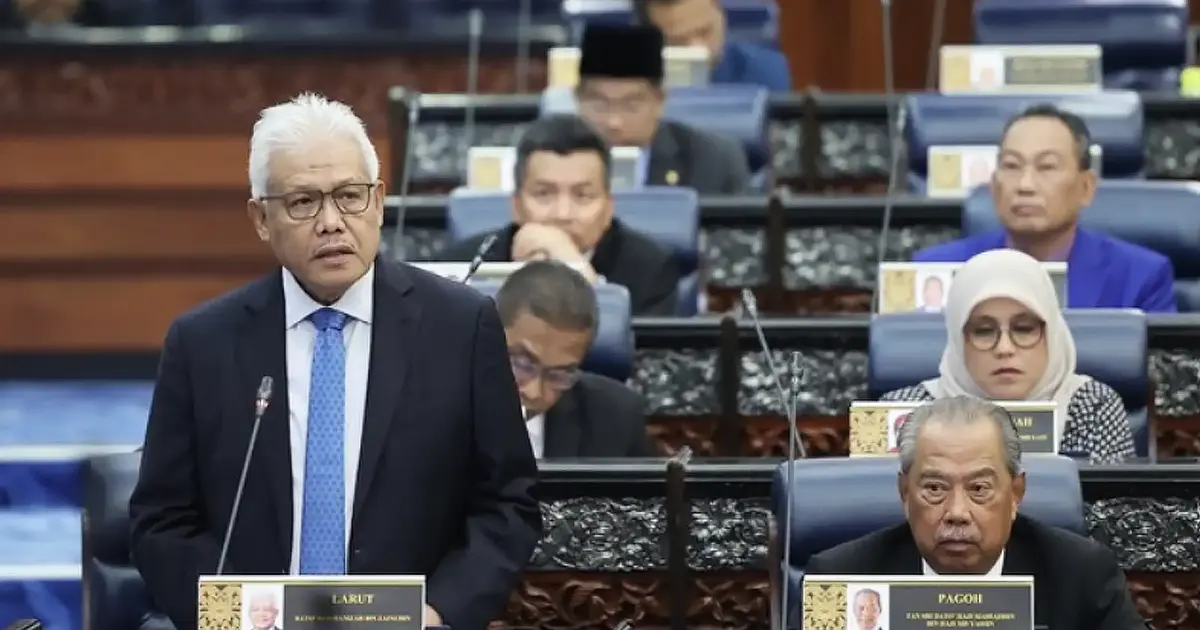
Dewan Rakyat Speaker Johari Abdul has revealed that former Prime Minister Muhyiddin Yassin approached him with a request to relocate to a different seat within the parliamentary chamber. The disclosure adds another layer of intrigue to Malaysia's evolving political dynamics, particularly regarding the internal reconfiguration of the Perikatan Nasional coalition and its positioning within the legislative assembly.
The speaker's announcement comes as parliament navigates a period of considerable political flux. Seat arrangements in the Dewan Rakyat carry significant symbolic weight beyond mere physical positioning, often reflecting parliamentary standings, factional alignments, and the relative influence of various political groupings. Muhyiddin's request for relocation signals potential shifts within the coalition's internal hierarchy or may reflect broader strategic considerations about Perikatan Nasional's parliamentary footprint during the current government's tenure.
Simultaneously, Speaker Johari Abdul confirmed that he has received official documentation formally designating Hamzah Zainudin, the MP representing the Larut constituency, as the opposition leader. This formal recognition carries substantial procedural implications for parliamentary operations, including speaking rights, question periods, and the official status of the opposition bloc during legislative sessions. The appointment represents the crystallization of opposition leadership structures following the formation of the current government configuration.
The convergence of these two developments—Muhyiddin's seat request and Hamzah's formal designation as opposition leader—underscores the continued restructuring of Malaysia's parliamentary landscape. Since the 2022 general election and subsequent political realignments, the composition and positioning of political blocs within parliament have remained fluid, with various coalitions and individual politicians adjusting their affiliations and parliamentary strategies.
Muhyiddin, who served as Prime Minister from 2020 to 2021, remains a consequential figure within Perikatan Nasional despite no longer holding the premiership. His request for seat relocation may reflect efforts to recalibrate his position within the parliamentary framework or signal changing dynamics within the coalition's decision-making structures. Such requests, while seemingly procedural, often carry substantive political messaging about factional relationships and individual status within larger political formations.
Hamzah Zainudin's formalization as opposition leader brings clarity to the opposition's institutional standing in parliament. The opposition leader's role encompasses not only parliamentary duties but also serves as a focal point for coordinating opposition responses to government initiatives and legislative proposals. This position requires navigating delicate balances between maintaining party discipline and coordinating across multiple opposition-aligned parties with potentially divergent interests and strategic priorities.
Parliament's internal architecture—including seating arrangements—has historically reflected Malaysia's political narratives. The physical positioning of lawmakers within the chamber carries implications for media coverage, visibility, and symbolic representation of political forces. Muhyiddin's request thus extends beyond administrative convenience to encompass broader questions about how different political actors wish to present themselves and be perceived within the national political arena.
For Malaysian observers and political analysts, these developments merit careful monitoring. The fluidity of parliamentary configurations suggests that Malaysia's political settlement remains dynamic rather than consolidated. The Dewan Rakyat continues to function as a venue where shifting coalitions, personal ambitions, and broader policy considerations interact to shape governance and opposition dynamics. Speaker Johari Abdul's role in managing these parliamentary arrangements emphasizes the Speaker's position as an institutional guardian tasked with maintaining procedural propriety while accommodating legitimate parliamentary adjustments.
The larger context includes ongoing questions about the stability of the current government coalition and the viability of opposition formations. Hamzah Zainudin's leadership of the opposition bloc provides an organizational focal point, though opposition effectiveness depends substantially on coordination among constituent parties with distinct ideological orientations and electoral constituencies. Similarly, Perikatan Nasional's internal cohesion remains central to government stability, making internal adjustments like Muhyiddin's seat relocation potentially consequential for broader political dynamics.
Moving forward, these parliamentary arrangements will likely continue evolving as political actors adapt to circumstances and recalibrate their positions. The Dewan Rakyat's functioning depends on such institutional adjustments, and Speaker Johari Abdul's facilitation of these changes reflects the pragmatic management of Malaysia's parliamentary institutions. For stakeholders and observers tracking Malaysian politics, the convergence of Muhyiddin's seat request and Hamzah's opposition leader designation serves as a reminder that parliament remains an arena where significant political recalibration continues to unfold.

