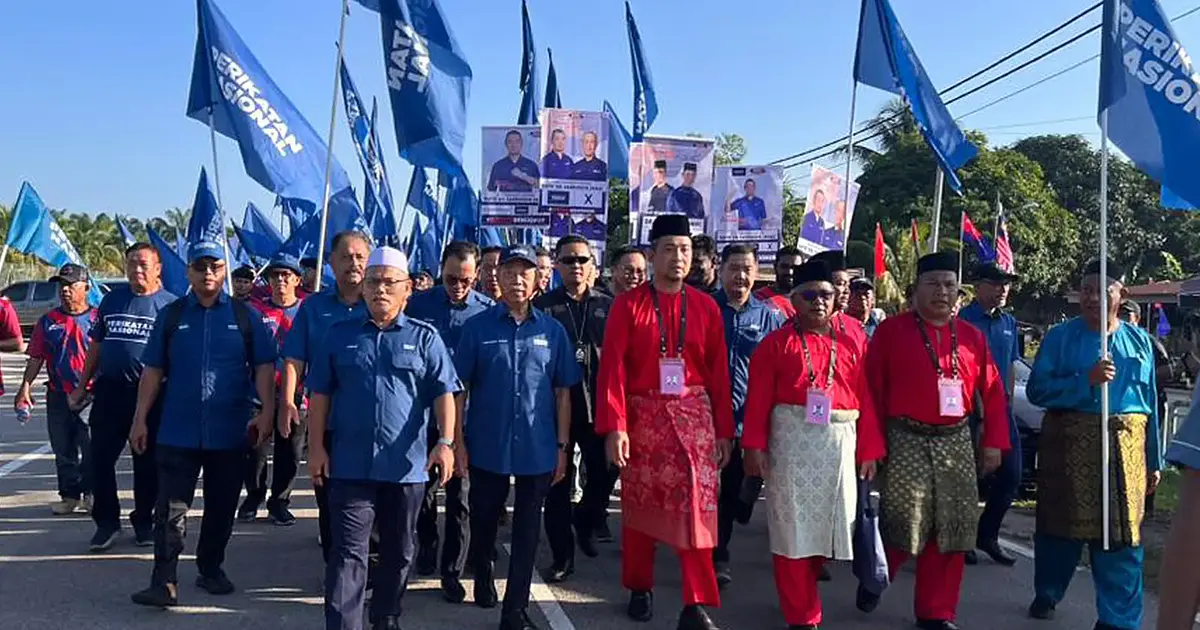
Perikatan Nasional chairman Muhyiddin Yassin joined hundreds of party supporters in a show of force at Bukit Kepong, where the coalition is backing two-term assemblyman Dr Sahruddin Jamal to retain his seat. The rally underscores the significance Perikatan places on holding the constituency as Malaysia's political landscape continues to reshape itself heading into what could be a competitive electoral cycle.
Dr Sahruddin has served two consecutive terms representing Bukit Kepong, establishing himself as a recognisable figure within the seat and accumulating institutional knowledge of local issues. His candidacy under the Bersatu banner, the dominant force within Perikatan Nasional, signals the coalition's determination to maintain its foothold in the area despite broader political uncertainties. The assemblyman's track record provides Perikatan with a tangible incumbent advantage as the party seeks to consolidate its position across key constituencies.
Muhyiddin's personal attendance at the rally carries symbolic weight beyond mere numbers. As Perikatan's chairman and a former Prime Minister, his presence signals high-level commitment to the campaign and lends gravitas to Dr Sahruddin's candidacy. Such leadership involvement is typically reserved for constituencies deemed strategically important or where competitive pressure from rival coalitions demands a robust response. The scale of supporter mobilisation—hundreds gathering for the event—reflects the organisational muscle Perikatan can deploy in areas where it maintains ground presence and party machinery.
For Perikatan Nasional, retaining seats becomes increasingly crucial as Malaysian politics grows more multipolar. The coalition has struggled to recover fully from the instability that characterised recent years, and every constituency becomes a test of its durability and appeal. Bukit Kepong, with an incumbent candidate fielded by Bersatu, represents exactly the kind of seat Perikatan needs to win if it is to demonstrate sustained relevance and reverse narratives of decline.
The rally also reflects broader campaign dynamics unfolding across Malaysia. With multiple coalitions competing for voter attention, visible campaign activity and leadership presence have become essential tools for generating momentum and reassuring grassroots supporters that their party remains viable and invested. Dr Sahruddin's experience and Muhyiddin's backing create a combination designed to appeal to voters seeking continuity in representation and proven local governance.
Bukit Kepong's electoral profile carries implications beyond the immediate contest. As a state assembly seat, it functions as a barometer for broader sentiment within its district and potentially across the wider state. Perikatan's performance here will be scrutinised by analysts and observers tracking the coalition's ability to sustain influence in its stronghold areas. A comfortable victory would reinforce party claims of resilience, while a narrow win or loss would invite fresh questions about its declining fortunes and whether erstwhile supporters are drifting toward rival parties.
For Malaysian voters in Bukit Kepong specifically, the election presents a choice between continuity in the form of Dr Sahruddin's established presence and potential alternatives fielded by opposition coalitions. The incumbent assemblyman's familiarity with local concerns, budget allocation priorities, and constituency-specific issues represents tangible experience that can be weighed against promises from challengers. His two full terms mean he has navigated multiple policy cycles and secured electoral endorsement twice already, though voters will ultimately judge whether that record justifies a third mandate.
The Perikatan campaign strategy evident in Muhyiddin's rally appearance emphasises tried-and-tested incumbency combined with coalition-level resources and visibility. This approach works best when an incumbent has delivered measurable benefits to their constituency and when the broader political environment does not strongly penalise the candidate's party affiliation. The size of the turnout suggests Perikatan retains organisational capacity to mobilise supporters, a crucial metric in competitive elections where ground operations often determine tight contests.
Regionally, Perikatan's performance in seats like Bukit Kepong carries significance for the broader Southeast Asian political landscape. Malaysian coalition politics increasingly influences how observers assess political stability and the durability of ruling arrangements across the region. Perikatan's ability to hold its constituencies and project forward momentum contributes to regional perceptions of Malaysian political direction and the health of its democratic institutions. A successful campaign by Dr Sahruddin would provide Perikatan with positive narratives to deploy in subsequent electoral contests and policy negotiations.
The campaign dynamic at Bukit Kepong also illuminates how Malaysian parties mobilise support in the contemporary era. Large-scale rallies, leadership visibility, and candidate incumbency remain potent tools, yet they coexist with digital campaigning, social media dynamics, and voter sentiment shaped by cost-of-living concerns, service delivery expectations, and broader national political narratives. Dr Sahruddin's campaign will succeed or fail based on how effectively Perikatan synthesises these elements and whether voters believe the coalition deserves continued trust with local representation.

