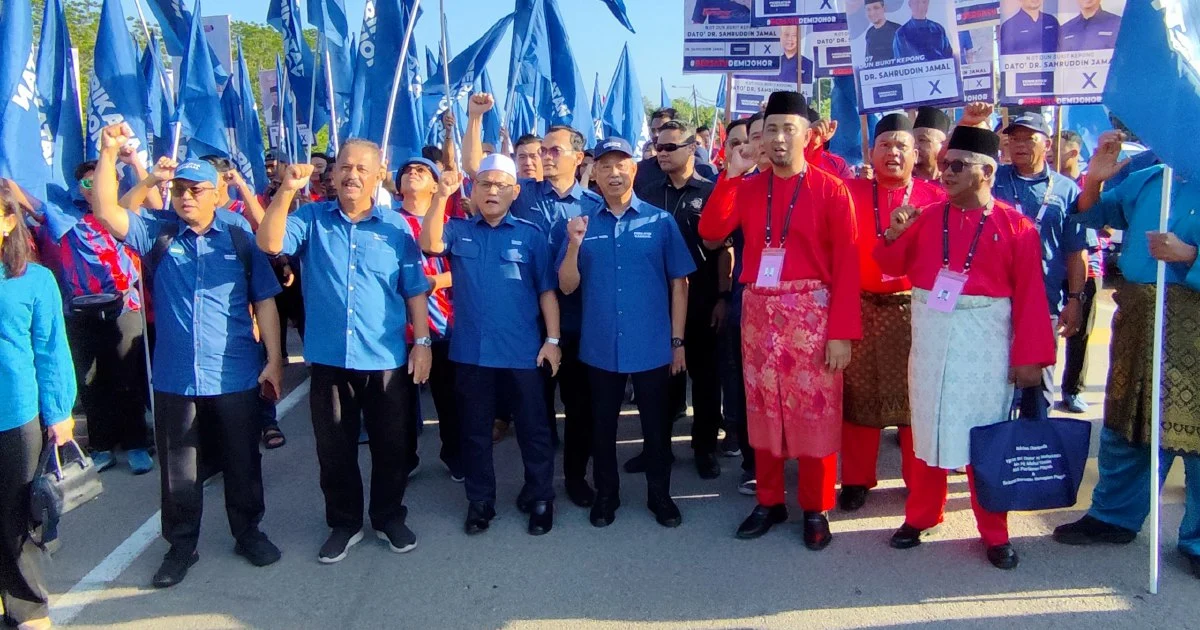
The presence of Bersatu president Tan Sri Muhyiddin Yassin at the nomination centre in Pagoh on Wednesday morning signalled the party's determination to mount a credible challenge in the Bukit Kepong constituency during the ongoing Johor state election campaign. Arriving at 8.45 am at the Pagoh Sports Complex Hall, Muhyiddin's appearance alongside candidate Sahruddin underscored the party's confidence in its electoral prospects in what has emerged as a keenly contested battleground in the southern state.
The symbolic timing of Muhyiddin's visit carried particular weight, as senior party figures increasingly seek to mobilise grassroots support during the crucial nomination phase. By positioning himself alongside Sahruddin, the Bersatu leadership demonstrated its commitment to key constituencies while also providing the candidate with the visible backing of the party machinery. Such gestures, though often overlooked in media coverage, play a significant role in signalling internal party strength to both supporters and observers alike.
Bukit Kepong has historically represented a closely watched microcosm of political sentiment in Johor, reflecting broader trends in the state's electoral dynamics. The constituency's composition and voter preferences have shifted considerably in recent election cycles, making it a bellwether for which political coalitions can effectively mobilise their base. Bersatu's decision to contest here, particularly with a candidate receiving high-level party support, reflects strategic assessments about where the party can consolidate its footing in the state.
The Johor state election carries outsized significance for Malaysia's broader political trajectory. As one of the country's most populated states and a traditional power base for various political formations, election results here often foreshadow national trends and help determine the shape of future coalition arrangements at both state and federal levels. Bersatu's performance, in particular, will offer indicators about the party's capacity to retain and expand support since its repositioning within the political landscape.
Muhyiddin's hands-on approach to the campaign reflects a broader pattern of senior party leadership engaging directly in electoral contests rather than delegating entirely to lower-ranked officials. This personal involvement signals the party leadership's serious investment in the outcome while simultaneously attempting to energise volunteers and supporters who draw motivation from seeing senior figures commit time and effort to specific campaigns. The nomination phase, often seen as mere administrative procedure, actually provides a crucial window for parties to demonstrate internal cohesion and candidate viability.
The Pagoh Sports Complex location itself carries some symbolic resonance, being situated in a district with deep historical roots in Malaysian politics. Such venues often serve as gathering points that transcend their immediate function as nomination centres, becoming spaces where party machinery demonstrates its organisational capacity and supporters manifest their commitment through physical presence.
Bersatu's electoral strategy in Johor appears focused on capitalising on specific pockets of support rather than attempting a blanket challenge across all constituencies. This targeted approach allows the party to concentrate resources where it assesses prospects most favourably, including constituencies like Bukit Kepong. The presence of high-level party figures in these targeted areas amplifies the signal that Bersatu has identified these seats as winnable and worthy of senior attention.
The nomination process itself, while procedural on the surface, serves multiple functions within Malaysia's electoral ecosystem. It provides parties with their first official opportunity to publicly test their candidates and campaign messaging, allows supporters to demonstrate enthusiasm and numbers at formal gatherings, and creates initial media narratives that can shape public perceptions of candidate viability and party momentum heading into the main campaign period.
For voters in Bukit Kepong and observers tracking the broader Johor election, the involvement of senior party leadership in the nomination process offers early intelligence about how various political forces are prioritising their efforts. Constituencies receiving visits from top party figures typically indicate where leadership believes resources can generate returns, whether in terms of securing seats or projecting images of party strength and organisational capacity.
As the Johor election progresses toward polling day, the patterns established during the nomination phase—including decisions about which candidates receive senior-level support—will likely prove consequential in shaping the final outcome. Muhyiddin's appearance alongside Sahruddin thus represents more than a symbolic gesture; it reflects calculated political positioning by Bersatu as it navigates an increasingly fragmented electoral landscape while seeking to maintain relevance at both state and federal levels in Malaysia's complex political environment.

