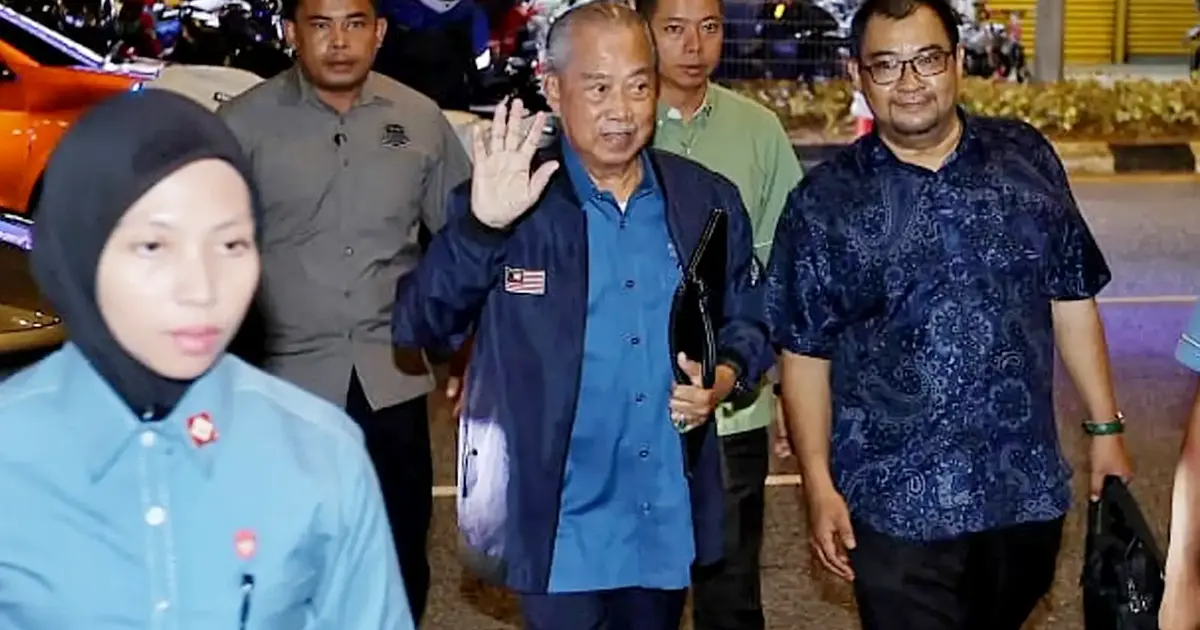
Tan Sri Muhyiddin Yassin and other leading figures from Bersatu arrived at an emergency gathering of the Perikatan Nasional coalition late this evening, signalling the urgency with which the party is responding to a significant restructuring within the political alliance. The hastily arranged session reflects mounting pressures on the coalition as it confronts its most serious internal challenge in recent months, with discussions centring on how Bersatu will position itself in the absence of a key partner.
The impetus for tonight's meeting stems directly from PAS's formal decision to withdraw from the Perikatan Nasional framework. This rupture marks a watershed moment for the coalition, which has served as the primary vehicle for opposition politics in Malaysia since its inception. The departure of PAS, one of the coalition's three founding pillars alongside Bersatu and Gerakan, fundamentally alters the mathematical and strategic calculations that have underpinned Perikatan Nasional's approach to national politics and its ambitions for future electoral contests.
Bersatu's standing within the coalition now demands urgent clarification and recalibration. As the party that anchors the Perikatan Nasional structure through its leadership and organisational presence, Bersatu faces critical questions about the coalition's viability, its appeal to voters, and whether it can maintain sufficient parliamentary leverage to remain a consequential force in Malaysian politics. The loss of PAS, which commands significant grassroots support particularly in the northern and eastern portions of Peninsular Malaysia, represents a considerable diminution of the coalition's territorial reach and mobilisation capacity.
For Malaysian political observers, the timing of this emergency session underscores the volatile nature of coalition governance. The Perikatan Nasional experiment has always rested on an implicit understanding that member parties would maintain their basic structural commitments, even amid periodic friction. PAS's unilateral decision to exit has effectively shattered that assumption, compelling Bersatu leadership to reassess not only the coalition's immediate operational arrangements but also its long-term strategic viability as a unified political force.
The broader context of Malaysian politics has shifted considerably since the Perikatan Nasional was established. Changes in electoral dynamics, shifting voter preferences, and the evolving landscape of party alliances have all contributed to increased pressure on the coalition's coherence. The meeting tonight will need to address whether Perikatan Nasional can continue functioning as a meaningful coalition entity or whether the departure of PAS necessitates a fundamental rethinking of its structure and objectives.
Bersatu's position is particularly delicate given its relatively recent formation and its dependence on key personalities to maintain party cohesion. Without the collaborative framework that the coalition provided, Bersatu must articulate a compelling and independent political vision to its supporters while simultaneously exploring whether alternative alliances might prove more productive than attempting to salvage the current coalition structure. This balancing act will occupy much of tonight's deliberations among senior party leaders.
The implications for Southeast Asian politics should not be overlooked. Malaysia's coalition politics frequently serve as barometers for broader regional trends in how diverse stakeholder groups negotiate power-sharing arrangements across ethnic, religious, and ideological lines. The unraveling of Perikatan Nasional demonstrates both the challenges and limitations of constructing durable political coalitions in deeply plural societies, lessons that resonate across the wider region.
For ordinary Malaysians and the business community, coalition stability matters considerably. Political uncertainty can translate into governance challenges, delayed policy implementation, and reduced investor confidence. The emergency nature of tonight's gathering suggests that senior Perikatan Nasional figures recognise the gravity of the situation and the need for swift, coordinated responses to contain any broader destabilisation.
The meeting will likely explore several dimensions of Bersatu's future trajectory. These include whether Bersatu should attempt to recruit additional coalition partners to replace PAS, whether it should operate independently as a political force, or whether negotiations might occur with other established political groupings. Each option carries distinct advantages and risks that will require careful strategic evaluation by party leadership.
Regional considerations also factor into these calculations. PAS's Islamist positioning and organisational strength in certain states meant that Perikatan Nasional's electoral mathematics differed significantly across different regions of Malaysia. Bersatu's predominantly Malay-Muslim base means that any reconfiguration of the coalition will need to account for the party's diminished capacity to compete effectively in constituencies where PAS provided electoral credibility and grassroots mobilisation.
The emergency session also reflects acknowledgment among senior Perikatan Nasional leaders that extended deliberation could invite further defections or internal dissent. Swift decision-making and clear communication of party direction become essential in contexts where coalition partners are exiting and party members may be questioning whether their political home remains viable.
As the discussions unfold this evening, participants will confront fundamental questions about the coalition's future that extend beyond the immediate crisis. The decisions taken tonight may well determine whether Perikatan Nasional can reinvent itself as a meaningful political force or whether it has entered a period of inevitable decline. The stakes could hardly be higher for Malaysian opposition politics.

