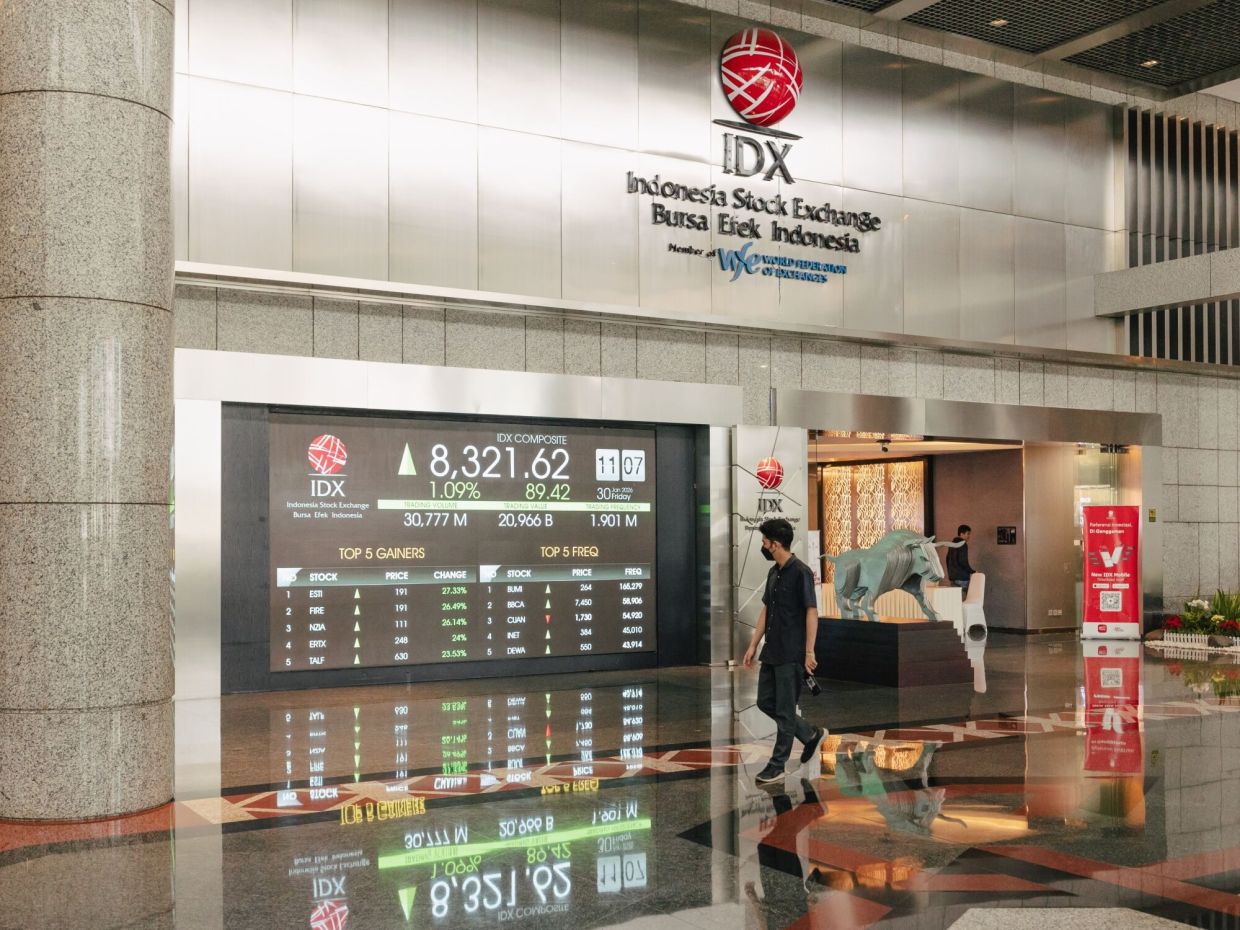
Indonesia's efforts to salvage its emerging market classification face a fresh setback as MSCI, the influential index provider tracking trillions of dollars in global investment flows, flagged significant concerns about market transparency on Thursday. The assessment underscores mounting challenges for Southeast Asia's largest economy as it attempts to retain foreign investor confidence at a time when economic headwinds are mounting on multiple fronts.
The accessibility review released by MSCI specifically downgraded Indonesia's information flow criterion to negative status, reflecting persistent opacity surrounding beneficial ownership data and real-time market activity. This deterioration in a key metric matters enormously because transparent share ownership is fundamental to how global portfolio managers assess free float—the portion of shares freely tradeable rather than locked in by controlling shareholders. When the true free float remains murky, it distorts valuation signals and creates unnecessary risk for international investors, many of whom operate under strict governance frameworks that require clear visibility into corporate structures.
MSCI's announcement arrives at a particularly precarious moment for Jakarta's beleaguered stock exchange. The index provider is scheduled to announce next week whether it will execute a downgrade that would shift Indonesia from emerging market status to frontier classification, a technical reclassification with enormous practical consequences. Analysts estimate such a move would force passive funds tracking MSCI indexes to liquidate Indonesian holdings worth as much as $13 billion. Active fund managers benchmarked against MSCI indexes would simultaneously face pressure to reduce exposure, compounding selling pressure across the market.
The situation represents a stunning reversal for an economy that once commanded considerable optimism among emerging market investors. Indonesia's Jakarta Composite Index has plummeted nearly 29 percent during 2025, making it among the world's worst-performing major stock markets. Foreign investors have already withdrawn approximately $3.65 billion worth of Indonesian stocks, a clear signal of deteriorating confidence in the investment environment. This exodus reflects not merely index concerns but broader anxieties surrounding macroeconomic management and political direction under President Prabowo Subianto's administration.
Mohit Mirpuri, a fund manager at SGMC Capital in Singapore, offered a more measured perspective on the latest MSCI assessment, suggesting that market participants may be overreacting to the headline risk. He noted that only a single accessibility measure actually deteriorated while Indonesia maintained competitive performance relative to regional peers including South Korea, China and India across multiple other key criteria. This observation carries weight within the fund management community, where comparative rather than absolute assessments often guide investment positioning decisions. Mirpuri's base case remains that Indonesia retains emerging market status following next week's verdict, implying that a downgrade is not inevitable despite mounting pressures.
Indonesian authorities launched a rapid-response reform agenda following MSCI's initial warning last January, actions that suggest policymakers understood the stakes involved. The stock exchange and financial regulator implemented several structural changes, including doubling the minimum free float requirement for listed companies to 15 percent. Perhaps most tellingly, the top executives of both the exchange and regulatory body resigned in what observers characterized as a single afternoon, signalling dramatic personnel changes aimed at demonstrating commitment to reform. These moves acknowledged that investor protection and market transparency had suffered under previous oversight frameworks.
Yet even aggressive reform measures have proven insufficient to arrest market deterioration. In April, MSCI extended its formal review of Indonesian markets, and in May the index provider removed six companies from its indexes, most of which maintained ties to prominent business tycoons. The removals represented a powerful signal that the index provider would not tolerate opacity around controlling shareholders, a common feature of Southeast Asian corporate structures but increasingly difficult to reconcile with global institutional investor standards. The announcement of these exclusions triggered another sharp sell-off in Indonesian equities, deepening the market's descent.
The MSCI scrutiny has exposed underlying anxieties extending far beyond index mechanics. Under President Prabowo Subianto, Indonesia faces mounting concerns about the sustainability of fiscal and monetary policy during a period of significant economic stress. Populist policy measures adopted by the administration, combined with market perceptions of inconsistent economic direction, have hammered the rupiah currency to record lows. The central bank has responded by hiking interest rates in recent weeks, a tightening sequence designed to defend the currency but one that risks suppressing economic growth at a time when the nation can least afford demand destruction.
Currency market dysfunction represents another dimension of accessibility constraints that MSCI identified. The index provider noted that Indonesia lacks an efficient offshore currency market while facing meaningful constraints on onshore foreign exchange trading. These limitations effectively prevent large international investors from executing hedging strategies that would otherwise mitigate currency risk exposure, making Indonesia's assets inherently less attractive for global portfolio allocation. When foreign exchange markets function poorly, institutional investors naturally migrate capital toward jurisdictions offering greater trading flexibility and tighter bid-ask spreads.
Global credit rating agencies have reinforced concerns about Indonesia's near-term trajectory. Both Moody's and Fitch downgraded their debt rating outlooks to negative status earlier in 2025, with both explicitly citing deteriorating policymaking credibility. For an economy valued at approximately $1.4 trillion, these downgrades carry significant consequences for borrowing costs across the corporate and sovereign sectors. The loss of credibility has proven particularly damaging given that Indonesia was previously regarded as a market darling during the earlier emerging market boom, making the contrast between previous perceptions and current sentiment especially sharp.
The convergence of index risk, macroeconomic headwinds, currency weakness and rating agency downgrades has created a challenging environment for Indonesian policymakers as they prepare for MSCI's imminent decision. Authorities must balance the desire to demonstrate reform momentum with acknowledging that deeper structural issues affecting investor confidence extend beyond transparency measures alone. Whether next week's verdict results in downgrade or reprieve, the episode underscores how closely emerging market classification now depends on both technical market infrastructure and broader confidence in economic management among global investors who control enormous pools of capital.

