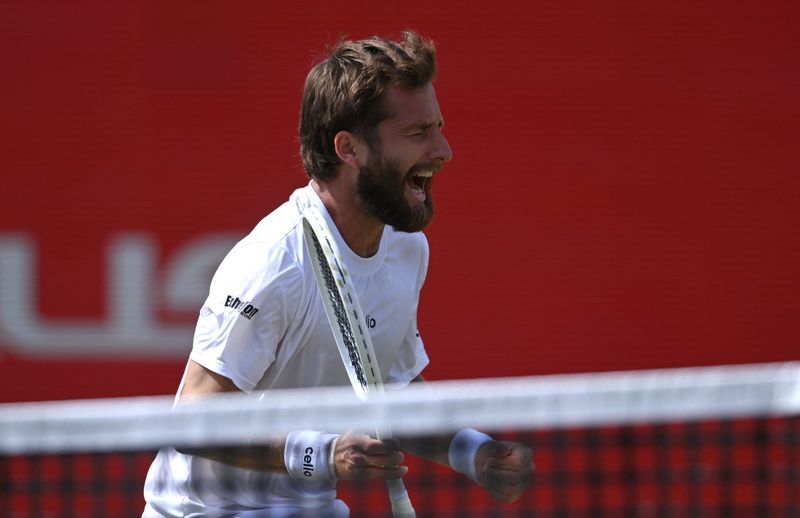
French tennis player Corentin Moutet has been stripped of virtually all his prize money from the Queen's Club tournament after the ATP imposed a $40,000 penalty for an expletive-strewn interview conducted on court by the BBC. The 27-year-old world number 36 was sanctioned for unsportsmanlike conduct following his opening-round victory over fellow Frenchman Giovanni Mpetshi Perricard, though he has since lodged an appeal against the ruling.
Moutet's total earnings from the prestigious London grass-court event amounted to $43,000 for advancing to the second round, meaning the fine essentially eliminates his entire financial return from the tournament. The punishment underscores how seriously the professional tennis circuit treats player conduct during broadcasts, particularly when matches are aired live to international audiences on major networks. For Malaysian audiences familiar with tennis through ESPN and other sports channels, this incident highlights the strict standards maintained across the professional game.
The problematic interview occurred immediately after Moutet's first-round triumph. When questioned by the BBC interviewer on court, the Frenchman began swearing to express his frustration at being aced on match point by a 142 miles-per-hour second serve. After uttering the profanity initially, the interviewer politely requested that Moutet refrain from repeating the expletive during their live television segment. Instead of complying, the player repeated the swear word three additional times before broadcasters terminated the interview and issued apologies to both the stadium crowd and viewers watching at home.
Moutet's disciplinary troubles have become something of a pattern in his professional career. The incident resonates beyond just this single tournament, as the player has previously faced serious consequences for his on-court behaviour. In 2022, he was defaulted from the Adelaide International after directing profanities at the umpire during his match against Serbian player Laslo Djere, an action that resulted in his immediate disqualification from the competition. That same year, the French Tennis Federation took the extraordinary step of suspending support for Moutet due to ongoing concerns about his conduct and professionalism.
Following the Queen's Club incident, Moutet subsequently posted on Instagram attempting to minimise the significance of his remarks, claiming that he had simply been joking during the exchange. This explanation has done little to sway the ATP's position or prevent the substantial financial penalty. His second-round loss to Spain's Alejandro Davidovich Fokina meant his tournament run ended shortly after the controversial interview, further limiting any opportunity to offset the fine through deeper tournament progression.
The case illustrates the tension that occasionally emerges between player authenticity and broadcast standards in professional tennis. While some argue that such strict enforcement of language policies may seem overly stringent, broadcasters and governing bodies maintain that live television requires a certain level of decorum, particularly given that millions of viewers worldwide, including families and younger audiences, tune in to these matches. The ATP's firm stance reflects the broader evolution of sports governance toward stricter accountability measures.
For context within the Southeast Asian tennis landscape, incidents like Moutet's serve as cautionary tales for rising regional players. As tennis continues to develop across the region, with more tournaments being broadcast and international players competing, understanding and respecting the professional standards expected across the circuit becomes increasingly important. The financial consequences of such violations can be particularly significant for mid-ranked players for whom tournament prize money represents crucial income.
Moutet's ranking as world number 36 places him among the tour's mid-tier professionals, where prize money from tournaments matters considerably for maintaining training programmes, coaching staff, and travel expenses. A $40,000 fine represents a serious financial blow, equivalent to several weeks of expenses for a professional player's support team. The appeal process will likely determine whether the fine stands or undergoes revision, though the reputational damage from the incident has already been established through widespread media coverage.
The incident also raises questions about player management and support systems within professional tennis. Moutet, who has clearly struggled with impulse control and emotional regulation during high-pressure competitive moments, may benefit from working with sports psychologists or behavioural coaches to develop better coping mechanisms. Such support resources are increasingly common among top-ranked players but remain less accessible to players in the 30-50 ranking range, potentially contributing to repeat offences.

