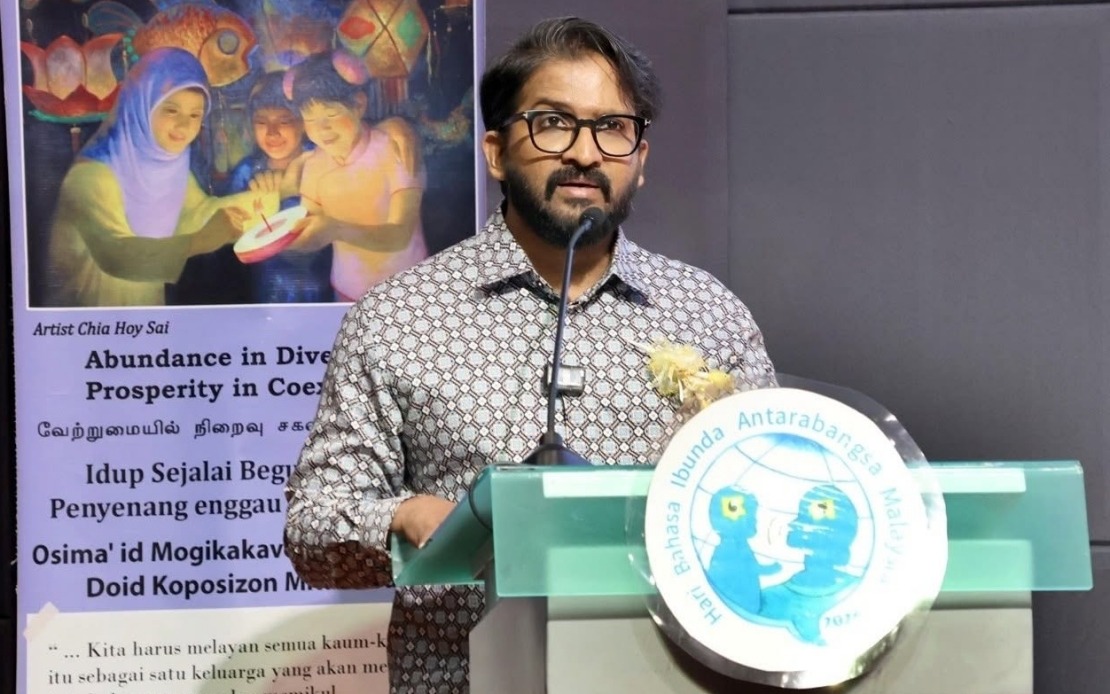
Deputy National Unity Minister R. Yuneswaran has made a compelling case for elevating mother-tongue education as a practical tool for managing the toxic 3R discourse—touching on race, religion and royalty—that has become increasingly corrosive on Malaysian social media. In a Facebook statement, Yuneswaran argued that linguistic and cultural competence provides citizens with the foundation needed to navigate Malaysia's complex plural society with greater empathy and understanding. The minister's intervention arrives at a critical moment when algorithmic amplification of divisive content continues to strain communal relations across the country.
The core of Yuneswaran's argument rests on a straightforward premise: many controversies involving sensitive communal issues stem not from deliberate malice but from profound ignorance of neighbouring cultures, histories and languages. When individuals lack familiarity with the languages and cultural frameworks of their fellow citizens, misinterpretation flourishes and bad faith becomes easier to assume. This educational deficit, Yuneswaran suggests, creates a vacuum that polarising narratives and inflammatory content readily fill. By contrast, genuine fluency in one's own heritage language—whether it is Tamil, Mandarin, Arabic or any of Malaysia's indigenous tongues—develops the linguistic precision and cultural consciousness necessary to engage with difference constructively rather than defensively.
Yuneswaran's framing of Malaysia's linguistic landscape as a national asset rather than a problem reflects a shift in official thinking about cultural diversity. The country is home to approximately 130 languages, a figure that most nations would regard as a liability requiring urgent standardisation. Yet the minister's position invites a reinterpretation: this abundance represents unparalleled richness and interconnection. When Malaysians develop genuine competence in their mother tongues, they gain access not merely to words but to distinct ways of understanding the world, systems of values embedded in vocabulary and idiom, and historical narratives that illuminate national identity from multiple angles. A Malaysian proficient in Tamil gains insight into South Asian epistemologies; one fluent in Mandarin understands philosophical traditions spanning millennia; a speaker of Malay or any Bumiputera language grounds themselves in the indigenous foundations of the nation.
The minister's own biographical example carries particular weight in advancing this argument. As an Indian Malaysian educated across both Chinese and national school streams, Yuneswaran embodies the possibility of navigating Malaysia's multilingual reality without sacrificing any component of national belonging. His testimony directly challenges the zero-sum framing that sometimes dominates policy debate—the false notion that investing in mother-tongue instruction necessarily weakens commitment to Bahasa Malaysia or creates communal silos. Instead, Yuneswaran presents evidence from lived experience that proficiency in heritage languages enhances rather than diminishes one's capacity to learn other languages and to engage meaningfully with broader Malaysian identity.
This intervention connects directly to the National Unity Ministry's mandate under the 13th Malaysia Plan, which tasked the department with consolidating nation-building initiatives around three interlocking principles: understanding, respect and reciprocal willingness to learn. These are not mere aspirational values but practical mechanisms for reducing intergroup tension. When individuals understand the linguistic and cultural underpinnings of their neighbours' identities, they become less susceptible to stereotypes and more capable of distinguishing between legitimate differences and manufactured grievances. Respect, in this formulation, flows naturally from comprehension rather than being imposed through exhortation alone.
The timing of this argument reflects Malaysia's ongoing struggle with social media's capacity to amplify conflict. Daily controversies erupting online around 3R topics demonstrate how digital platforms compress complex cultural questions into inflammatory fragments, stripping away nuance and context. Citizens lacking deep cultural literacy find themselves navigating these disputes with inadequate conceptual tools, vulnerable to radicalised narratives and prone to defensive reactions. A population more thoroughly grounded in its own heritage languages and cultures would approach such controversies with greater sophistication and resilience.
Implementing Yuneswaran's vision would require coordinated action across education, media and cultural institutions. Schools would need to allocate genuine resources and class time to mother-tongue instruction rather than treating it as peripheral. Curricula would need to emphasise not merely grammatical competence but the cultural, historical and philosophical dimensions embedded in language. Universities and media organisations would need to cultivate spaces where multilingual expression and cross-cultural dialogue become normalised rather than exceptional. This is substantially more ambitious than current practice in many quarters, yet entirely achievable given political will.
The implications for Malaysia extend beyond conflict prevention into the realm of social cohesion and economic productivity. Research across Southeast Asia and globally demonstrates that multilingual populations demonstrate superior cognitive flexibility and intercultural competence—assets increasingly valuable in knowledge economies. Malaysia's linguistic diversity, properly cultivated, represents a competitive advantage in engaging with the region and the world. Citizens comfortable moving between languages develop the conceptual breadth necessary for innovation, diplomacy and complex problem-solving.
Yuneswaran's framing also offers Southeast Asian governments a constructive alternative to security-focused approaches to managing communal tensions. Rather than restricting speech or intensifying surveillance of social media, investing in cultural literacy addresses root causes of polarisation. This approach respects individual autonomy while strengthening shared foundations for coexistence. For nations across the region wrestling with similar 3R pressures, the deputy minister's case for linguistic and cultural investment merits serious consideration as part of broader national resilience strategies.

