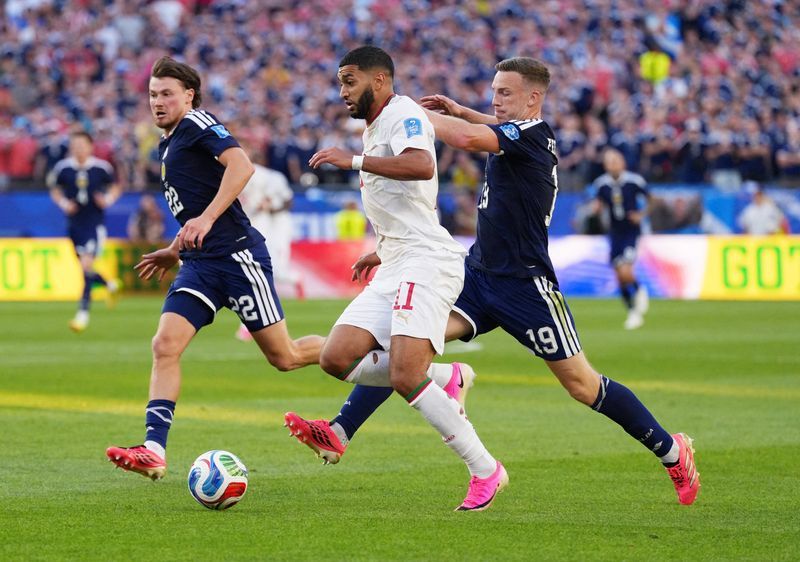
Morocco moved to the summit of Group C on Friday with a 1-0 triumph over Scotland, delivering a masterclass in controlled possession and relentless pressing that belied the narrow scoreline. Playing in Foxborough, Massachusetts, the North African side exhibited the technical quality and tactical discipline that carried them to the semi-finals four years ago in Qatar, leaving the Scots largely frustrated and unable to generate meaningful attacking opportunities throughout a one-sided encounter.
The defining moment arrived with bewildering speed. Ismael Saibari broke free of the Scottish defence after just 71 seconds, capitalising on a dangerous cross from Brahim Diaz that left central defender Grant Hanley exposed. Saibari's composure in front of goal proved decisive as he drove his shot past goalkeeper Angus Gunn to record the fastest goal of this World Cup competition. The lightning-quick breakthrough appeared to unsettle Scotland considerably, forcing them into a reactive posture from which they never truly recovered.
Saibari's goal added another notable distinction to his tournament record. The midfielder, who previously netted in Morocco's opening-match draw against Brazil, became only the second African player to score in his first two World Cup appearances, following Egypt's Mohamed Salah into this exclusive category. His performance has reportedly caught the attention of German champions Bayern Munich, who have moved to secure his signature in recent days, though his immediate focus remains on delivering results for his country in this competition.
Following their surprise opening victory over Haiti—Scotland's first World Cup win in 36 years—the Scots arrived in Foxborough with renewed optimism and genuine belief in their chances of progressing. That optimism evaporated almost immediately. Morocco's dominance extended far beyond the scoresheet, as they controlled midfield, suffocated Scotland's offensive transitions, and created numerous clear-cut opportunities that might have seen them extend their advantage significantly. The visitors managed barely a shot of consequence until deep into the first-half stoppage period, a damning indictment of their inability to compete with their opposition's intensity and pressing game.
Morocco threatened repeatedly to add to their tally, with several gilt-edged chances spurned that could easily have resulted in a more emphatic victory. Azzedine Ounahi orchestrated play down the left flank in one particularly promising sequence, cutting the ball back for teammates to finish, only for both to somehow fail to convert from yards out. Bilal El Khannouss squandered another opportunity in the 36th minute when his effort sailed over the bar following another sweeping Morocco move, while Saibari himself struck the post with a deflected shot during the second half. El Khannouss also forced Gunn into a decent save with a glancing header shortly after the interval, evidence of Morocco's sustained offensive pressure throughout.
Ounah had generated controversy the previous day by boldly declaring Morocco's intention to reach the final, comments that drew skepticism from observers. However, Friday's performance substantiated such ambitions. The Moroccans played with a clarity of purpose and technical execution that suggested a team genuinely capable of competing at the tournament's highest level. Their captain Achraf Hakimi, who faced boos from Scottish supporters amid ongoing legal matters in his personal circumstances, nonetheless led by example in a display that showcased Morocco's credentials.
Scotland's inability to muster effective resistance raises serious questions about their tournament trajectory and whether their opening success against Haiti represented genuine progress or merely a false dawn. Despite attempting to build momentum in the closing stages, they found Morocco's defensive shape too disciplined and their goalkeeper too well-protected to manufacture a meaningful comeback. The lack of cutting edge in the final third proved utterly inadequate against opposition that seemed to operate on a different wavelength entirely.
The result reshapes Group C significantly heading into the final round of matches. Morocco now command four points from two games and face Haiti on Wednesday, a fixture that should prove manageable for a side performing at such a high level. Scotland, with three points accumulated, confront the daunting prospect of taking on five-time champions Brazil in their concluding fixture, a meeting that may well decide their tournament fate. Brazil themselves play Haiti later on Friday, adding further layers of complexity to the group's permutations as every result now carries implications for all four teams' qualification hopes.
Qualification mathematics in this tournament reward consistency and efficiency, with the top two sides from each group automatically advancing to the round of 32, supplemented by the eight strongest third-placed finishers. Morocco's commanding display and commanding performance metrics suggest they possess the pedigree and composure required to navigate what remains of their campaign. Scotland, conversely, must find a way to generate the attacking impetus and defensive solidity that proved entirely absent against the North Africans, though facing Brazil represents arguably the most unforgiving environment imaginable in which to rediscover such form.

