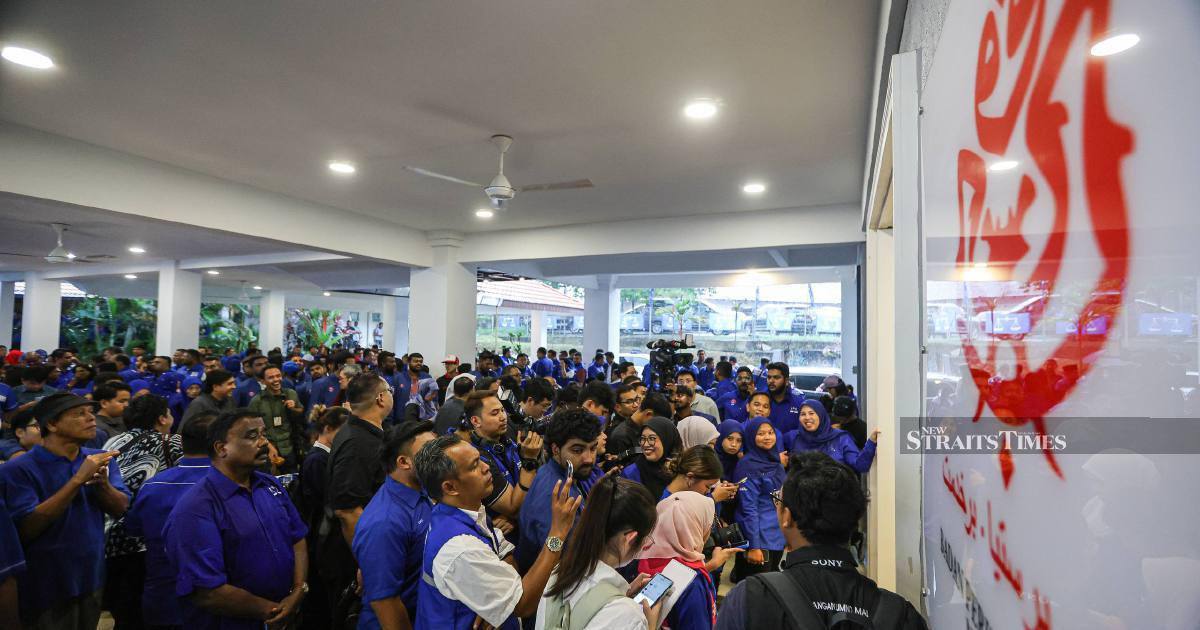
Anticipation is mounting within Barisan Nasional circles as senior party figures and grassroots supporters gathered at the Johor Umno headquarters in preparation for the formal unveiling of the coalition's candidates contesting the 16th Johor state election. The convergence of political heavyweights and dedicated party members signals the coalition's determination to mount a competitive campaign in one of Malaysia's most consequential state contests.
The Johor state election represents a significant political juncture for Barisan Nasional, which seeks to consolidate its governing position in a state that has historically been a stronghold for the coalition. The gathering at party headquarters reflects the scale of preparation underway, with multiple tiers of BN leadership coordinating efforts to field competitive candidates across the state's constituencies. This mobilisation demonstrates the coalition's view of Johor as strategically critical to its broader political objectives in the coming electoral cycle.
For Malaysia's political landscape, Johor elections carry outsized importance due to the state's size, economic significance, and historical voting patterns. A strong BN performance would reinforce the coalition's claim to remain the natural governing force, while setbacks could embolden opposition parties and complicate federal political calculations. The enthusiastic turnout at the candidate announcement event underscores how seriously BN treats this contest and the internal expectations being set within party ranks.
The assembly of party members at the Johor Umno headquarters also reflects the coalition's strategy of building visible momentum ahead of official campaign commencement. By orchestrating a high-profile candidate announcement with significant attendance, BN aims to project unity, organisation, and voter appeal to both the media and the broader electorate. This choreographed demonstration of party strength serves multiple purposes: energising grassroots volunteers, signalling stability to potential swing voters, and establishing narrative dominance in early campaign framing.
Within Barisan Nasional's internal dynamics, the Johor election offers an important test of coalition cohesion. The coalition comprises multiple component parties with varying levels of influence in different regions. How candidates are distributed among BN partners—traditionally Umno, MCA, and MIC—and how equitably seats are allocated, will reveal the balance of power within the coalition's leadership structure. The buzz surrounding the announcement suggests significant negotiations may have preceded the candidate finalisation process.
For Johor's electorate, the timing and composition of BN's candidate slate will heavily influence campaign dynamics. Voters assess not merely policy platforms but the quality and credibility of individual candidates offered for their consideration. Contested internal selections or last-minute changes to the candidate list could undermine BN's unified image or energise critics who question the selection process's transparency. Conversely, candidates with strong local credentials and community connections can effectively mobilise support across diverse constituencies.
The opposition parties will be closely monitoring BN's candidate announcements to calibrate their own campaign strategies. The identity of BN candidates in marginal seats, patterns in candidate deployment across urban and rural areas, and decisions regarding incumbent retention all provide opposition movements with tactical intelligence for constructing competitive counter-campaigns. Early analysis of the candidate slate will likely inform opposition messaging and resource allocation decisions throughout the campaign period.
The gathering at Johor Umno headquarters also carries symbolic significance regarding party discipline and member engagement. Public displays of party unity and enthusiasm help establish psychological momentum that can influence voter perceptions and party volunteer motivation. The energy witnessed during candidate announcements often translates into campaign intensity during subsequent weeks, with energised party members proving more effective at ground-level voter outreach than disengaged or demoralised supporters.
Beyond the immediate Johor context, this election serves as a barometer for Malaysian political sentiment more broadly. Johor's voting patterns frequently preview national electoral trends, making the state election outcome potentially predictive of federal-level dynamics. Political analysts across Malaysia's spectrum will scrutinise Johor results for signals regarding voter appetite for incumbency, economic messaging effectiveness, and emerging demographic voting patterns. A strong BN showing would suggest voter confidence in the coalition's governance record, while significant opposition gains would indicate shifting voter preferences requiring federal-level strategy recalibration.
The candidate announcement represents the formal transition from internal party consolidation to public campaign mode. With candidates now formally identified and unveiled before party supporters, Barisan Nasional enters the period where policy platforms, campaign messaging, and candidate visibility become central to electoral competition. The enthusiasm evident at the announcement event suggests the coalition has constructed a candidate slate intended to project competitiveness across Johor's diverse constituencies and demographic segments.
As the campaign unfolds, the initial momentum observed during the candidate gathering will be tested against opposition organisational capacity, policy resonance with voters, and ground-level campaign execution. The Johor election will ultimately turn not on the spectacle of candidate announcements but on how effectively candidates and party volunteers translate initial excitement into sustained voter engagement and electoral mobilisation throughout the campaign period. The next weeks will demonstrate whether the observed enthusiasm reflects genuine competitive advantage or merely reflects standard pre-election positioning.

