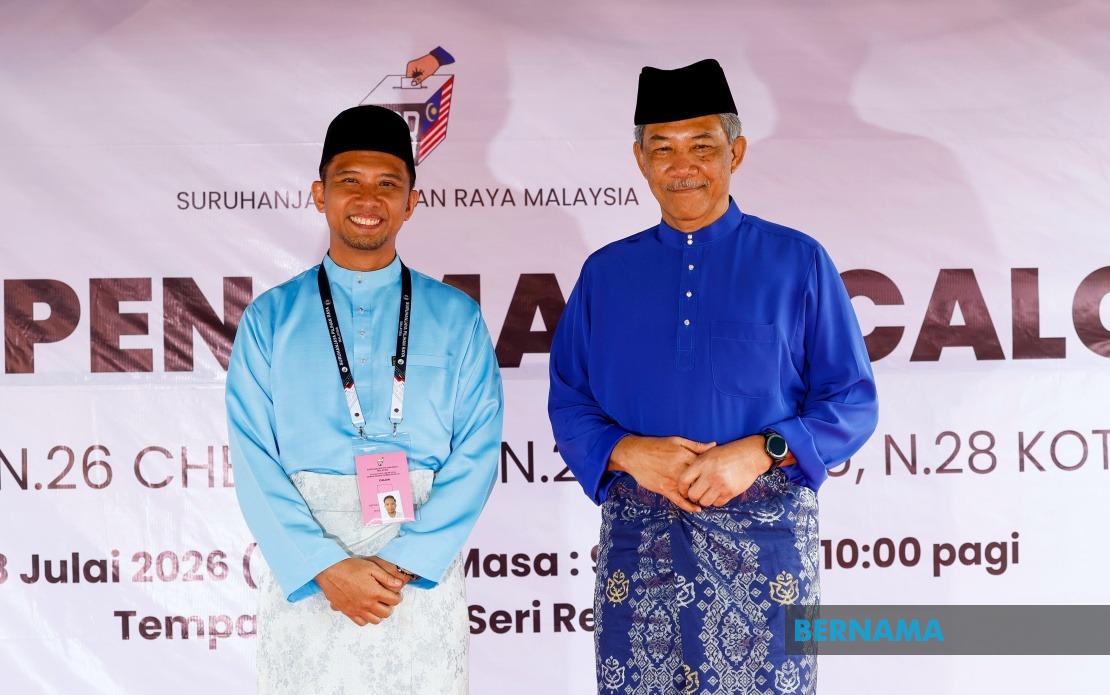
The Rantau state seat in Negeri Sembilan will feature a two-candidate race between two starkly different backgrounds, as state Barisan Nasional chairman and Foreign Minister Datuk Seri Mohamad Hasan prepares to defend his position against Pakatan Harapan's Dr Azizul Hakim Mahdi. The returning officer confirmed the direct contest during nomination proceedings at Dewan Sri Rembau on July 18, setting the stage for what analysts expect to be a significant battleground in the 16th Negeri Sembilan state election scheduled for August 1.
Modamad, who has represented Rantau since 2004 and simultaneously serves as UMNO deputy president, brings two decades of electoral experience and a commanding track record to the contest. In the 2023 state election, he secured a decisive victory with 16,957 votes against Pakatan Harapan's Rozmal Malakan, who received 6,677 votes, translating to a commanding majority of 10,280 votes. This substantial margin underscores the deep entrenchment of Barisan Nasional support in the constituency, though changing voter sentiment remains an unpredictable variable in any electoral contest.
Dr Azizul Hakim, at 35 years old, represents a generational contrast to the incumbent, positioning himself as a fresh professional voice in state politics. The medical practitioner owns three private clinics strategically located in Senawang, Puncak Alam, and Melaka, establishing both entrepreneurial credentials and visible community presence. His professional background in healthcare, accumulated over a decade of medical practice, forms the cornerstone of his campaign strategy, emphasising service-oriented governance rooted in tangible expertise rather than political machinery.
The centrepiece of Dr Azizul Hakim's platform revolves around healthcare accessibility and quality, reflecting his professional vantage point. He argues that his direct experience managing medical facilities and understanding patient needs positions him uniquely to advocate for comprehensive health infrastructure improvements across Rantau. This focus on a specific policy domain—rather than broader political platforms—suggests a targeted campaign appealing to voters prioritising medical services expansion and clinic accessibility in less-served areas.
Modamad's post-nomination remarks emphasised systematic campaign organisation and messaging discipline across the Barisan Nasional machinery. His stated priority involves articulating the coalition's manifesto while mobilising grassroots structures to generate momentum toward polling day. As both a senior federal minister and state-level administrator, Mohamad represents institutional continuity and administrative experience, positioning himself as a safe custodian of established governance frameworks within Negeri Sembilan.
The Rantau contest unfolds within a broader Negeri Sembilan electoral landscape characterised by competitive multi-cornered battles. The Paroi state seat features a three-way contest involving Ahmad Shahir Mohd Shah from Pakatan Harapan, alongside Perikatan Nasional and Bersatu candidates competing for voter attention. Similarly, the Kota state seat encompasses a three-candidate race with incumbent BN representative Suhaimi Aini facing challenges from both Pakatan Harapan and Bersatu challengers. Meanwhile, Chembong presents a straight fight between incumbent Zaifulbahri Idris of Barisan Nasional and Pakatan Harapan's Danish Nazran Murad, demonstrating the state's fragmented political composition.
The broader electoral framework encompasses the 36-seat Negeri Sembilan State Legislative Assembly, dissolved on June 5 following constitutional procedures. The Election Commission designated July 28 as early voting day, allowing military personnel, police officers, and designated voters to cast ballots before the general polling date. This staggered approach accommodates 889,490 registered voters across ordinary, military, and police categories, with 867,151 ordinary voters, 16,884 military and police family members, and 5,455 police personnel eligible for early voting provisions.
For Barisan Nasional, the Rantau contest represents a crucial defensive battle against potential erosion of traditional strongholds. While the 10,280-vote margin from 2023 appears substantial, contemporary Malaysian electoral dynamics have demonstrated surprising volatility, particularly in seats perceived as secure. The emergence of Mohamad's younger, professionally-credentialled challenger may energise voters seeking alternative governance models, particularly among younger demographics and medical service users concerned about healthcare infrastructure adequacy.
Dr Azizul Hakim's candidacy reflects Pakatan Harapan's broader strategy of presenting professional expertise-grounded alternatives rather than strictly party-political candidates. His medical credentials and clinic ownership demonstrate entrepreneurial success and community embeddedness, potentially appealing to swing voters valuing practical competence over partisan affiliation. The healthcare-focused platform resonates particularly in constituencies experiencing rapid urbanisation and demographic transitions, where medical service accessibility becomes an increasingly salient political issue.
The nomination process completion marks the commencement of the official campaign period, unlocking intensive grassroots mobilisation by both coalitions. Barisan Nasional's superior organisational resources and established administrative networks will likely dominate ground activities, yet Dr Azizul Hakim's professional profile and targeted healthcare messaging may generate unexpected voter enthusiasm, particularly among urban, younger, and healthcare-concerned constituencies. The outcome in Rantau could provide early indicators of voter sentiment regarding incumbent performance and alternative governance preferences across Negeri Sembilan more broadly.
The August 1 polling date represents a critical juncture for Negeri Sembilan's political trajectory, with Rantau serving as a microcosm of broader coalition competition. Mohamad Hasan's simultaneously holding federal and state responsibilities highlights the interconnectedness of national and state-level politics in Malaysia, where senior ministerial figures remain actively engaged in local electoral contests. The contest's implications extend beyond Negeri Sembilan, potentially influencing federal political calculations and coalition dynamics as Malaysia navigates the post-2023 election political environment.

