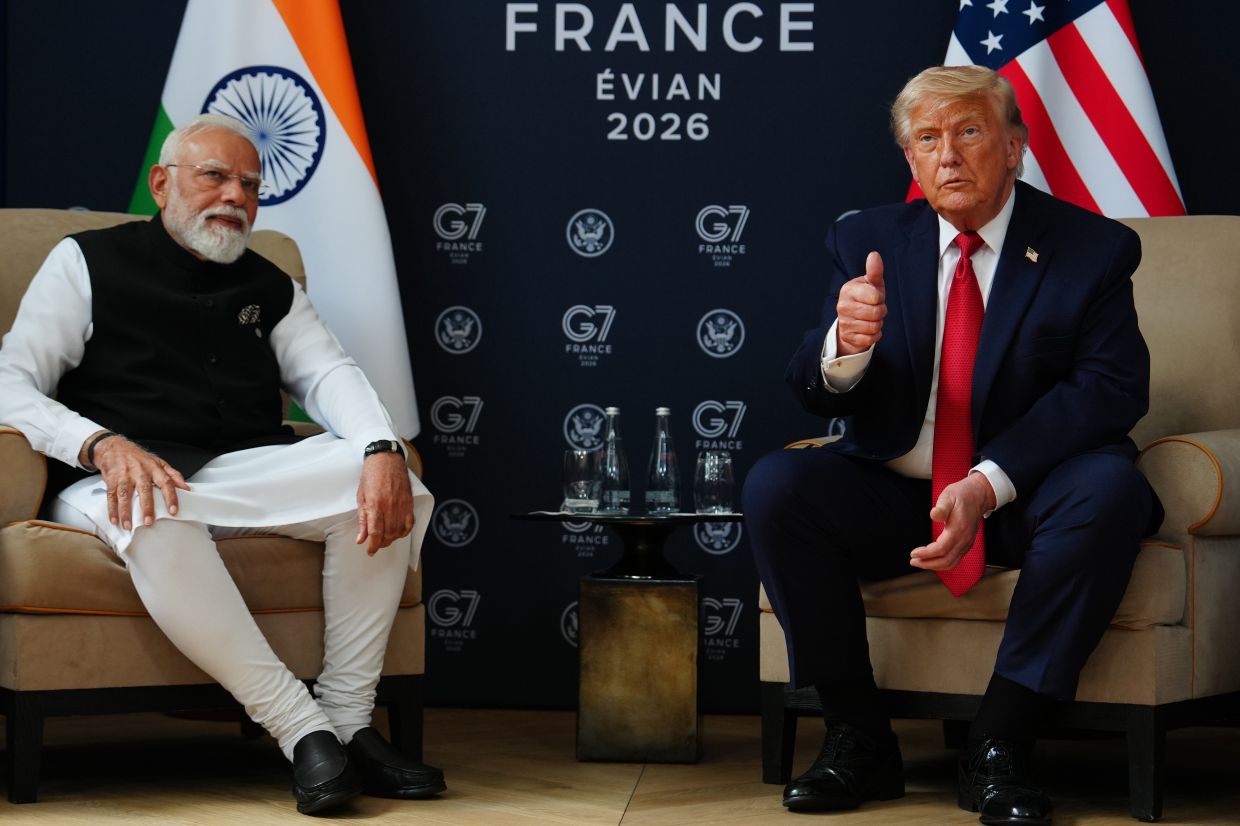
Indian Prime Minister Narendra Modi and US President Donald Trump have declared "significant progress" in protracted negotiations for a comprehensive trade agreement between their two nations, according to an official statement released Thursday following their meeting at the G7 summit in Evian, France. The bilateral talks mark the first in-person engagement between the leaders since February 2025, when they last met in Washington, and signal renewed momentum in discussions that have spanned months and weathered multiple procedural obstacles.
Trump characterised the state of negotiations as remarkably advanced, telling journalists at the summit that the two countries stand "very close" to concluding a formal trade deal. The US president offered effusive praise for Modi's negotiating approach, describing him as "one of the toughest" dealmakers while simultaneously noting the Indian leader's courteous demeanour—a rhetorical flourish typical of Trump's diplomatic style. The casual but emphatic language deployed by the American president underscores the symbolic importance both administrations have attached to reaching an accord.
India's foreign ministry officially confirmed that both leaders have expressed "particular satisfaction" with the trajectory of negotiations toward what they are characterising as an interim bilateral trade agreement. The statement further indicates that Modi and Trump have directed their respective trade teams to accelerate work toward finalising a "commercially meaningful agreement" without unnecessary delay. This language suggests that while fundamental consensus has emerged on key framework elements, technical details and specific tariff schedules remain subject to finalisation.
US Trade Representative Jamieson Greer will travel to India in the coming week to conduct the next substantive round of discussions, a visit that underscores the administration's commitment to concluding negotiations expeditiously. This deployment of senior negotiating personnel signals that both capitals anticipate meaningful progress during the talks and view the window for agreement as genuinely narrow. For India, the arrival of the chief American trade negotiator represents an opportunity to resolve outstanding contentions regarding market access, intellectual property protections, and sectoral tariff treatment.
The two nations have established an ambitious ceiling of US$500 billion in bilateral merchandise trade by 2030, a target that would require roughly 12 to 14 percent annual growth from current levels. This objective has galvanised multiple negotiating rounds focused on resolving fundamental disputes regarding agricultural tariffs, pharmaceutical intellectual property, and digital commerce standards. An initial preliminary understanding was reached in February, but momentum stalled significantly following the US Supreme Court's invalidation of Trump's earliest tariff executive orders, which disrupted the administration's entire trade enforcement architecture.
Following the court's intervention, the Trump administration pivoted to launching formal investigations into alleged unfair trade practices by multiple countries, including India, while simultaneously implementing a broad-based 10 percent tariff surcharge. This regulatory recalibration forced Indian negotiators to recalibrate their own strategic approach and created additional uncertainty around the timeline for concluding a comprehensive deal. However, India's Commerce Minister Piyush Goyal indicated in early June that the parties had resolved approximately 99 percent of the first tranche of the agreement, suggesting that only marginal technical issues remained unresolved.
Beyond commercial considerations, Modi also utilised the Evian meeting to raise urgent security concerns affecting Indian nationals. The Prime Minister specifically requested that Trump ensure the protection of Indian seafarers operating in conflict zones, particularly following a June 10 incident in which three Indian sailors were killed when a commercial vessel was struck by a US military operation off Oman's coast. This tragic event has heightened anxieties within India's maritime industries regarding the safety implications of ongoing Middle East hostilities.
The ongoing geopolitical turmoil centred on Iran and regional security has created cascading disruptions across global supply chains that disproportionately affect developing economies in South Asia. India's energy security infrastructure depends critically on oil and liquefied natural gas transiting the Strait of Hormuz, a chokepoint that has experienced periodic interference as regional tensions have intensified. When Iran closed the Strait, India's import costs surged dramatically, threatening to accelerate already-elevated inflation and disrupt energy-intensive manufacturing sectors.
Modi cautioned during his Wednesday remarks that the full consequences of Middle East instability would persist for an extended timeframe. The Indian Premier emphasised that disruptions affecting fuel, fertiliser, and food supply chains triggered by the regional crisis would continue constraining economic growth across the Global South for what he characterised as "a considerable period." This assessment reflects India's assessment that the geopolitical fault lines extending across the Middle East cannot be rapidly resolved through conventional diplomatic mechanisms and will impose persistent economic friction on developing countries dependent on Middle Eastern energy and agricultural imports.
For Malaysia and other Southeast Asian economies, the successful conclusion of a substantial US-India trade agreement carries significant implications. A stronger commercial relationship between Washington and New Delhi could reshape regional trade architecture, potentially driving investments in allied manufacturing sectors and encouraging technology transfer initiatives benefiting the broader Indo-Pacific region. Simultaneously, the emphasis both leaders have placed on security cooperation and seafaring safety suggests that trade arrangements will increasingly intertwine with maritime security considerations—a dynamic that directly affects chokepoints and shipping corridors critical to Southeast Asian commerce.