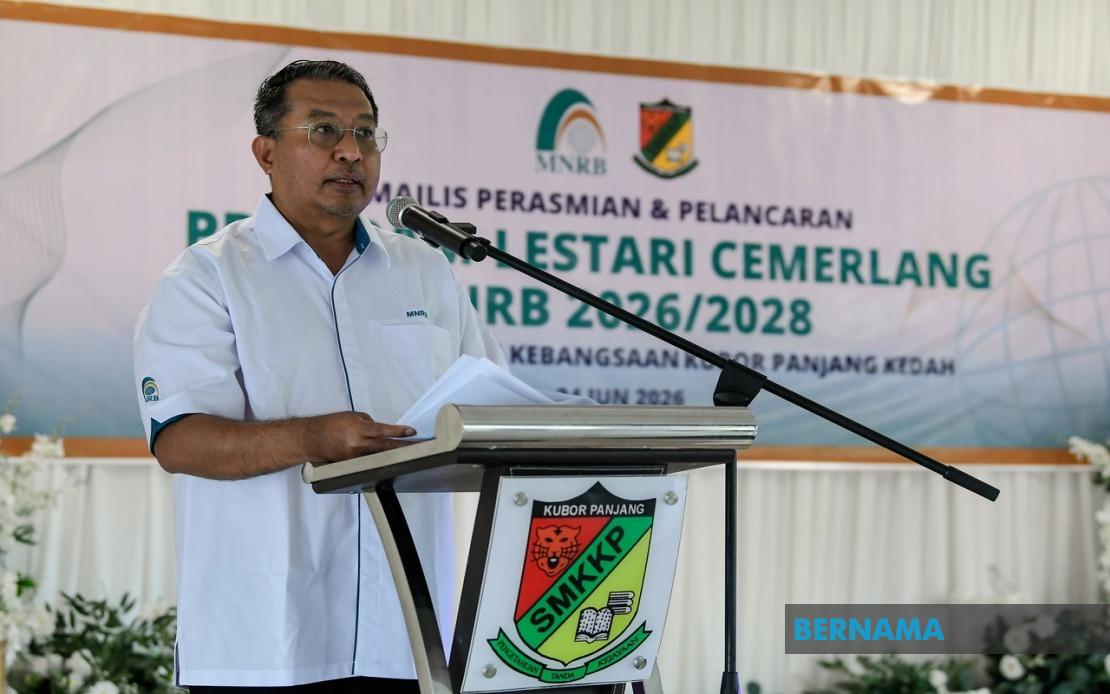
MNRB Holdings Berhad, an investment holding company, has demonstrated renewed commitment to educational development by channelling nearly RM600,000 through its MNRB Lestari Cemerlang Programme to support six schools across the country. The initiative, launched at Sekolah Menengah Kebangsaan Kubor Panjang in Pendang, Kedah, represents the latest expansion of a corporate social responsibility effort that has evolved significantly since its establishment over a decade ago.
Datuk Rudy Rodzila Che Lamin, MNRB's interim president and group chief executive officer, outlined the origins and philosophy behind the programme during the launch ceremony. First introduced in 2011, the scheme has grown into a comprehensive intervention model that extends beyond traditional charitable giving to encompass strategic educational partnerships. The programme's architecture deliberately prioritises schools in less developed regions, recognising that educational inequality often mirrors geographical disparities in infrastructure and resources.
The Lestari Cemerlang initiative operates on a holistic premise that school improvement requires attention to multiple dimensions simultaneously. Rather than focusing narrowly on examination results, the programme acknowledges that sustainable excellence emerges when institutions strengthen both academic and co-curricular foundations. This balanced approach reflects contemporary educational research suggesting that student development transcends classroom performance alone, encompassing leadership capacity, resilience, and practical skills.
SMK Kubor Panjang's selection as the sixth participating institution marks a significant milestone for the programme, which has previously established partnerships with schools in Perak, Pahang, Negeri Sembilan, Melaka, and Selangor. This geographic expansion across multiple states demonstrates MNRB's intention to embed the initiative as a regional force rather than a localised effort. The ceremony was officiated by Kedah State Education Department deputy director Ishak Awang, underscoring the partnership between corporate and government education sectors.
The practical manifestations of MNRB's support are diverse and substantive. The company has implemented supplementary tuition programmes targeting Form Five students preparing for crucial examinations, organised motivational camps designed to build student confidence and aspirations, and sponsored developmental initiatives addressing behavioural and social dimensions. Physical infrastructure improvements have included facility upgrades and provision of sports jerseys, tangible investments that enhance the daily school experience. Beyond these conventional interventions, MNRB has pioneered a digital learning initiative through its MNRB Smart e-Learning Room, equipped with smart television and internet connectivity to modernise teaching methodologies.
This technology integration addresses a critical gap for rural schools often lagging behind urban counterparts in digital infrastructure. The smart learning space represents strategic alignment with Malaysia's broader educational digitalisation agenda, positioning participating schools to develop technological literacy essential for contemporary careers. For institutions in less affluent areas, such provisions can be transformative, enabling teachers to access multimedia resources and interactive teaching tools previously beyond their reach.
Parallel to the Lestari Cemerlang Programme, MNRB operates the Tabung Biasiswa MNRB initiative, a targeted scholarship scheme for exceptional students from partner schools pursuing higher education in fields complementary to the company's business interests. Five top-performing students from SMK Kubor Panjang have been selected for this sponsorship, which extends across diploma, bachelor's, and master's level studies. This multi-level support structure recognises that educational mobility requires sustained investment across extended timeframes, not merely one-off grants at critical junctures.
According to MNRB Group chief people officer Hazlina Hazani, the scholarship initiative has already benefited fourteen students from previously adopted schools, with eight successfully transitioning into employment within MNRB Group upon graduation. This outcome demonstrates both the practical value of the sponsorship and the company's willingness to create direct employment pathways for supported scholars. The linkage between educational sponsorship and corporate recruitment transforms the scholarship from philanthropic gesture into strategic talent pipeline development.
The targeting of students pursuing insurance, takaful, and finance-related disciplines reflects MNRB's strategic human resource planning. Rather than sponsoring studies in fields unrelated to organisational needs, the company has deliberately aligned its educational philanthropy with long-term workforce development objectives. This approach, while appearing self-interested, actually creates sustainable benefits for students who gain not merely financial support but career clarity and employment prospects aligned with their educational credentials.
For Malaysian education policy observers, MNRB's model offers instructive lessons about scaling corporate engagement in school improvement. The combination of infrastructure investment, direct instructional support, facility upgrades, and scholarship linkage creates layered intervention more likely to generate lasting impact than ad-hoc charity. The geographic diversification across multiple states suggests replicability, positioning the programme as a potential template for other corporations seeking meaningful educational engagement.
The emphasis on rural schools carries particular significance for Malaysia's broader development agenda. Regional educational inequality remains a persistent challenge, with rural institutions frequently disadvantaged in teacher quality, infrastructure, and resource allocation. When corporations like MNRB strategically target these institutions, they effectively support national efforts to narrow development disparities. For a country aspiring to higher-income status requiring skilled workforces, such investments in previously marginalised educational institutions represent strategic nation-building.
Moving forward, the programme's trajectory will likely depend on sustained corporate commitment and measurable outcomes demonstrating educational improvement. As MNRB expands the Lestari Cemerlang initiative to additional schools, questions about programme effectiveness, scalability, and alignment with government educational priorities will become increasingly pertinent. The initiative exemplifies how private sector resources, when strategically deployed in partnership with government education systems, can meaningfully extend opportunities for students in under-resourced regions.

