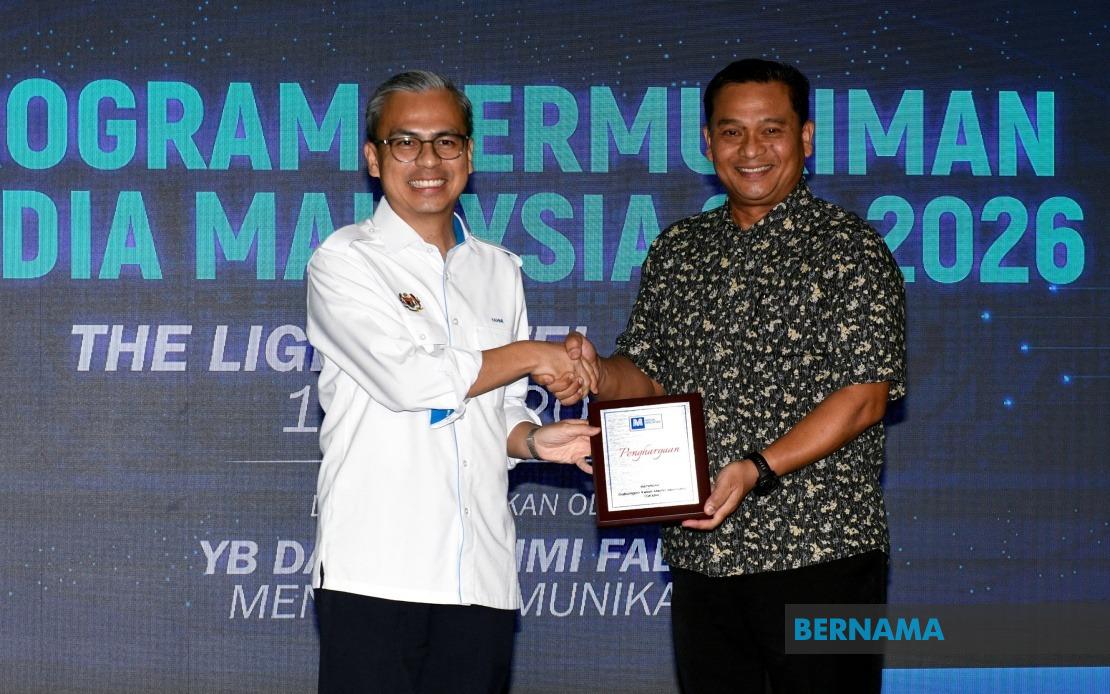
Communications Minister Datuk Fahmi Fadzil has unveiled a financial support package aimed at strengthening the institutional framework supporting Malaysia's journalism profession. Speaking at the Malaysia Media Retreat Programme 2.0 in Butterworth, Fahmi announced that the Ministry of Communications will distribute RM10,000 to each state media club holding membership in the Malaysian Media Clubs Association (GKMM), while simultaneously awarding RM30,000 to GKMM itself for conducting activities and programmes dedicated to journalist welfare.
The funding allocation represents a tangible commitment from the ministry to address the operational challenges faced by media organisations and professional bodies at the grassroots level. By channelling resources directly to state-level clubs, the government hopes to enable these bodies to organise regional initiatives that resonate with the practical concerns of working journalists across the country. Fahmi emphasised that recipients should utilise the contributions strategically, maximising impact through carefully designed programmes that genuinely serve the profession's interests.
Fahmi's remarks underscored the government's perspective on GKMM's role within Malaysia's media ecosystem. While the association lacks the formal negotiating status of a traditional trade union, Fahmi acknowledged its significance as a conduit through which journalist grievances and industry concerns reach government decision-makers. He highlighted GKMM's capacity to articulate the welfare challenges facing media practitioners, positioning the organisation as an essential intermediary in policy dialogue between the profession and state authorities.
The minister reiterated a central government position regarding journalism's irreplaceable function in contemporary society. Fahmi argued that artificial intelligence and automated systems, despite rapid technological advancement, cannot substitute for the investigative judgment, ethical reasoning, and human expertise that professional journalists bring to news gathering and reporting. This declaration carries particular significance in Malaysia, where ongoing debates about media regulation, digital disruption, and the future of legacy news organisations have generated uncertainty about the profession's viability and the government's stance toward press freedom.
Fahmi's framing of journalism as essential infrastructure reflects a strategic effort to position the ministry as supportive of the profession during a period of industry contraction. Many Malaysian newsrooms have experienced retrenchments and operational cutbacks in recent years as advertising revenue declined and digital platforms fragmented audience attention. By publicly affirming journalists' irreplaceable value and directing ministry funds toward professional welfare, Fahmi attempted to counter perceptions that government policy either neglects or actively undermines the news industry's stability.
The announcement also contextualised the government's broader approach to media policy formulation. Fahmi noted that during the development of the Malaysian Media Council Act—a significant regulatory instrument shaping the industry's governance framework—the ministry solicited extensive input from media practitioners and industry bodies. This consultation-oriented narrative suggests the government views media organisations not merely as subjects of regulation but as stakeholders whose perspectives inform policy design. Whether this consultative approach meaningfully influences final legislative outcomes remains a separate question that observers continue to debate.
The event's attendance reflected the significance the government assigned to the occasion. Present alongside Fahmi were Communications Ministry secretary-general Datuk Abdul Halim Hamzah, Bernama chief executive officer Datin Paduka Nur-ul Afida Kamaludin, and Bernama editor-in-chief Arul Rajoo Durar Raj. The involvement of these senior figures from the national news agency underscored the government's interest in maintaining constructive relationships with state-aligned media institutions and professional bodies.
For Malaysian media practitioners, the funding announcement offers modest but welcome relief at a time when many struggle with stagnant salaries, inadequate benefits, and deteriorating working conditions. The allocation to state media clubs creates opportunities for regional professional development activities, networking events, and welfare programmes that individual journalists might otherwise struggle to access. However, the modest quantum of support—RM10,000 per state club across thirteen states—suggests constraints on the scale of initiatives these funds can finance.
The government's framing of this support carries implications for how Malaysia positions itself regionally on media freedom and press development. Southeast Asian governments have increasingly emphasised positive engagement with media industries as an alternative to purely regulatory or restrictive approaches. Malaysia's allocation of ministry funds for journalist welfare, while limited in absolute terms, signals alignment with this softer positioning. Whether such funding translates into genuine improvements in working conditions or functions primarily as symbolic gesture remains to be determined through implementation and outcome assessment.
The announcement also reflected continuing debate about journalism's institutional future in Malaysia. By directing resources toward professional associations rather than individual newsrooms, the government prioritised support for structures representing journalists collectively. This approach implicitly recognises that individual news organisations face commercial pressures beyond government assistance, while professional bodies can enhance practitioners' welfare through collective action and shared services. The distinction underscores the government's acknowledgment that journalist wellbeing encompasses dimensions beyond individual employment relationships.

