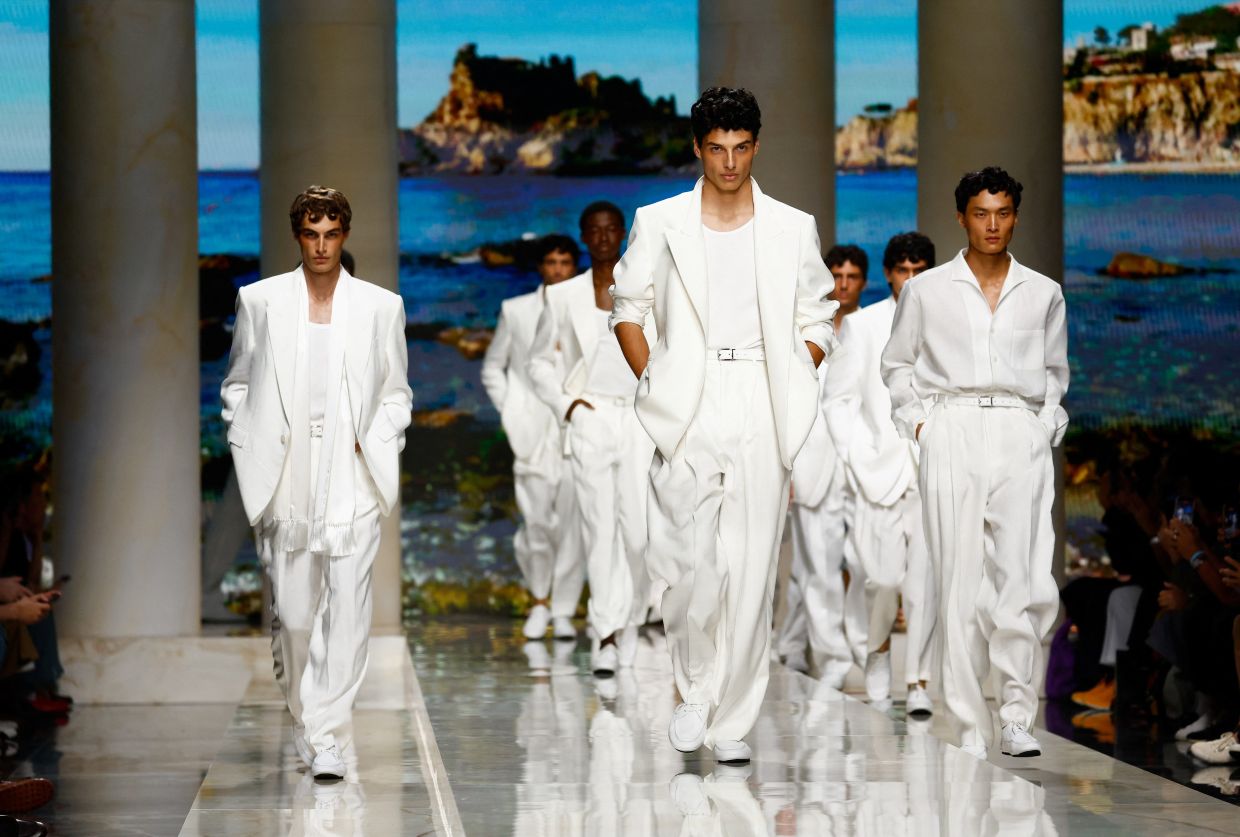
Milan menswear designers have responded to the world's current anxieties with a surprising embrace of restraint and simplicity. As the Italian fashion capital sweltered through its recent fashion week, which concluded on June 22, the industry's leading creative minds largely opted for stripped-down aesthetics, reconceived proportions, and reimagined fabrications rather than extravagant statements. The choice reflected broader concerns about economic instability, geopolitical tensions, and the tangible challenges of dressing fashionably during increasingly hot summers—issues that resonate particularly with fashion-conscious consumers across Southeast Asia, where humidity and heat present year-round sartorial challenges.
Prada set the tone for the season, with co-creative directors Miuccia Prada and Raf Simons championing a philosophy of simplicity achieved through unexpected angles. Their approach centred on familiar wardrobe staples—the kind of clothes most men already own—reimagined through subtle manipulation of cut and material. This democratisation of luxury through proportion rather than price point proved influential across the collections, signalling that sophistication in uncertain times comes not from obvious displays of wealth but from understanding how a garment sits on the body. For Southeast Asian audiences accustomed to navigating tropical climates, this philosophy offers practical reassurance: timeless elegance need not require impractical heavy fabrics.
The most striking paradox of Milan's Spring/Summer 2027 menswear collections was the pervasiveness of leather and knits despite the season's name and the venue's oppressive heat. Designers employed leather in unexpected ways, drawing inspiration from the universality of denim—a material so ingrained in casual wear that reimagining it felt both fresh and accessible. Prada's take featured slim five-pocket trousers paired with cropped flat-pocketed jackets that functioned almost as shirts, blurring the boundary between layers and standalone pieces. Other houses pursued more technical solutions, incorporating woven and perforated methods to render leather more breathable without sacrificing its luxurious associations. This innovation matters significantly for Malaysian fashion consumers: it suggests that impeccable tailoring and quality materials need not be abandoned in favour of flimsy cotton compromises.
The tension between luxury aspiration and practical comfort emerged as a defining theme across Milan's runways. For years, menswear had embraced oversized silhouettes that prioritised comfort and movement, but this season witnessed a decisive shift toward closer-fitting garments that acknowledge and complement the male form. Designers broadly concurred that the suit remains essential to a well-dressed man's wardrobe—a reassurance for traditionalists—yet the challenge lay in making such formal constructions wearable during scorching months. The response was ingenious: dress shirts left unbuttoned, sometimes rendered transparent, occasionally abandoned entirely. Some designers experimented with removing shirts altogether, exposing the torso as a design element rather than a violation of formal dress codes.
Tailoringitself underwent transformation, maintaining its centrality to Milan collections while becoming lighter and more relaxed in execution. Designers softened construction methods, opened necklines to permit airflow, and experimented with unconventional fabric combinations that defied traditional notions of formal wear. The cumulative effect was tailoring that acknowledges climate change and rising global temperatures without surrendering the formality and polish associated with sartorial excellence. Thom Browne, the American designer now operating under Zegna ownership, returned to Milan for his first show since 2008, bringing layered suiting constructed from summer-friendly seersucker and pleated skirts—a signature brand element—that demonstrated how heritage ideas could be reinterpreted for contemporary environmental conditions.
Yet not every designer subscribed to the season's minimalist aesthetic. Philipp Plein presented a crystal-encrusted denim ensemble requiring days of handwork to complete, unapologetically rejecting restraint in favour of spectacle and labour-intensive craftsmanship. Dolce & Gabbana similarly leaned toward embellishment, incorporating beaded accents that evoked coral and tropical imagery. This divergence between Prada's philosophy of reduction and these designers' maximalist glamour reflected a broader debate within fashion about how the industry should respond to contemporary anxieties. Some believe luxury should become more accessible through simplification; others contend that craftsmanship and ornamentation offer escape from austere times.
Beyond the industry's established powerhouses, Milan's lighter calendar—itself a response to sustainability concerns and industry fatigue—created space for emerging talents to gain significant attention. Martin Quad made his Milan debut with unconventional tailoring tricks that had already generated buzz in Copenhagen, while Domenico Orefice presented a co-ed collection celebrating leather and richly woven textiles. Japanese designer Shinya Kozuka's Shinyakozuka label also debuted in Milan with a collection that captured the season's essence: a bare-chested model wearing a billowing sheer coat in teal paired with baggy white trousers presented menswear not as rigid formality but as poetic expression capable of accommodating movement, air, and individual interpretation.
The collective message emerging from Milan's menswear presentations was unambiguous: the suit, that cornerstone of Western masculine dressing, remains non-negotiable, yet it is rapidly evolving. For Malaysian fashion editors and consumers, this development carries particular relevance. The tropics have long posed challenges to traditional Western tailoring, often forcing Southeast Asian men to choose between sartorial correctness and physical comfort. Milan's Spring/Summer 2027 menswear collections suggest this binary choice is becoming obsolete. Designers have begun treating ventilation, breathability, and temperature regulation as design features worthy of the same creative attention previously reserved for embellishment and silhouette manipulation. This represents genuine progress for regions where heat and humidity are constants rather than seasonal inconveniences.
The season also underscored a shift in how luxury fashion conceptualises its audience during times of global instability. Rather than offering escapism through excess, many leading designers opted for what might be termed "honest luxury"—garments that justify their premium pricing through quality, proportion, and wearability rather than logos or obvious ornamentation. This approach particularly resonates in Southeast Asia, where growing middle-class consumers increasingly demand value alignment with their spending. A Prada suit that achieves elegance through cut rather than branding signals a maturation in luxury consumption attitudes. For fashion-conscious Malaysian professionals navigating boardrooms in tropical heat, Milan's message offers both philosophical validation and practical solutions.
Looking ahead, the implications for regional fashion retail are substantial. Southeast Asian boutiques and department stores will likely encounter demand for these lighter, better-ventilated tailoring approaches. Consumers who previously accepted that formal wear meant discomfort may now expect climate-appropriate alternatives from premium brands. Retailers must prepare to educate customers about proportion, fabrication, and the subtle luxuries that Milan has championed. Simultaneously, emerging designers from the region—whether from Malaysia, Singapore, or Thailand—have a significant opportunity to interpret these trends through local sensibilities, creating menswear that honours both Milan's technical innovations and Southeast Asia's aesthetic traditions. The suit is not going away, Milan has declared, but it is becoming more intelligent, more adaptable, and increasingly responsive to the actual conditions under which people live.

