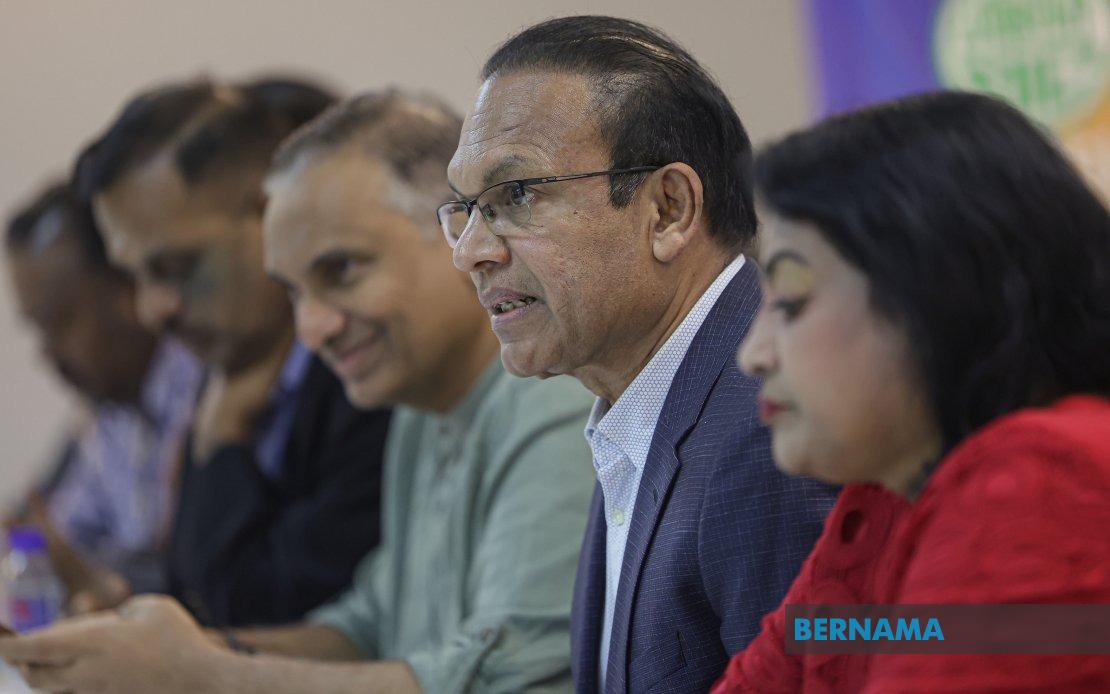
The Malaysian Indian Congress (MIC) will field candidates in four constituencies during the upcoming Johor state election, according to party vice-president Datuk T. Murugiah, marking the party's continued participation within the Barisan Nasional coalition machinery. The allocation was confirmed by MIC president Tan Sri SA. Vigneswaran following recent coalition discussions on state-level contests in both Johor and Negeri Sembilan. While the Johor seat allocation is finalised, negotiations on seat distribution in Negeri Sembilan remain ongoing, with party preparations moving into their final stages ahead of nomination day.
MIC's positioning in the forthcoming Johor election reflects both continuity and tactical adjustment from its performance five years ago. In the March 2022 state election, the party successfully retained three of four contested seats—Kemelah, Kahang, and Tenggaroh—but lost the Bukit Batu constituency. The party's current candidate strategy appears designed to reclaim lost ground while consolidating previous victories. Based on preliminary indications from party sources, MIC is expected to renominate candidates in Kemelah and Kahang, mount a fresh challenge in Bukit Batu, and notably swap the Tenggaroh seat with coalition partner UMNO in exchange for Perling, a tactical repositioning that reflects broader coalition negotiations within Barisan Nasional.
With the Election Commission scheduling July 11 for Johor polling and June 27 for candidate nominations, MIC has embarked on an intensive grassroots mobilisation programme targeting the state's Indian voter population. The party is conducting a two-day training session this weekend in Johor Bahru for approximately 150 party speakers, equipping them with public speaking techniques and coordinated messaging strategies. These trained speakers will be deployed across all 56 state constituencies contested by Barisan Nasional, reflecting MIC's role as a coalition facilitator responsible for capturing Indian community support beyond its own four contested seats. The training initiative underscores the party's recognition that its electoral relevance depends not only on direct seat victories but on broader coalition performance within constituencies where Indian voters represent significant demographic weight.
The speaker recruitment and training programme addresses a strategic imperative facing MIC and other minority-focused parties within Barisan Nasional. Indian voters, comprising roughly nine percent of Johor's electorate, are geographically dispersed across multiple constituencies rather than concentrated in particular areas. By positioning trained speakers in all 56 coalition-contested seats, MIC seeks to amplify its organisational reach and ensure that Indian community concerns and coalition messaging reach voters in constituencies where the party itself is not directly contesting. This approach reflects evolving coalition campaign strategies that prioritise targeted community mobilisation over solely seat-based competition.
Candidate renewal emerges as a significant theme within MIC's Johor strategy, with party sources indicating that approximately fifty percent of the party's nominees will be new entrants to electoral politics. This generational refresh may signal an attempt to address concerns about party vitality and appeal to younger Indian voters, while also potentially reflecting negotiations within the coalition regarding seat allocations and preferred candidates. The balance between incumbent retention in Kemelah and Kahang and new candidate deployment in Bukit Batu and Perling suggests a deliberate strategy to defend established strongholds while attempting to recapture lost territory through fresh political voices.
MIC's subsidiary objective in Negeri Sembilan has yet to crystallise fully, though party sources suggest potential candidacy in two constituencies. The delayed finalisation of Negeri Sembilan allocation compared to the confirmed Johor positioning indicates that coalition negotiations may prove more complex in that state, where multiple component parties compete for limited seat allocations. The timing differential—with Johor nominations on June 27 and Negeri Sembilan nominations on August 18—provides MIC with extended preparation time for the latter state election, scheduled for August 1.
Beyond electoral mechanics, MIC has deployed its institutional anniversary as a platform for community engagement and party profile-building. Concurrent with state election preparations, the party organised sports competitions across 152 nationwide locations in conjunction with its 80th anniversary celebrations. The competitions, encompassing football, badminton, bowling, carrom, and hiking, explicitly welcomed participation from all racial communities, positioning MIC as a multi-ethnic organisation despite its Indian-focused electoral base. This approach serves dual purposes: generating positive grassroots engagement and reinforcing the party's self-presentation as a bridge between Indian community interests and broader national political institutions.
The historical context of MIC's electoral performance illuminates both the party's contemporary challenges and strategic options. Once a dominant political force within the coalition, MIC's representation has contracted substantially over successive electoral cycles, reflecting broader demographic and political shifts within Malaysia's Indian population. The party's allocation of four seats in Johor—a state where it previously held greater representation—represents a consolidation of diminished but stabilised electoral presence. The tactical seat swap involving Perling suggests MIC's willingness to accept coalition position-shuffling in exchange for contestable territory, prioritising competitive viability over seat quantity.
The broader Barisan Nasional context shapes MIC's electoral strategy in fundamental ways. The coalition remains dominant in Johor and Negeri Sembilan, with the Johor state assembly comprising 56 seats where BN typically secures substantial majorities. MIC's four contested seats represent less than seven percent of Johor's legislature, yet the party's grassroots mobilisation across all coalition seats reflects recognition that minority-focused component parties derive influence not primarily from seat numbers but from swing vote mobilisation within core communities. Indian voters' demonstrated capacity to shift voting patterns across elections has elevated MIC's perceived coalition utility despite shrinking direct seat allocation.
The training and deployment strategy targeting Indian community mobilisation operates within specific electoral logic. Although Indian voters constitute a minority within most Johor constituencies, their concentration in specific urban and semi-urban areas has produced competitive battlegrounds where narrower margins determine electoral outcomes. Barisan Nasional's dependence on Indian voter support—particularly in constituencies where Malay voter division might otherwise disadvantage the coalition—creates incentive structures favouring MIC's grassroots mobilisation role. The party's institutional presence and community networks provide apparatus advantages that justify continued coalition partnership despite modest direct seat allocation.
Looking toward July 11, MIC faces the dual challenge of defending its three incumbent seats while recapturing Bukit Batu through competitive candidacy. The fifty percent new candidate refresh introduces uncertainty regarding electoral performance but potentially signals generational repositioning. The party's speaker training and community engagement initiatives suggest institutional confidence despite structural electoral disadvantages. Whether MIC can translate grassroots mobilisation into tangible seat gains while maintaining coalition partnership discipline will significantly influence both the party's trajectory and Barisan Nasional's performance within Malaysia's critical Johor electorate.