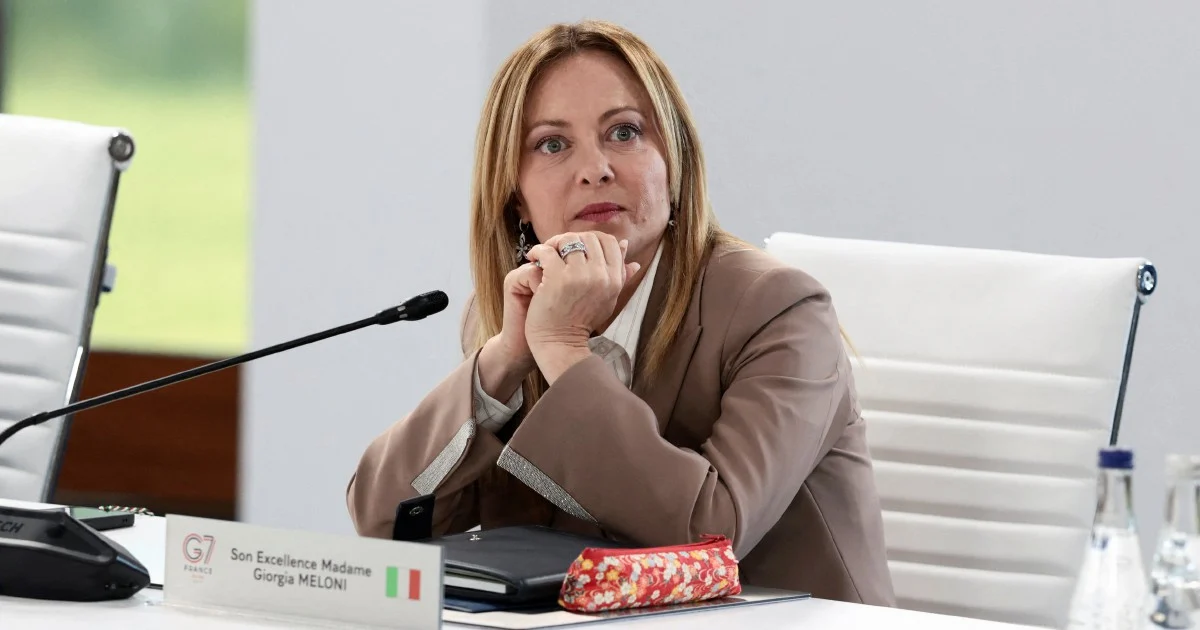
When Donald Trump began his second term as United States president in 2025, Italian Prime Minister Giorgia Meloni held a singular distinction among European leaders—she alone received an invitation to his inauguration, a gesture seemingly destined to crystallise their alliance and herald a strengthened partnership between Washington and Rome.
Meloni's presence at that ceremonial moment appeared to validate her carefully cultivated image as Europe's most sympathetic interlocutor to Trump's America First agenda. Italy's conservative leader had long positioned herself as a pragmatic bridge-builder, willing to engage constructively with the Trump administration while other European capitals maintained cooler distances. The invitation seemed to reward that diplomatic posture and promised to deliver tangible benefits for Rome across trade, security, and geopolitical influence.
Yet this initial promise of a golden era has deteriorated with striking rapidity. In a startling reversal that reflects both personal political calculations and deeper structural tensions within the Western alliance, Meloni has increasingly adopted a critical posture toward Trump's policies and rhetoric. This transformation underscores the volatility of contemporary transatlantic relations and the precarious position occupied by centrist-leaning European conservatives attempting to navigate between Washington's unpredictability and European institutional interests.
The reversal speaks to fundamental misalignments between Trump's vision for American engagement and Italy's interests within the European Union and NATO framework. While Meloni initially believed she could channel Trump's policies in directions favourable to Italian concerns, the practical implementation of Trump administration decisions on trade, Ukraine, and environmental regulation has created friction points that cannot be easily bridged through personal relationships or diplomatic flattery.
For Malaysian observers, this Italian-American rupture carries wider implications for regional stability. The erosion of transatlantic cohesion that Meloni's criticism reflects raises questions about the durability of American security commitments and the credibility of multilateral institutions. When even traditionally aligned European partners publicly distance themselves from Washington's approach, it suggests deeper fissures in the Western order that Southeast Asian nations must reckon with in calibrating their own strategic postures.
Meloni's pivot also reflects internal pressures within Italian politics. Her coalition partners and elements of the broader Italian electorate expect her to defend national interests robustly, particularly when trade policies or European coordination might be compromised by excessive accommodation of American preferences. Public criticism of Trump allows her to demonstrate that Italy's sovereignty and European commitments remain paramount, even while maintaining the diplomatic channels necessary for strategic cooperation.
The episode illuminates a broader European dilemma: how to maintain the transatlantic relationship as foundational to security and prosperity while asserting legitimate interests that diverge from current American priorities. Individual European leaders like Meloni who positioned themselves as Trump-friendly find themselves constrained by the contradictions inherent in that role when policy disputes emerge.
Moreover, this dynamic reflects the personalised nature of Trump's foreign policy, which privileges personal relationships with individual leaders over institutional frameworks. When those relationships encounter policy disagreements, there is no deeper structural foundation to sustain cooperation. Meloni's experience demonstrates the risks of betting too heavily on personal rapport as a substitute for alignment on strategic objectives.
The timing of Meloni's criticism also suggests calculation about her positioning within European affairs. By moderating her support for Trump and expressing concerns about his policies, she can better maintain credibility with other EU leaders and institutions while avoiding the appearance of being Washington's favoured European interlocutor—a label that might undermine her influence in Brussels and her coalition's domestic standing.
For Southeast Asia, the message is clear: the West cannot be treated as a monolithic bloc with consistent priorities. Even traditional allies within the Western alliance hold divergent interests and will pursue independent policy courses when circumstances warrant. This reinforces the value of strategic autonomy and hedging strategies that regional powers have long employed.
Looking forward, Meloni faces the delicate challenge of managing relations with an increasingly unpredictable American administration while preserving her standing within European structures. Her transformation from Trump's European cheerleader to his critic illustrates the instability that personalised diplomacy creates and the difficulty European leaders face when attempting to balance transatlantic commitments with European institutional solidarity and national interest calculations.
The episode also serves as a warning about the durability of diplomatic alignments built primarily on personality and ideology rather than institutional interests. As Europe grapples with questions about its future security architecture and its relationship with America, Meloni's shifting position encapsulates the broader uncertainty defining contemporary transatlantic politics and its reverberations across the Indo-Pacific.

