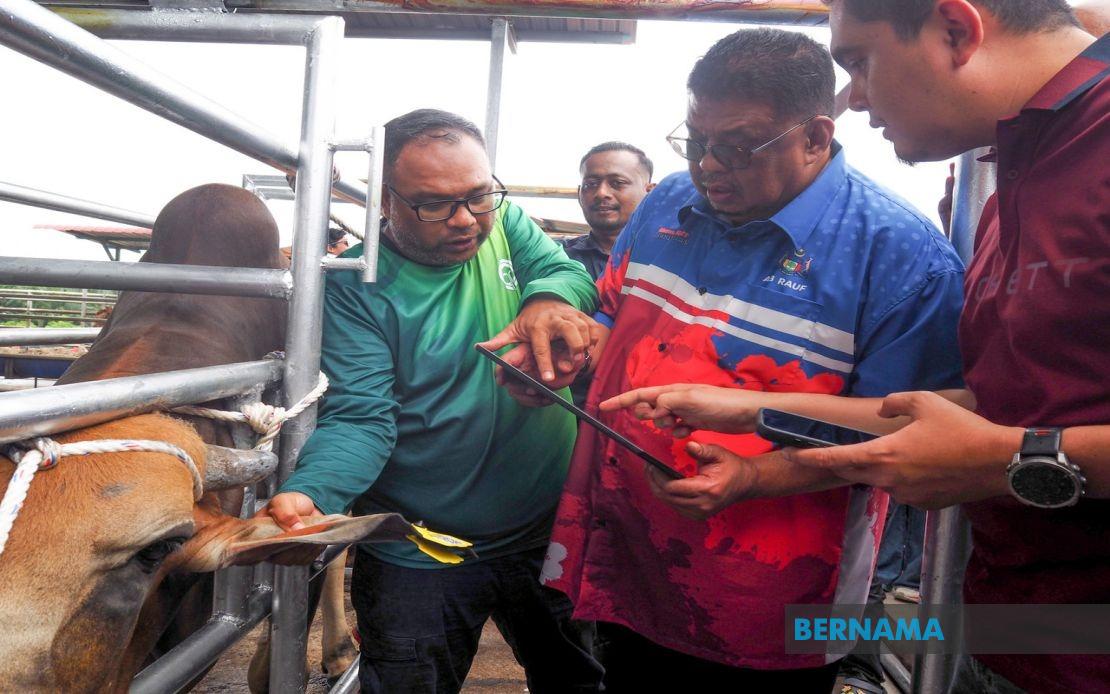
Melaka's state government has rolled out an innovative digital identification system for livestock that marks a significant shift towards technology-driven agricultural management in the region. The Livestock QR Tag initiative, conceived by Chief Minister Datuk Seri Ab Rauf Yusoh and developed through collaboration between the Melaka Veterinary Services Department and the Local Government Unit, represents part of a broader digitalisation strategy aimed at modernising how the state oversees its farming sector. This move reflects growing recognition across Southeast Asia that digital tools can address longstanding challenges in rural and agricultural administration where traditional record-keeping has proven inadequate.
The system operates on a straightforward yet effective principle: each registered animal receives a physical tag embedded with a unique QR code and identification number. Farmers, veterinarians, and enforcement officers can instantly access comprehensive farming information by scanning the code with a smartphone—a practical solution that requires minimal training and no expensive infrastructure. This approach democratises data access, allowing multiple stakeholders to retrieve ownership details, farm location, and breeder information instantaneously. According to Mahathir Mustafa, chief assistant secretary of the Local Government Unit's Melaka Chief Minister Department, the technology transforms livestock management from a paper-based, labour-intensive process into a streamlined digital ecosystem aligned with Melaka's vision of becoming a smart, livable state.
The urgency behind this initiative stems from an escalating public safety crisis that has long troubled Malaysian authorities. Since 2023, Melaka has recorded 835 accidents involving livestock and fielded more than 50 formal complaints concerning stray animals. These figures underscore how inadequate ownership identification allows farm animals to roam freely, endangering motorists, pedestrians, and creating liability questions that frustrate both communities and livestock breeders. The state government recognises that without a mechanism to rapidly identify and contact owners, incidents proliferate and tensions between farmers and the public intensify. The QR tag system directly addresses this gap by enabling authorities to locate responsible breeders within minutes rather than hours or days, fundamentally changing the response dynamic.
As of early June, Melaka had already affixed QR tags to 2,000 livestock, demonstrating early momentum behind the programme. The state government has set an ambitious target to eventually cover the entire registered cattle and buffalo population, estimated to exceed 32,000 head across Melaka. This phased approach allows for manageable implementation while building experience and addressing technical challenges before full-scale deployment. The systematic rollout also provides time to educate farmers about the system, troubleshoot scanning procedures, and integrate data into existing veterinary databases. Such deliberate pacing contrasts with rushed technology deployments that often fail due to poor adoption or inadequate backend systems.
Beyond accident response and stray animal management, the QR system offers substantial benefits for disease monitoring and enforcement. When outbreaks of livestock disease occur—a recurring concern across Southeast Asia's densely populated regions—authorities can rapidly trace animal movements, identify potential transmission pathways, and implement quarantine measures with precision previously impossible. The system also strengthens the hand of regulators attempting to crack down on illegal farming practices, unauthorised animal transport, or substandard husbandry conditions. Farmers cannot evade accountability by claiming ignorance of ownership obligations; the tag permanently links them to their animals regardless of sales or transfers, creating documented chains of responsibility that deter negligence.
The permanence of the QR tag represents a particularly shrewd design feature. Once affixed to an animal, the tag serves as that creature's immutable identity throughout its lifetime, eliminating the administrative confusion that typically accompanies livestock sales or ownership changes. When ownership transfers, only the information within the eVetPermit Malaysia system requires updating—the animal's digital identity remains constant. This architecture prevents the common scenario where enforcement officers encounter animals whose ownership records are outdated, missing, or deliberately obscured. The system thus creates transparency that protects legitimate farmers while closing loopholes that irresponsible operators exploit.
Initially, the state government is heavily subsidising farmer participation by covering installation costs at RM6.50 per tag until the end of 2024, with tagging services available at no cost to breeders who register with the Melaka Veterinary Services Department. This financial incentive significantly reduces barriers to adoption during the critical launch phase, and farmer responses have reportedly been positive. However, the state's willingness to absorb costs reflects pragmatic policy design: rapid, widespread adoption now establishes baseline data essential for effective system management later. Once the transition period concludes in 2027, participating farmers will contribute RM5 per head for new installations or replacements—a modest ongoing cost that sustains system integrity without imposing undue hardship.
The initiative also signals broader transformation in how Malaysian state governments conceptualise agricultural regulation. Historically, livestock administration relied on inspection visits, complaint-driven investigations, and paper registries prone to loss or falsification. Digital tagging shifts the paradigm towards continuous, automatic monitoring where data flows through integrated systems rather than depending on episodic human intervention. This represents convergence with international best practices; multiple countries including Australia, New Zealand, and members of the European Union employ national livestock traceability systems based on ear tags or injectable microchips. Melaka's adoption positions Malaysia as adopter rather than laggard in agricultural technology innovation within Southeast Asia.
The collaborative framework involving the Melaka Veterinary Services Department, Local Government Unit, and local authorities proves essential to sustained success. Veterinary professionals ensure tags remain effective and provide valuable disease-monitoring functions; local government staff manage registration databases and coordinate enforcement; municipal authorities address public complaints and traffic incidents. This multi-agency approach acknowledges that sustainable solutions require coordination rather than siloed action. The willingness of breeders to embrace the system—itself noteworthy given farmers' frequent scepticism towards government initiatives—suggests the QR tag addresses genuine problems they face, including liability concerns when their animals cause accidents or disease outbreaks.
Looking beyond Melaka, the model offers valuable lessons for other Malaysian states and Southeast Asian jurisdictions wrestling with similar livestock management challenges. Thailand, Indonesia, and the Philippines all struggle with stray animal incidents, inadequate disease surveillance, and weak ownership documentation systems. The relative simplicity and low cost of Melaka's approach—QR codes require no specialised scanning devices beyond widely-available smartphones—makes replication feasible across regions with limited technological infrastructure. Success in Melaka could catalyse regional adoption, creating standardised systems that facilitate livestock trade and movement data-sharing across state and national borders.
The financial sustainability model also warrants attention from policymakers elsewhere. By absorbing initial costs and gradually transitioning responsibility to beneficiaries, Melaka avoids the trap of either perpetual government subsidy or user fees so high they deter participation. The RM5 replacement fee structure remains accessible to small-scale farmers while generating revenue for ongoing system maintenance. This balanced approach increases the likelihood that the initiative survives changes in political administration or budgetary priorities—a common vulnerability for well-intentioned technology programmes that rely entirely on government funding.
Implementation challenges will inevitably emerge as the system scales. Technical issues such as tag durability, scanning reliability in poor conditions, or database integration glitches must be anticipated and addressed. Farmer training will require sustained effort, particularly among older or less-educated operators. Criminal elements might attempt to circumvent the system through tag tampering or false registrations, necessitating enforcement mechanisms. Institutional coordination between the Veterinary Services Department, Local Government Unit, and municipal authorities could strain if accountability lines blur. Nevertheless, Melaka's commitment to this initiative—demonstrated through financial investment and senior leadership endorsement—suggests authorities understand these challenges and possess determination to overcome them.
The QR tag system ultimately represents more than a technical fix for livestock management; it embodies a philosophy that digital tools, deployed thoughtfully and inclusively, can strengthen governance in agricultural sectors. By reducing friction between regulators and farmers, improving public safety, and creating accountability mechanisms that protect rather than merely punish, the initiative demonstrates how technology can serve multiple stakeholders simultaneously. As Melaka continues expanding coverage towards its 32,000-head target, other Malaysian states and Southeast Asian governments will be watching closely, assessing whether this model can be adapted to their own circumstances and whether the promised benefits of safer roads, faster emergency response, and more transparent farming practices materialise as expected.

