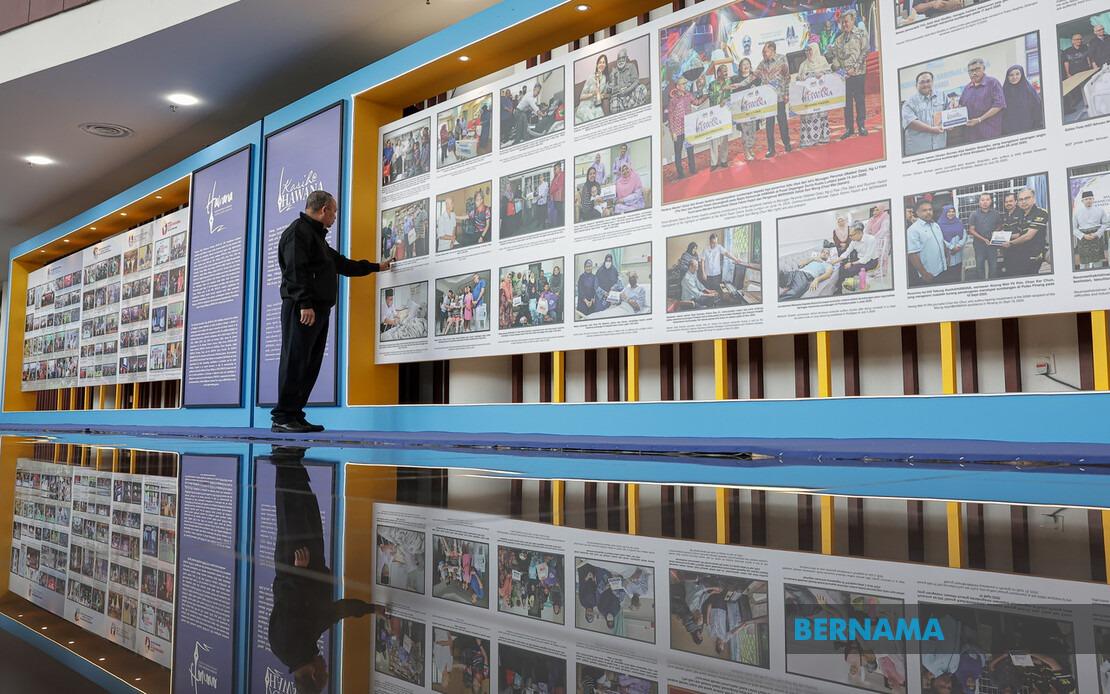
The National Journalists' Day celebration, known as HAWANA 2026, is unfolding across Butterworth in Penang as a crucial moment for Malaysia's media landscape to confront both its future and fundamental values. With Prime Minister Datuk Seri Anwar Ibrahim scheduled to officiate the main event tomorrow at PICCA @ Butterworth Arena, the gathering represents the nation's most significant annual platform for recognising journalistic excellence and addressing industry-wide concerns. The multi-day programme reflects an industry grappling with rapid technological change while endeavouring to maintain professional standards and public trust.
The lead-up to tomorrow's main celebration has already showcased the breadth of concerns occupying Malaysia's newsrooms and journalism bodies. The Malaysian Federation of Media Clubs (GKMM) organised the Malaysia Media Retreat 2.0 in Butterworth, bringing together representatives from 15 media clubs scattered across the country. This gathering serves a dual purpose: strengthening professional bonds among journalists from different organisations and regions, while simultaneously providing GKMM with a structured opportunity to review its institutional development since formally establishing itself on October 24, 2022. The retreat underscores how Malaysian media practitioners are increasingly organising themselves into networked communities that transcend individual publication loyalties, creating spaces for collective problem-solving and professional peer support.
GKMM president Mohamad Fauzi Ishak emphasised that the retreat transcends mere social networking, functioning instead as a genuine strategic checkpoint for the federation. The gathering ahead of GKMM's third annual general meeting—notably to be conducted without electoral contests—suggests the organisation has moved beyond foundational establishment phases and into consolidation. Ishak highlighted how the retreat enables members to assess what the federation has accomplished over roughly three and a half years of operation, establishing a baseline against which future initiatives can be measured. This reflective approach indicates that Malaysia's media leadership recognises the necessity of building durable institutional structures capable of supporting journalists through prolonged industry transformation.
The involvement of Communications Minister Datuk Fahmi Fadzil in officiating the retreat signals government recognition of media clubs' role in maintaining professional standards. Bernama's attendance through Chief Executive Officer Datin Paduka Nur-ul Afida Kamaludin and Editor-in-Chief Arul Rajoo Durar Raj further legitimised the event within Malaysia's official news ecosystem. Such high-level participation suggests the government views organised media practitioners not as adversaries but as necessary partners in sustaining public information quality during periods of technological disruption.
The Malaysian Press Institute's town hall session at Han Chiang University College of Communication directly confronted what many journalists view as an existential question: "2035: Will Journalists Still Exist?" This provocative framing reflects genuine anxiety within the profession regarding artificial intelligence's potential to automate reporting functions, disintermediate news consumption, and diminish demand for human journalists. By positioning this question prominently at HAWANA 2026, the industry signals that technological disruption cannot be dismissed as peripheral concern but must be central to professional conversations. The participation of MPI president Datuk Yong Soo Heong, alongside senior editors from New Straits Times Press and Media Prima, ensured that discussion drew on practical newsroom experience rather than remaining theoretical.
The inclusion of Farrah Naz Abd Karim from NSTP and Azhari Muhidin from Media Prima's news division brought specific expertise from Malaysia's largest media organisations into the forum. These editors navigate daily decisions about how to integrate AI-assisted tools while preserving editorial judgment and accountability—practical dilemmas that abstract discussions about journalism's future often overlook. Their presence suggested that Malaysian media leadership increasingly recognises the necessity of public conversation about technological change, rather than implementing changes in relative silence that breeds professional anxiety and public suspicion about editorial quality.
The Malaysian Media Council's planned engagement session tomorrow will add a regulatory and governance dimension to HAWANA 2026. By scheduling introductory and engagement sessions alongside networking opportunities for northern region journalists, the MMC positioned itself as an active participant in the industry conversation rather than a distant adjudicator of complaints. This approach aligns with emerging global recognition that media councils function most effectively when they engage practitioners in ongoing dialogue about standards and challenges, rather than operating solely as mechanisms for adjudicating alleged transgressions.
With approximately 1,000 media practitioners expected at tomorrow's main celebration—including international journalists—HAWANA 2026 represents a rare gathering of Malaysia's entire journalism ecosystem. The theme "Media Integrity, Foundation of Credibility" directly addresses public concerns about news reliability at a moment when misinformation proliferates and trust in institutions continues fragmenting globally. By elevating integrity as the central concept rather than, for instance, "innovation" or "digital transformation," Malaysian media leadership signalled commitment to defending journalism's traditional accountability function even as delivery mechanisms evolve dramatically.
The supporting RIUH @ HAWANA Carnival, running three days at PICCA Convention Centre @ Butterworth Arena, adds a public-facing dimension often absent from industry conferences. By opening the celebration to broader audiences through carnival activities, organisers recognised that journalism's credibility depends not solely on internal professional standards but on public understanding of how journalism actually functions. Such transparency initiatives become increasingly important when substantial portions of the public consume misinformation and organised disinformation campaigns deliberately exploit skepticism about professional journalism.
For Malaysian readers and Southeast Asian observers, HAWANA 2026 illuminates how the region's largest English-language journalism community is collectively confronting futures marked by artificial intelligence, algorithmic content distribution, and declining trust in institutions. The breadth of programming—from media club networking to town halls about AI's implications—suggests Malaysian journalism possesses sufficient institutional resources and professional commitment to navigate disruption deliberately rather than reactively. Yet the very emphasis on these challenges at HAWANA 2026 also underscores how precarious the journalism profession's position has become, even in a country with established news organisations and professional traditions.
The gathering ultimately reflects a critical moment in Malaysian media's evolution. Journalists are simultaneously defending professional standards developed during an earlier media era while attempting to understand how journalism functions when news distribution mechanisms, audience consumption patterns, and technological capabilities transform as rapidly as they currently do. Whether HAWANA 2026's programmes translate into concrete initiatives that sustainably strengthen Malaysian journalism remains uncertain, but the seriousness with which the industry is engaging with these questions suggests that journalism's future in Malaysia will not simply evolve passively but will be actively shaped by practitioners determined to maintain credibility even as everything else transforms.

