The Malaysian Communications and Multimedia Commission has been directed to maintain optimal internet coverage throughout the Johor state election campaign period, with particular attention to venues expecting large gatherings. Deputy Communications Minister Teo Nie Ching made the announcement in Pasir Gudang on Wednesday, underscoring the critical role stable connectivity plays in enabling political activities and ensuring voters receive timely campaign information.
Teo's directive reflects growing recognition among Malaysian political operatives that digital infrastructure underpins modern electoral campaigns. Beyond traditional rallies and door-to-door canvassing, parties now depend on seamless internet access to coordinate events, livestream speeches, manage volunteer networks, and respond rapidly to competing narratives. The instruction to MCMC encompasses regular monitoring protocols, particularly in constituencies anticipated to host major campaign gatherings where network demand typically spikes.
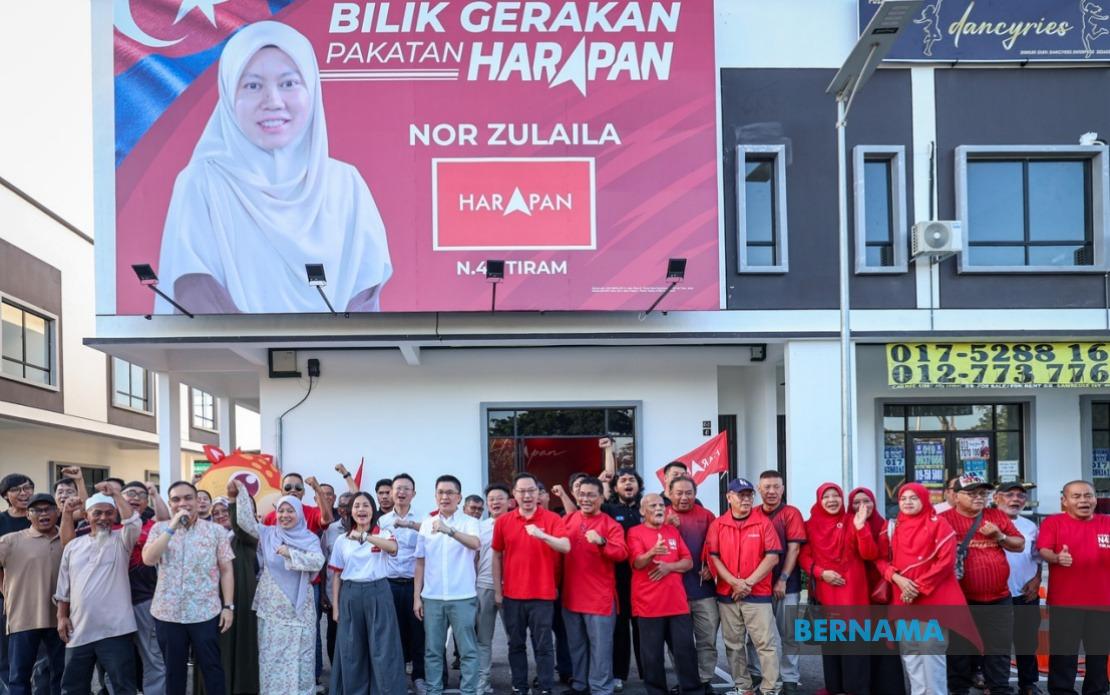
The timing of this infrastructure initiative coincides with escalating electoral activities in Johor, where Pakatan Harapan and opposing coalitions are mobilising resources across 56 state assembly seats. Teo, who holds the position of Johor DAP chief, spoke following the launch of her party's operations room for the N40 Tiram constituency at Taman Kota Masai. The establishment of such command centres—equipped with communication systems, volunteer coordination facilities, and data analytics capabilities—represents a shift toward technology-enabled campaign management in Malaysian politics.
The deputy minister's remarks carry significance beyond immediate technical logistics. Internet reliability has become intertwined with electoral competitiveness, affecting a party's capacity to mobilise supporters, counter opposition messaging in real time, and maintain campaign momentum across dispersed geographic areas. In Johor, where urban centres like Johor Bahru coexist with sprawling semi-rural constituencies, uneven connectivity could disadvantage campaigns unable to afford supplementary mobile infrastructure or digital advertising on commercial platforms.
Teo reported receiving encouraging feedback from voter engagement activities across the state, noting that citizens demonstrate strong commitment to participating in the electoral process. Particularly noteworthy is the willingness among voters residing outside their home constituencies to travel back for polling day—a pattern suggesting heightened civic engagement or, conversely, indicating that demographic mobility remains a complicating factor in Malaysian electoral mechanics. This observation reflects broader demographic trends in which younger Malaysians work in major cities whilst maintaining voting registrations in hometown constituencies.
Regarding Pakatan Harapan's campaign strategy, Teo emphasised that the coalition is directing equivalent resources toward all 17 seats it contests without designating any as guaranteed victories. This approach—explicitly rejecting the classification of constituencies as "safe seats"—represents a calculated decision to maintain organisational discipline and prevent the complacency that sometimes afflicts parties holding perceived strongholds. By framing each contest as competitive, the party aims to sustain volunteer motivation and funding allocation throughout the campaign.
The heterogeneous nature of Johor's constituencies necessitates tailored campaign strategies responsive to local conditions. Constituencies differ markedly in demographic composition, economic interests, infrastructure development priorities, and historical voting patterns. Urban Johor Bahru constituencies may prioritise urban planning and business regulation, whilst constituencies encompassing agricultural or fishing communities emphasise commodity support schemes and rural connectivity. This geographic and socioeconomic diversity requires campaigns to adapt messaging and allocate resources according to constituency-specific dynamics rather than applying uniform statewide messaging.
Election dates have been formally scheduled, with nomination day set for June 27, followed by early voting on July 7 and election day on July 11. This compressed timeline concentrates campaign activities into a fortnight, intensifying demand for communication infrastructure. Early voting provisions—enabling voters unable to cast ballots on election day to do so in advance—have become increasingly utilised in Malaysian elections, particularly among workers, students, and individuals with healthcare or family obligations requiring absence during the standard polling period.
The MCMC's monitoring mandate aligns with the commission's broader regulatory responsibilities overseeing telecommunications infrastructure and service quality standards. During major national events—general elections, royal ceremonies, emergency response situations—the MCMC coordinates with service providers to prioritise capacity allocation and address technical disruptions rapidly. Electoral periods represent scenarios demanding heightened vigilance, as sustained network congestion could undermine both official election administration processes and campaign communication activities.
Teo's announcement also implicitly acknowledges the digital divide persisting within Malaysian society. Despite substantial telecommunications infrastructure expansion, coverage quality and speeds vary considerably across urban and rural areas. Some constituencies lack redundancy in broadband connectivity, potentially rendering them vulnerable to service interruptions. The MCMC's proactive monitoring approach aims to identify and mitigate such vulnerabilities before they affect campaign activities or, more critically, election administration systems.
For Malaysian observers, the emphasis on internet infrastructure during elections reflects internationalised trends in which digital connectivity has become foundational to democratic participation. Countries ranging from India to Indonesia have similarly grappled with ensuring equitable digital access during large-scale elections. As Malaysia's electorate becomes progressively digitally engaged—through social media consumption, online news consumption, and digital political organising—the relationship between infrastructure quality and electoral competitiveness will likely intensify.
The presence of multiple Pakatan Harapan figures at the Tiram operations room launch—including Deputy Education Minister Wong Kah Woh, Bangi MP Syahredzan Johan, and Tebrau MP Jimmy Puah Wee Tse—underscores the coalition's treating Johor as a priority contest where senior leadership involvement signals organisational seriousness. Such high-profile endorsements serve both to energise local volunteers and to project competence and unity to voters evaluating party governance credentials.

