Maxim, Malaysia's e-hailing platform, is strengthening its commitment to dismantling transportation barriers for marginalised segments of society, deploying a multi-pronged strategy that combines affordability, technological innovation, and collaborative engagement with community organisations. The initiative reflects a broader recognition that reliable mobility underpins social participation, economic opportunity, and personal dignity for Malaysians navigating systemic inequalities in access to transport services.
Syed Abdul Syarif Syed Peiaru, Maxim's Kuala Lumpur head, positioned mobility as fundamentally about human empowerment rather than mere vehicle movement. His framing emphasises how transportation decisions directly shape who can pursue education, secure employment, attend healthcare appointments, and maintain social connections—the infrastructure of dignified participation in Malaysian society. This perspective aligns with international development thinking that treats accessible transport as essential infrastructure, comparable to schools or clinics. For Malaysia's approximately 3.3 million persons with disabilities, plus millions of elderly citizens and economically vulnerable families, transportation accessibility remains a decisive factor in life outcomes.
The company's Mesra OKU service exemplifies the operational translation of these principles. By embedding extended waiting periods, driver training programmes, mobility aid accommodation, and voice-recognition booking features into its platform, Maxim addresses practical friction points that conventional ride-hailing ignores. A visually impaired passenger, for instance, traditionally faces barriers at multiple stages: locating a vehicle icon on a smartphone screen, communicating destination details, coordinating with an unfamiliar driver, and navigating the vehicle itself. Voice-recognition and TalkBack compatibility remove friction at the booking stage; driver training and designated assistance protocols address the service delivery phase. These incremental adjustments represent the difference between theoretical access and usable access.
Malaysia's transport landscape historically privileged able-bodied, car-owning demographics, leaving elderly residents and disabled Malaysians dependent on informal networks or expensive specialised services. Public transport remains inconsistently accessible, with many bus terminals and stations lacking adequate facilities. Ride-hailing platforms theoretically democratised transport by reducing barriers to entry for drivers and passengers alike, yet most operators applied one-size-fits-all pricing and functionality. Maxim's deliberate adaptation of its service model acknowledges that inclusion requires intentional design choices, not passive accessibility through general availability.
The strategic partnership approach Maxim emphasises—connecting hospitals, educational institutions, non-governmental organisations, and adaptive sports communities—extends the platform's reach beyond individuals who independently know to use it. When a hospital's patient transport coordinator can arrange rides for mobility-impaired outpatients, or when schools serving deaf and hard-of-hearing students integrate Maxim for student commutes, the service becomes embedded in institutional pathways rather than requiring isolated user initiative. This institutional integration proves particularly valuable for elderly residents and low-income families with limited digital literacy or information networks.
Pricing strategy emerges as equally crucial. Generic affordability—merely undercutting competitors—serves affluent budget-conscious riders more than genuinely low-income passengers. Maxim's targeted pricing for persons with disabilities and special-needs individuals signals differentiated pricing based on need. This approach acknowledges that disability often correlates with reduced earning capacity; fixed-income elderly populations spend proportionally more on transport; and low-income families face harder trade-offs between transport and other essentials. Subsidised fares for these cohorts recalibrate mobility accessibility as a distributional question, not simply a technological one.
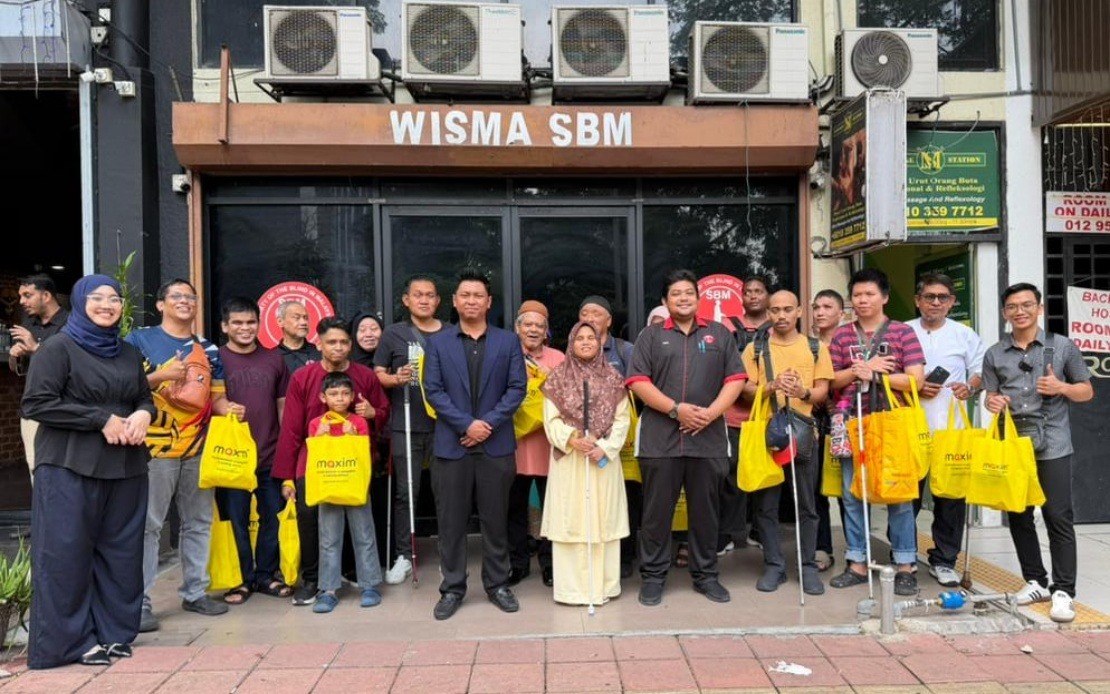
The platform's engagement with the Society of the Blind Malaysia demonstrates recognition that digital inclusion requires active dialogue with affected communities rather than presumed solutions. Promoting TalkBack features to visually impaired users involves ongoing awareness-raising, accessibility training, and feedback channels to refine platform design. This participatory approach contrasts with top-down accessibility retrofitting and respects the experiential knowledge of disabled users regarding their own transport needs. Similar collaborations with deaf organisations, wheelchair-using advocacy groups, and elderly-focused NGOs would amplify this inclusionary design philosophy.
Support for para-athletes and adaptive sports communities, exemplified through transport provision to Sarawak para swimmers, illustrates how mobility access cascades into broader social inclusion. Para-athletes training at standard facilities depend entirely on transport reliability; absences undermine athletic development and competitive opportunities. By removing transport uncertainty, Maxim enables disabled athletes to participate in adaptive sports, which in turn builds representation, role models, and cultural recognition of disability in Malaysian sporting life. This ripple effect moves beyond immediate transport provision into systemic inclusion.
Rural and underserved area expansion carries particular significance for Southeast Asian contexts where geographic inequality parallels economic disadvantage. Rural elderly populations often live distant from healthcare, markets, and family networks, with limited public transport and few taxis. Extending affordable e-hailing to provincial towns reduces isolation and enables rural residents to access urban services. However, this expansion requires financial commitment—ride volume in sparsely populated areas means thinner margins—and depends on sustaining driver supply in low-density regions. Maxim's stated commitment to rural expansion thus involves cross-subsidisation from profitable urban operations, reflecting a social investment mindset beyond pure profit maximisation.
Technology's role extends beyond convenience to genuine empowerment for cognitively diverse users. Real-time driver visibility, transparent fare structures, and voice-guided interfaces reduce anxiety and decision fatigue for elderly passengers, autistic riders, and those with intellectual disabilities. These features compound effects: a senior citizen who confidently books rides becomes more likely to attend preventive healthcare appointments, maintain social visits, and preserve independence—outcomes worth far more than individual transport savings. Technology here functions as an equaliser, translating human variation into service design adaptability rather than treating disability as a niche market segment.
The company's emphasis on government agency collaboration and institutional partnerships signals understanding that sustainable inclusion requires policy alignment. E-hailing platforms operate within regulatory frameworks; transport access interconnects with healthcare, education, and social protection policy. If government subsidies or insurance arrangements could cover or partially subsidise rides for eligible low-income passengers, institutional integration deepens. If public transport and e-hailing connect seamlessly through integrated payment and booking, system accessibility improves. These structural improvements lie beyond Maxim's control but emerge through consistent stakeholder engagement.
For Malaysian society, Maxim's accessibility initiative addresses a genuine gap in inclusive infrastructure. With an ageing population—median age now 29 years and rising—and persistent disability representation across all income levels, transport accessibility becomes an increasingly pressing policy issue. Private sector initiatives offer speed and flexibility that government procurement sometimes lacks; they also provide proof-of-concept for later policy adoption. Should Maxim's accessible services demonstrate demand and viability, regulatory frameworks and competitor platforms may gradually standardise similar features.
Challenges remain substantial. Meaningful accessibility requires continuous investment in driver training, technology refinement, and customer support—ongoing costs that pressure margins. Attracting drivers to serve low-income passengers and rural routes presents persistent recruitment challenges. Cultural attitudes toward disability sometimes manifest as driver reluctance or user embarrassment, requiring sensitivity training and awareness campaigns. Measuring impact—whether accessibility improvements actually translate to increased transport usage and improved life outcomes for target groups—demands rigorous evaluation that most companies avoid. Maxim's long-term commitment will ultimately be tested by sustained investment when growth pressures mount and accessibility improvements yield modest direct revenue returns.

