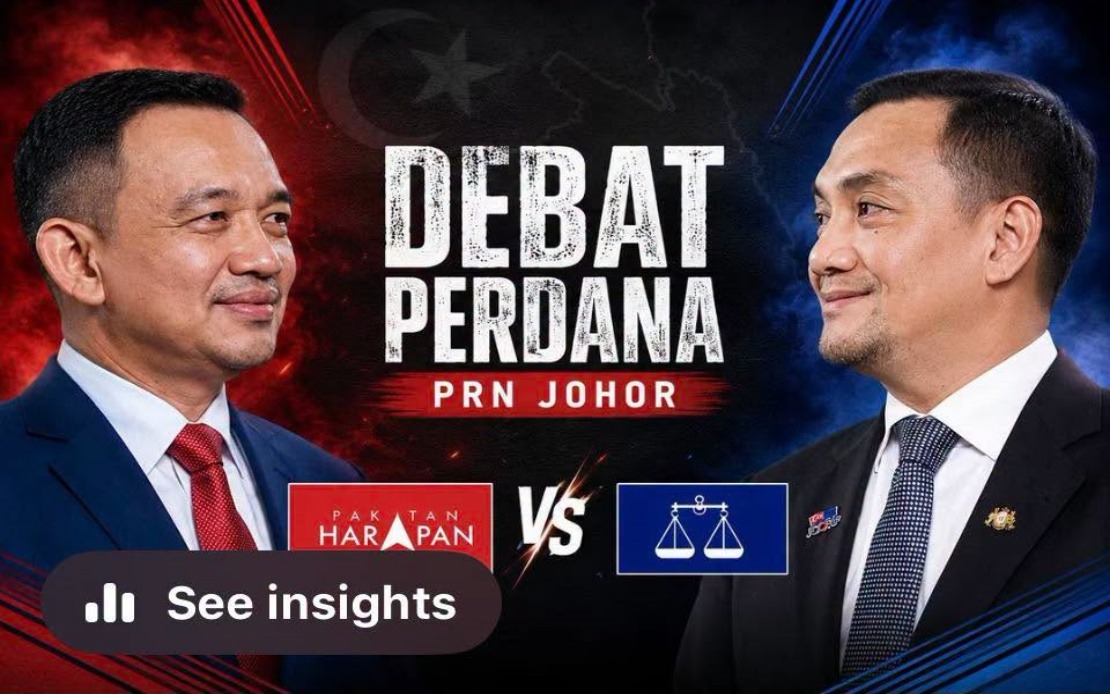
Former Education Minister Maszlee Malik has confirmed his willingness to participate in a public debate with Johor Menteri Besar Onn Hafiz Ghazi in the lead-up to the state election, marking a significant moment in the campaign that could reshape how voters engage with political candidates ahead of the July 11 polling date.
Maszlee, who secured nomination as the Pakatan Harapan candidate representing the Puteri Wangsa constituency, framed his acceptance in terms that emphasize the broader democratic value of structured political dialogue. In a statement posted on his Facebook page, he characterized the debate invitation not merely as a campaign obligation but as an opportunity to demonstrate the kind of mature, principled politics that Malaysian voters increasingly demand from their leaders. His decision to accept reflects a calculated effort to position himself as someone willing to engage directly with opponents rather than relying solely on traditional campaign messaging.
The debate proposal originated from social media influencer Muhamad Harris Nasril and gained traction after being amplified through the Redaksi.com Facebook page, following the announcement of all 56 Pakatan Harapan candidates across Johor by party chairman Anwar Ibrahim. This organic emergence of the debate concept through civil society channels rather than formal party structures underscores a shift in how electoral campaigns are being shaped by grassroots momentum and public demand for greater accountability from candidates.
Maszlee's public statement emphasized that he accepted the invitation with "all humility and respect" and grounded his acceptance explicitly in democratic values. He expressed hope that the debate could serve as an educational platform, noting that he believed structured political discourse elevated the standard of public engagement. His framing suggests an awareness that voters, particularly younger and more educated demographics in urban areas, are increasingly attuned to the quality and substance of political debate rather than simply rallying behind party symbols.
The significance of this debate extends beyond the personal contest between two candidates. For Johor voters, the encounter represents a rare opportunity to observe contrasting visions for the state's future through direct exchange rather than edited campaign materials. Onn Hafiz's position as Menteri Besar gives him the advantage of an incumbency record to defend, while Maszlee brings national profile and ministerial experience from the previous Pakatan Harapan federal government, creating a substantive clash between different governance philosophies and track records.
From a broader Southeast Asian perspective, Malaysia's electoral culture has traditionally centered on party machinery and established political networks. The emergence of organized public demands for candidate debates reflects the gradual influence of global democratic practices and the rising expectation among voters that political figures should justify their positions through structured argument rather than assertion alone. This represents a maturation of electoral politics that extends beyond Malaysia's shores.
The Johor election itself carries particular weight in Malaysian politics. As the gateway state connecting Malaysia to Singapore and a traditional stronghold of the ruling coalition, Johor's electoral outcome carries implications for national political dynamics. Pakatan Harapan's fielding of 56 candidates—20 from PKR, 19 from Amanah, and 17 from DAP—represents a substantial commitment of organizational resources and signals confidence in the coalition's ability to mount a serious challenge in a state where it has faced historical difficulties in securing sustained electoral support.
The Election Commission's timeline has compressed the campaign into a tight window. With nomination day already scheduled, early voting set for July 7, and polling day fixed for July 11, candidates have limited time to reach voters effectively. In this constrained schedule, high-profile debates become particularly valuable as media moments that can influence undecided voters and generate extensive coverage far beyond the immediate debate venue.
Maszlee's career trajectory adds another layer to this contest. His tenure as Education Minister under the previous Pakatan Harapan government from 2018 to 2020 remains fresh in voters' memories, with strong opinions among both supporters and critics regarding his policy initiatives. His willingness to debate directly with an incumbent leader suggests confidence that his record and vision can withstand scrutiny and resonate with Johor voters who may be reassessing their political preferences.
The debate format itself could significantly influence its impact. Whether organizers structure it as a one-on-one confrontation, include moderators, allow cross-examination, or invite questions from the audience will shape both the substance and tone of the exchange. Each format variation would likely emphasize different strengths—direct confrontation favors rhetorical skill and quick thinking, while moderated formats with journalist questions reward policy depth and specificity.
For Malaysian political observers and voters, this debate represents a test case for whether electoral contests can be elevated beyond personality-driven campaigns toward substantive policy discussion. Success in establishing a productive dialogue could encourage similar formats in future elections, gradually shifting campaign culture toward greater emphasis on ideas and performance over partisan loyalty. The outcome will be watched closely by political analysts, civil society organizations, and media outlets as an indicator of evolving voter expectations across the region.

